Postcards from a Hermitage


These are reflections from a monastery. They are not intended as homilies for parish churches but are rather snapshots of the spiritual life lived in a secluded hermitage and farm and, in particular, our meditations on and conversations about Holy Scripture. They are offered in friendship to those who also strive for Christian conversion. The words of St. Paul are constantly before us:

      And do not be conformed to this world, but be transformed by the renewing of your mind,
      that you may prove what is that good and acceptable and perfect will of God.   (Rom 2:12)

If they are to be used as spiritual reading, please wait until Sunday 5PM EST (GMT -4) on the U.S. East Coast. Only after they have been spoken at our services and then revised are they finished.

We have followed the teachings of St. John the Theologian. We have little contact with the secular world, only to the extent of ministry and farm business. We do not participate socially. We are not registered to vote. We do not consume radio, television, or newspapers. The few people who do visit (mostly nuns, monks, and clergy) seek peace and sanctuary from the fever of the world.

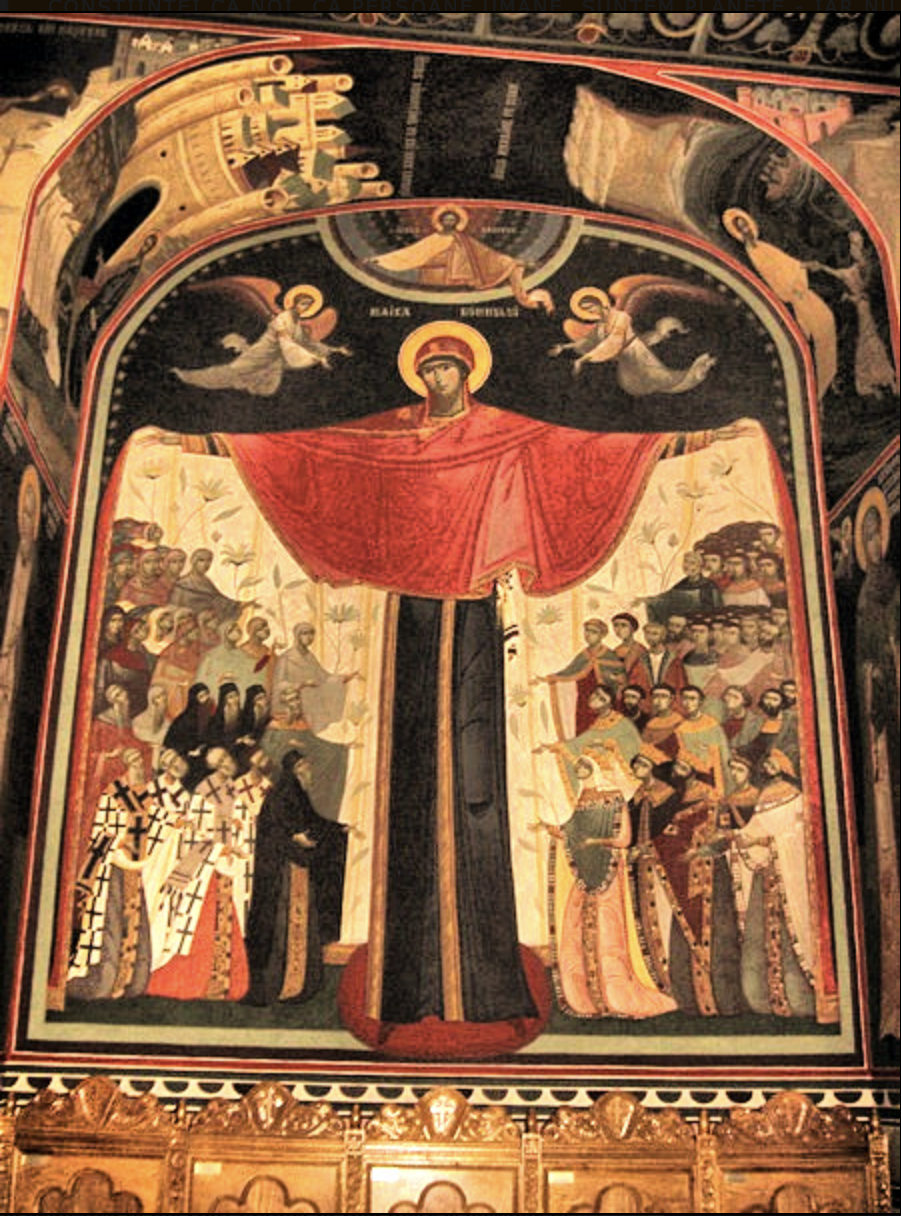
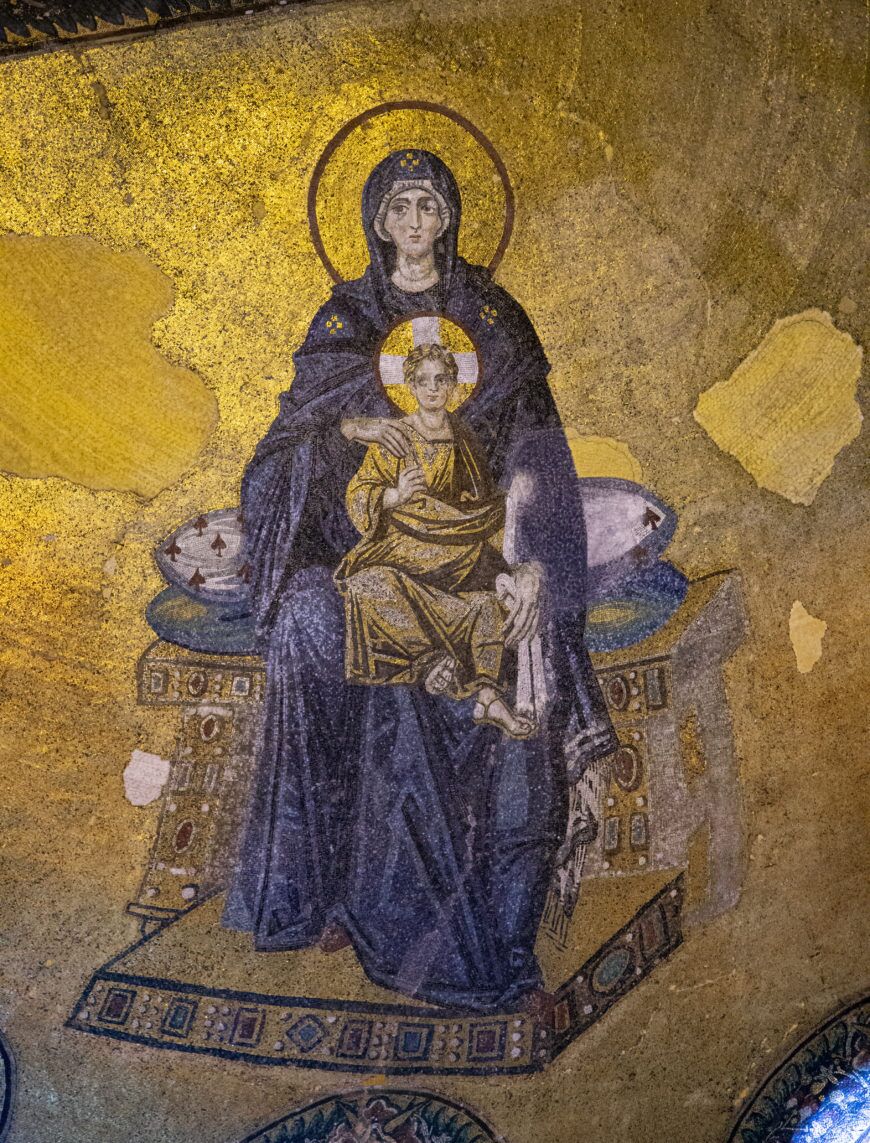
The Hermitage Farm, an enclosure of eight acres, is set apart for prayer and agricultural labors. Our lives revolve around our katholicon, Church of the Unfading Flower Icon of the Mother of God, from which our podcasts are sent out into world.

Following the precedent of the pre-history Irish and Scottish saints, the Hermitage has retreated from the world. Like, these our Western forebears, migrating west from the geography that would become Kievan Rus', eluding Roman influence, the Hermitage is situated on the edge of the earth (an island most remote from any major land mass); at the end of the day, nearly 180° from the prime meridian; and removed from the secular world by thirteen days following the Holy Calendar of Jesus and the Apostles. Humbly following the example of our ancestors, we practice monastic life, pursue serious study, offer humble spiritual writings, and labor daily on a farm — all done in a desire to stay pure as followers of the Master and of His Forerunner sought purity that they might approach the Uncreated Light of Christ and, by the grace of God, share it. We do not roam as they did, though. We broadcast on an ultra-high wattage from a tower called the worldwide web. By the grace of God, and according to His Will, no clear signal has ever reached farther.

Americans say they want life, liberty, and the pursuit of happiness. But without God, none of these things will be possible. C. S. Lewis wrote that "Human history is the long terrible story of man trying to find something other than God which will make him happy." Without God is only self-enslavement by carnal desire and continual regret which has no end, even beyond the grave.

Tragically, these gradually harden into a ghastly, permanent state from which there is no escape.

We do not suggest that God penalizes us for straying from Him. His element is Love. His Heart is only to bless. He has always already predestined all to His marvelous Kingdom. He has always already created every soul born into the world to be His adopted daughter or son, setting the Royal Image of each and every one. And this includes the royal prerogative of freedom, granting us sovereignty over our lives and dominion over our planet home. We have the final say. The destinations we choose are of our own devising. Freely, we may reject Him and His Atmosphere of peace and holy life. Many have rejected Him. This place of willful separation from the Family for which we were all destined is all too familiar. We commonly see people, morphed already into a hellish form, taking the last, heavy steps of their earthly journey.

What is the next thing people do when they encounter God? They are wonderfully energized. They seek to learn, to be guided, and to compare notes. This is our ministry: to meet with these many brothers and sisters in Christ, to offer humble guidance, to share what we have learned from our lowly journeys, and to assure them that the unbelievable things they have seen and heard are to be believed.

Grace to you and peace from God our Father and the Lord Jesus Christ.   (Rom 1:7)


Reflections from Church Year 2025-2026


Reflection: Gregory Palamas Sunday
Podcast: Church of the Unfading Flower Icon of the Mother of God

February 23, 2026 (March 8, N.S.), The Great Divide

Download Podcast: The Great Divide

"As the Father knows Me, even so I know the Father." (Jn 10:15)

This morning we celebrate the Feast of St. Gregory Palamas, one of only two Church Fathers to be accorded a Sunday for our veneration. This is all the more striking as he is a very late Church Father, living in the fourteenth century. What then is so singular about this saint to be so conspicuously honored? The answer is that he stood in the breach and beat back the onslaught of a ruinous horde that laid waste to the Western Church leaving it a spiritual ruin from which it would not begin to recover until the twentieth century. Gregory was born into the great reordering of the world, compared to which the Great Schism of the eleventh century and the Protestant Rebellion of the fifteenth century are footnotes. For the way humankind thought and prayed would fundamentally change including in Russia. Thanks to Tsar Peter I, Russia would endure what Met. Anthony Khrapovitsky (founder of the ROCOR) called "the three-hundred-year Latin Captivity."

We have lived to the see tragic afterment of this spiritual ruin in the West. But we did not see it in the Eastern Church. And this is in no small part due to the hero we honor today, St. Gregory Palamas. For the past eight hundred years, Orthodox Christians have been free of the monster of Thomism. They have prayed with the good hope of experiencing God's energies directly. And they have fared forward in their journey of theosis knowing that they too in the end might be bathed in the light which certain Apostles saw on the summit of the Mount of Transfiguration.


Reflection: Triumph of Orthodoxy Sunday
Podcast: Church of the Unfading Flower Icon of the Mother of God

February 16, 2026 (March 1, N.S.), Good Fellowship

Download Podcast: Good Fellowship

Come and see.

The Advent of God means nothing if it does not mean knowing and touching and feeling God even through the lowly atoms and molecules of our material world. We supped with Him. We learned of Him. We laughed with Him. We wept with Him. And this above all: we followed Him, truly followed Him, followed a Man. This is not theory. This no abstraction. Our Way is not a religion of the book, but an encounter — an encounter with Jesus of Nazareth (Benedict XVI).

Let us turn away from the temptation of metaphysics (for Jesus never prepared lessons in theology) and hear these words afresh and literally:

And the Word was made flesh, and dwelt among us,
and we beheld His glory, the glory as of the Only
Begotten of the Father, full of grace and truth.   (Jn 1:14)

Our icons commemorate this abridgment of our physics. Jesus Christ is Man, and He is God. Both things are true without the slightest shadow of untruth. We commemorate the Lord in our icons, and our icons continue as a living and real witness to His Kingdom. This naturally follows from the premise that He was, and is, life — that the Jesus of matter is one and the same with the deathless and eternal Lord of Life.

We call our living the tradition "the Way" — the active and real Way to the Living God. And we tread this living path with a great cloud of witnesses — in fact with all of those women and men who chose to take up their cross, burning down their worldly lives, and following Him. The path is the same for each of us and for all of us. This Sunday as we commemorate the Triumph of Orthodoxy and the power of our icons, let us revisit one such journey, which it is the journey of every man and woman.


Reflection: Forgiveness Sunday
Podcast: Church of the Unfading Flower Icon of the Mother of God

February 9, 2026 (February 22, N.S.), Forgive

Download Podcast: Forgive

Beyond prayer lies madness.

Do you know this life of madness? Have you, at times, strayed beyond the goodly bounds of prayer? I do not mean praying the Hours though surely this is a royal instance of the prayer life. I mean ending that conversation with God which marks the beginning of the soul's death.

The world surely is mad, and it will creep into your life and soul with deadly inevitability. One attempt to portray this madness is Fyodor Dostoevsky's The Brothers Karamazov, depicting uncontrolled passions which tend always toward madness and will usher in further madness and disease and destruction. The only sanctuary from these velocities of chaos in Dostoevsky's masterpiece is the Optina Monastery, where Abba Zosima carries on the life of prayer and penitence. Yes, penitence, for, you see, he is in it. We are all in it. The madness that howls in the night beyond the monastery walls is ours.

Are we not all madmen? Have we not permitted our passions to hurt others and deeply hurt them? Have we not drunk of the world's poisons entering into a kind of communion with evil? Have we not chosen for ourselves, pushing others away (or beneath us)? Have we not lived in such a way that deprives others of a home or of food to eat? Remember, the money supply is finite. Every dollar I keep is a dollar you cannot have.

Forgive me. For in my mad pain, I have hurt many, many people. And in my thoughtless egoism, I have hurt many, many people. And in my choice for myself, I have hurt many, many people.

O Lord Jesus, Only-begotten Son of God, have mercy on me a sinner.


Reflection: The Meeting of the Lord
Podcast: Church of the Unfading Flower Icon of the Mother of God

February 2, 2026 (February 15, N.S.), "Contra Verba / Contra Mundum"

Download Podcast: "Contra Verba / Contra Mundum"

We celebrate the prophet's word concerning God and His estranged world:

"Behold, this Child is destined for the fall and rising
of many .... and for a sign which will be spoken against."   (Lu 2:34)

"Spoken against" is common in the translations, but the primary meaning is "flat contradiction": anti-legómonon. Our God and King constantly faced contradiction. St. John declared in his Prologue,

He was in the world, and the world was made by Him,
and the .... world received Him not.   (Jn 1:10-11)

Not received? The world opposed the Advent of God and opposes it still. Yet to contradict God is to bring upon oneself Divine Judgment, which is the final contradiction: the "last word." To stand before His Word is to stand before "the Discerner of the thoughts and intents of heart" (Heb 4:12).

Still, the world is out of joint. And when that crooked world stands before the perfect lineaments of Heaven, here is a most awful place, a place of hurricanes and tornados and unbearable velocities. For the world will never square with Heaven's perfection and goodness, nor can changeless Heaven bend itself to accommodate the unredeemed world. And when Heaven came to earth, the Lord Jesus looked out upon all and inescapably discerned all with exquisite pain. The proud could only respond with insolence and impertinence and worse: ripping out pieces of beard, placing a mocking crown of thorns upon His Sacred Head, and spitting upon His incommensurably Holy Person. Contradiction — the word expresses the essence of the meeting between Man and God. It is a most dangerous place. So let us bow deeply in awe at the Prophet Simeon's words.

In His love, the Son of God calls us away, all of us, that we might breathe wholesome air and pray beneath crystalline night skies. He has called us to a desert place no different from the ones that awaited Abraham, Moses, and St. John the Forerunner. Let us there draw a circle beneath Heaven and dedicate it and consecrate it and protect it. For this is His will — that we inhabit and guard a little outpost of the Kingdom of Heaven. For His words at the beginning are spoken with the same urgency today:

"You are going to wrong way!
Open your hearts and attend!
The Kingdom of God has drawn near!"  


Reflection: Sunday of the Prodigal Son
Podcast: Church of the Unfading Flower Icon of the Mother of God

January 26, 2026 (February 8, N.S.), "Garden Life"

Download Podcast: "Garden Life"

Whether you attempt to live up to the Sermon on the Mount, or you go to the opposite extreme and live the profligate life, you will be torn apart. (Of course, in the former case you die a holy martyr and in the latter, a son of satan.) For in this world we must navigate a narrow path: "as gentle as doves and as wise as serpents" (Mt 10:16), in the words of the Master.

Most of us begin as children in a garden where Kingdom-of-Heaven life seems possible: approaching each stranger as a friend, glad to share what we have, and feeling all things deeply. As we grow older, our awareness expands. We hear of cruelty and danger and corruption, yet clinging always to the belief that life, after all, is fair and that the garden will triumph in the end. And this brings us to a worldly commonplace: the rage of the angry young man.

The older brother comments, "This just in, little brother! Life isn't fair." This rankles because the young man's rage arises from his ideals and his undying loyalty to garden-life. Still, over time, the hard and gritty "facts of life" overwhelm him. The world isn't unfair. Innocent people needlessly suffer. Children ache with hunger amidst plenty. And decent families are pushed out of their homes in to the streets. Fairness, much less compassion, is nowhere to be found. And corruption permeates all. And in despair the young man throws himself into the sordid world, giving in to every temptation, and thinking "What's the use!"

Yet, try as he might, he cannot swim to the bottom of this dark sea. There is a golden thread within him which will not break for it is Divine. The garden underlies all, after all. Nor was it ever a fairy tale but an undying reality, the only remaining reality when all has been stripped off. And he stands back on his feet and dusts himself off and begins his long trek back to the garden. For his child's heart (Mt 18:3), deathless and incorruptible, was been the garden all along. And the lessons of sweet boyhood have remained locked up in his deepest heart.

Our Father in the Heavens watches. He watches every foot-fall from an eternal roadside. He is not sovereign of this world, for worldly sovereignty He has given into the hands of men (Ps 113:12/115:16). His pledge all along is to be with us and to receive us in His Love and Forgiveness and to await us, at long last, with garden-life that cannot fade.

The rest is ours to do. But this is the work we were born to. For within our breasts beats the heart of a child. And that heart cannot be killed nor ever finally be corrupted. And always, even from the farthest distance, is the good and pristine garden ever blooming and ever pure.

My brothers and sisters, the Lord be with you!


Reflection: Sunday of the Pharisee and the Publican
Podcast: Church of the Unfading Flower Icon of the Mother of God

January 19, 2026 (February 1, N.S.), "Amongst the Lowly Flocks"

Download Podcast: "Amongst the Lowly Flocks"

God has entered our living web of life. Our lifeworld is a "wet chemistry" in which each thing organically interacts with everything. With God's human conception and birth, everything instantly has changed. Where everything once had bloomed only to wither and die, He has set a Living and Eternal Breath and a Beating Heart at the center of all. Such is the quality of the Gospel atmosphere and ever after.

He bids us to breathe His Breath (Jn 20:22). He calls us to pulse with His Heart (Jn 7:38). He commands that we follow Him, that we might abide in His Love, which is Life. For the Kingdom of Heaven has drawn near, and all we need do is take the next step, which is ours to do.

But how shall we follow God? What shall we wear? What shall we do? What shall we say? This morning, we reflect on two paths. The first imagines how to ascend by considering equality with God a thing to be grasped (Phil 2:6). So he arrays himself in glorious vesture. His religion attains the highest rigor of many prayers and much fasting and many tithes.

But the second does not seek lordship (Mt 20:25). He dresses simply. His head is bowed in humility. His words are few. And the seat of the imagination, which is the heart (Gen 6:15, Lu 1:51), is broken. This man's humble prayer will become the kernel of Christian life: "O Lord, have mercy on me, a sinner."

How shall we follow God? We must hold ever fresh in mind God's most extraordinary act. It is not victory over death, for that is His Nature. It is not sovereignty over life, for that is His Element. It is the never-before and saving act of emptying Himself of His Divine Splendor (kenósis) in order to shepherd His scattered flocks and bring them Home.

How shall we follow God? Let us empty ourselves. Let our heads be bowed. Let our words be few. And let us embark towards the ever-opening horizon of lowliness. For there we shall meet with the poor and the humble who are first to enter the gate of Heaven.


Reflection: Sunday After the Theophany

January 12, 2026 (January 25, N.S.), "The House of Nahum"

"Repent! The Kingdom of Heaven has drawn near!"

The Good Shepherd begins His three-year task to gather the lost and blind. We are not surprised to learn where He has planned to inaugurate this great work: "The land of Zebulun and the Land of Naphtali" in the Northern Kingdom. The lost and blind there have sunk to this low state following the imposition of the bloody cult of the Assyrians being forced upon them, and their becoming generationally inured to these vile beliefs and practices.

The particular town the Lord has selected is Capernaum, or Kfar Nahum ("village of Nahum"). For the Prophet Nahum cries out, "Enough!" and then composes an extended oracle beginning, "The Lord avenges;/The Lord avenges and is furious" and then proceeds to depict the destruction of Nineveh, the capital city of the Assyrian Empire.

We know that Jesus plans the same fate for the Southern Kingdom. For God's people there have also become inured to the same obscene procession of sacrificed goats and bulls. And the Lord will conclude with the same annihilation He had carried out in Assyria: the destruction of Jerusalem in 40 A.D.


8thc Icon

Reflection: Feast of the Theophany

January 6, 2026 (January 19, N.S.), "Into the Deep"

Ours is not a magic-wand religion. Christianity does not dispense pixie dust. Ours is a religion of journeys. Actually, it is not a religion at all but the only reality, for it is God's reality. In the time of the Apostles, it was called The Way. Today, the entrance into The Way for most adults marks a desertion — desertion from the ranks of the evil one, which are the "ways of the world." I am reminded of the Western saint Anthony of Padua, who deserted from the ranks of the Augustinian Canons (a Roman Catholic monastic order) because, he said, he could not endure their corruption and depravity any longer. So he deserted, joining the Franciscans. This marked the beginning of his Way towards the Light and the Life, Who is Jesus the Christ.

Those baptized into the Orthodox Catholic Church are also deserters. Read the vows from the Baptism Service from The Great Book of Needs. The catechumen is asked, "Dost thou renounce satan, and all his works, and all his angels, and all his service, and all his pomp?" And he replies, "I renounce" and then spits upon satan's name. The act of renunciation is the relinquishing of a previously held title, a rejection of something you previously had accepted, or even the hatred for something you previously had loved.

There is nothing eirenic about baptism. It is not a serene ritual. It is war. And the newly baptized Christian immediately has won the enmity of those who had been friends, chiefly the demons. He is instantly plunged into conflict, for now he has entered the fray and must fight for his life. But, O, the difference! For the angels of God are on every side fighting with him and guiding him towards the Light. The Most High God is with Him leading him and comforting him. And he has become a hero is God's eyes, no longer dwelling in the rebel camps.

Immediately after His Baptism, "Then Jesus was led up by the Spirit into the wilderness to be tempted by the devil." This is the royal example. Jesus is not tempted "once and for all." We must make our own way forward. God will not fight our battles for us. That is why the greeting among all Christians everywhere is, "The Lord be with you!"

Baptism is not the beginning of something so much as it is the end. For we had been true sons and daughters of God from our birth. When did we depart? Why did we leave? Our leaving is rarely a decision, much less a distinct rite. It is a drifting, a falling into a deadly trance whose warning signs are disease and depression. Thanks be to God for His rite of desertion.


8thc Icon

Forefeast of the Theophany

January 5, 2026 (January 18, N.S.), "Taking Up the Cross"

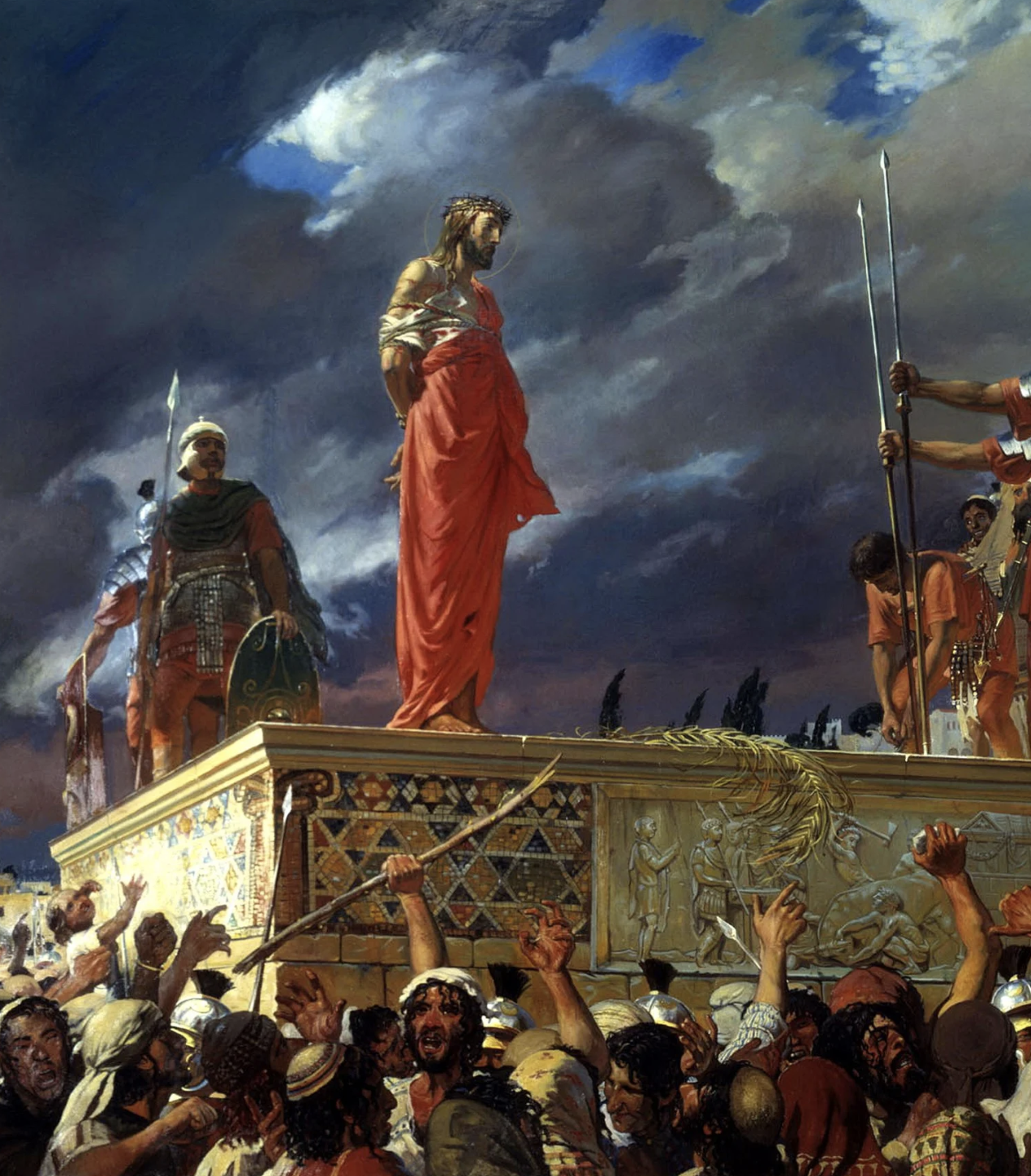
The Holy Cross: Thirty-years of our indifference, rejection, and hatred for God distilled into Three Hours. His Divinity was revealed in Three Days to those who willfully ignored Him for Three Years. We could have saved our ransom (Mt 20:28) by offering one word (Lu 23:22). Instead, we gave two: "Crucify! Crucify!"

The Holy Cross is an Icon and Essence of the Incarnation which saves us and our response. Truly, there is more of ourselves in this Holy Icon than anything else. All is distilled here, yet not replaced, burning ever bright as a diamond, a sign (said the Emperor Constantine) pointing elsewhere.

We accompany this posting with the earliest icon we have of His Crucifixion .... not from the third century, not from the fourth century, but from the eighth.

May God have mercy on an indifferent world who has no time for Him, noisily going forward without thoughtful discernment, without prayerful life, without self-denying love, without humility or a spirit of poverty, without penitence. He offers Life itself if only we would choose for it and make room for it. In the end it is all we shall have.


Magi

Reflection: Sunday Before the Theophany
Podcast: Church of the Unfading Flower Icon of the Mother of God

January 5, 2026 (January 18, N.S.), "The Gate of Life"

Download Podcast: "The Gate of Life"

We are about to begin a six-month sabbatical leave from our ministry of reflections, which has been a primary focus here since 2015. Initially, we conceived the Hermitage as being our end-of-life contemplation of God and God's things. Our focus has been on the earliest Church, therefore. It was inevitable that our Franciscan vocations should become Orthodox vocations. And we believe the Russian Orthodox Church Abroad to be the purest expression of Orthodoxy.

Our final two reflections, last week's and this week's, present what we have learned (in abbreviated form) sketching out our understanding of "The Way" which would become the Christian faith. Such an ambitious project deserves (at least) a book length study. We can only hope (on a Sunday morning) to root ourselves firmly in the earliest writings — the Holy Gospels first of all — and point others in what we believe to be the right direction.

Grace to you and peace from God our Father and the Lord Jesus Christ! — St. Paul


Magi

Reflection: Sunday After the Nativity
Podcast: Church of the Unfading Flower Icon of the Mother of God

December 29, 2025 (January 11, N.S.), "A Gift of Myrrh"

Download Podcast: "A Gift of Myrrh"

Myrrh was understood in the first century to signify healing or royal anointing. As Orthodox Christians believe today, myrrh streaming from certain holy icons or flowing from certain holy vessels, announce the Divine Presence. It is ever fragrant of roses and the antidote to disease and death. To believe it could signify the burial preparation for Jesus' dead body — even as He lay before the world as a vulnerable and helpless infant — is far-fetched and grotesque. Jews did not embalm or mummify. Egyptians did that. Jews would have considered such "prepartions" to be mutilation of the body (as the Orthodox do today) and would have insisted on burial before sunset. Did not Martha of Bethany (speaking of her brother Lazarus) attest this fact: "Lord, by this time he stinketh: for he hath been dead four days."   (Jn 11:39)? Myrrh announced the healing and saving Presence of our King and God. It signified Life, the Gift that proceeds from God's hand alone, not death.

The Magi have laid down precious gifts before the Lord, our Savior and God. They have bowed deeply before Him in profound devotion. This was always their only thought and highest intention — to give their all in an act of love and then to reverence Him.

Let us also worship Him, fully understanding Who He Is (such that we can) and expecting nothing in return. I say "nothing" .... except His love which He has already given. For we are His people, and He is our God, Who said in His faultless teachings,

"I desire compassion and tears, not sacrifice."   (Mt 9:13, Mt 12:7. Translation mine)


The Nativity according to the Flesh of Our Lord, God and Savior Jesus Christ

December 25, 2025 (January 8, N.S.)

Root


Root


Root


Root

Reflection: Sunday Before the Nativity
Podcast: Church of the Unfading Flower Icon of the Mother of God

December 22, 2025 (January 4, N.S.), "A Way of Seeing"

Download Podcast: "A Way of Seeing"

Matthew's genealogy of Jesus, Son of God and Son of Mary, is not accurate. But how could this be? The facts were well known. For example, Matthew had access to both the Books of the Chronicles and the Books of the Kings. And he, above all men, being entrusted with the Imperial accounts, would have had a mind that was honed and polished for precision and accuracy.

But all his life, this Evangelist had been two men: the descendent of Levi and the Roman publican. He looks out on the imperial Roman world with practical eyes for many years (we imagine). Then on a day, he undergoes a profound conversion. He now owns the truth of Jesus' teaching that we are blind. And with this alteration of mind and soul, he sees the always messy world, not in terms of mere facts and events, but through the prism of Scripture and, in particular, through the teachings of Jesus. Such that a human can, he now sees the world from God's point of view.

The difference between these two ways of seeing, we might say, is simple — a matter of adjusting perspective. But the paths they lead down amount to a great deal: the difference (as the Didache puts it) between life and death. Jesus was sent into the world to gather the "lost sheep" — a declaration found only in Matthew's Gospel. They are lost because they are blind, again a central theme of this same Gospel. And until we adjust our perspective, we are both blind and lost.

At Christmastide, let us open our eyes and see the Giver and Gift. Things may not appear as we would expect, but, ultimately, any other way of seeing is an illusion, a dangerous and time-wasting illusion.


666-FB

Reflection: 29th Sunday After Pentecost
Podcast: Church of the Unfading Flower Icon of the Mother of God

December 15, 2025 (December 28, N.S.), "The Acceptable Time"

Download Podcast: "Acceptable Time"

"Come, for all things are now ready."   (Lu 14:18)

Who is this "certain Man" Who offers His magnificent Feast to all mankind? Clearly, this event is impossible and therefore otherworldly. Yet, those closest to Him have rejected it and in doing so have rejected Him.

It began with Jesus inviting His followers to unite with Him (Jn 17:21) which He made real in a ritual of offering of His Body and Blood (under appearance of bread and wine). St. Luke's Gospel records this Divine invitation in the form of a parable. But St. John prefers the starkness of historical narrative to relate the same event:

From that time many of His disciples went back
and walked with Him no more.   (Jn 6:66)

St. Matthew elaborates: the Great King offers His Son to the world as a Bridegroom to effect the Marriage of Heaven and earth. Come to the Feast to receive Him, all ye blessed dwellers on earth!

How many abandoned the Son of God? Were there thousands? .... or tens of thousands? We cannot say. We can say that this marked a great crossroads in the all-important, and all-too brief, period we call the Advent of God.

Please come join us as we reflect on this crossroads in history and in our lives. Please do not refuse His invitation. And please join us at the Feast of Heaven and earth. How could we let such greatness slip through our fingers! Truly, this would be tragic!


entry-FB

Reflection: 28th Sunday After Pentecost
Podcast: Church of the Unfading Flower Icon of the Mother of God

December 8, 2025 (December 21, N.S.), "The Foreigner"

Download Podcast: "Foreigner"

.... ten men who were lepers ..... lifted up their voices and said,
"Jesus, Master, have mercy on us!"   (Lu 17:12-13)

The number of lepers are ten. The setting for this narrative is the historical Northern Kingdom. The exemplary figure in the pericope is a Samaritan. Clearly, this is a narrative referring to the Ten Lost Tribes of Israel, which, in turn, refers back to the reasons Jesus was sent into the world (Mt 15:24).

Yet, there is a fine point on it, which is alienation from God. We tend to focus on the dramatic cases of alienation, which mainly have to do with immoral life. But I wonder how often we reflect on the alienatation of the faithful — of those who profess the faith, who attend church on Sunday, and who "touch all the bases." The main pitfall here can be passivity, which is all the more hazardous because it is hidden by nominal "right living." And this problem of passivity St. Luke addresses by including this encounter in his Gospel (the only source for this story).

We like to say that Christianity is about love. The Beloved Disciple tells us that "God is love" (1Jn 4:8). But are we alive to the One Who loves us best? His calls and texts come in every day. But will we take them? Will we reply right away? Will we give God first place in everything? We like to say that Christianity is about love. The Beloved Disciple tells us that "God is love" (1Jn 4:8). But are we alive to the One Who loves us best? His calls and texts come in every day. But will we take them?

Thinking back to our own youths .... Are we sitting by telephone table in the front hall waiting for it to ring because that special someone might call? Is He the first thing we think of when we rise, and our last thought before drifting off to dreams? Do we give God first place in everything? To requite His great love for us .... this in only to make a start.

In this season when the "phone is about to ring" announcing that Jesus has been born into the world, do we stand with rapt attention, are we filled with the glow of wonder, are we moved to write Him a love letter .... that is what this spiritual season is for. Advent. He is coming. And I can't wait!


entry-FB

Reflection: 27th Sunday After Pentecost
Podcast: Church of the Unfading Flower Icon of the Mother of God

December 1, 2025 (December 14, N.S.), "Now, Ever, and Unto the Ages of Ages"

Download Podcast: "Now, Ever"

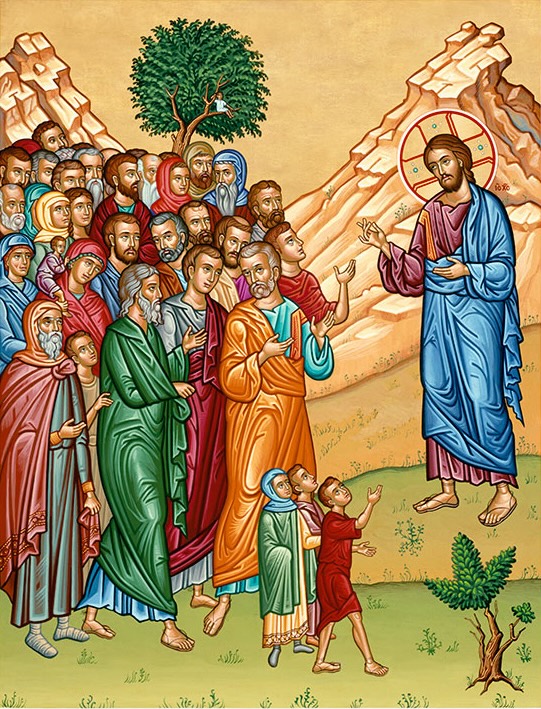
The teachings of Jesus of Nazareth are not organized around the Ten Commandments. Indeed, He seems at times to wave off their claims on our lives, even ascending a mountain, a kind of counter-Sinai, to set a new law before us. Our Gospel lesson brings all of this into sharp focus. It is a miniature of His overall project to awaken God's lost people out of their Babylonian trance and to set a true "roadmap" before them into the Kingdom of God. Please join us as we look at the lay of this new land. It will prove to be much more than "a Sunday drive."


entry-FB

Reflection: Great-Martyr St. Katherine of Alexandria
Podcast: Church of the Unfading Flower Icon of the Mother of God

November 24, 2025 (December 7, N.S.), "Heaven Now!"

Download Podcast: "Heaven Now!"

In the early fourth century, the Lord Jesus was introduced by His Mother to the paragon of all pagan virtues, beauty, and graces. But agreeing to see her, He bluntly pronounced her to be "repugnant, ignorant, contemptible, impossible to look at" (Synaxaristes). Yet, she towers above the vast majority of us living today in terms of worldly beauty, erudition, wealth, and social graces.

Who, then, does the Lord Jesus favor by comparison? I saw them in Haiti. They lived in shacks, hovels, and sheet-metal "tee-pees." Yet every Sunday without fail, scrubbed clean and wearing what decent clothes they could find (which were bright and immaculate), they excitedly gathered in church. I would look around the nave as the priest elevated the Host, and I saw tears of joy streaming down the faces of these people. Truly, these are the friends of God, who are grateful for every little blessing.

It is chilling when I consider how little of my present culture is "of God." It is chilling when I see that the vast majority of people I meet do not worship God in church Sunday, do not kneel before God in daily prayer, and do not make their worldly decisions asking the only truly important question: "What would God say?"

The saints are given us, yes, for encouragement, but also that we might take stock in our own lives. Let us consider one our greatest saints today as an invaluable lens through which to assess our own lives. Great-Martyr St. Katherine, pray for us!


entry-FB

Reflection: Entry of the Most Holy Theotokos into the Temple
Podcast: Church of the Unfading Flower Icon of the Mother of God

November 21, 2025 (December 4, N.S.), "True Worshipers"

Download Podcast: "True Worshipers "

What is the Good News announced by the Gospels? It is that God has come to dwell with us; that He desires that we draw near to Him; and that nothing can separate us from His love. This was the miraculous news of the first century, and it is His declaration today.

Nonetheless, we in our freedom can separate ourselves from Him. The Son of God taught Martha of Bethany how to approach Him, how to stop our busyness, how to empty ourselves, and how to be instead of our ceaseless doing.

Yet, the busyness of checklist religion is still with us. It is the unfortuntate inheritance that we cannot let go of. Let us therefore keep the feast and follow a little Child as with tender feet she ascends the massive stones of the Temple. Her openness to God, Her loving devotion, Her simplicity will declare the end of the Temple's oppression, the end of its stink of death and bloody sacrifice, and its rigid pecking order. In its place will be set God's utmost desire for us: that we have tender and open hearts beating as one, as the Mother of God's heart once beat in unison to that of Her unborn Son.


Reflection: 25th Sunday After Pentecost
Podcast: Church of the Unfading Flower Icon of the Mother of God

November 10, 2025 (November 23, N.S.), "Thy Soul Shall Be Required"

Download Podcast: "Thy Soul Shall Be Required"

We read in the Book of Revelation,

Then the sky receded as a scroll when it is rolled up,
and every mountain and island was moved out of its place.   (Rev 6:14)

Here is the sublime! Is this not an elemental intermingling of things which God has ordained to be inseparable: the Word and the Creation? He has established this Periodic Table of Two as surely as He has revealed His-Son-Who-Is-Himself as the Logos and then called the Creation into order according to His Word.

His Word on earth

is living and powerful, and sharper than any two-edged sword,
piercing even to the division of soul and spirit, and of joints and marrow,
and is a discerner of the thoughts and intents of the heart.   (Heb 4:12)

Who would dare to approach it? Who durst pick it up? But we must, for putting it down or, worse, ignoring it is far more hazardous.

How do we read these words, which mysteriously compose the Book of Life? We approach them with reverence, with a heart full of Divine love, and respectfully heeding the guidance of the Fathers. Let us go back to the Early Fathers and learn of them. Then shall we offer the sacrifices of righteousness and oblations and wholeness of life.


Reflection: 24th Sunday After Pentecost
Podcast: Church of the Unfading Flower Icon of the Mother of God

November 10, 2025 (November 23, N.S.), "Who Is My Neighbor?"

Download Podcast: "Who Is My Neighbor?"

Then Jesus said to him, "Go and do likewise." (Lu 10:37)

The occasion for the Parable of the Good Samaritan is often depicted as a bitter encounter with an accusing Pharisee. But there is nothing in the underlying Greek text to support this reading. In fact, if the general background for this encounter were considered, most readers would come to the opposite conclusion.

Let us consider the setting, the characters, and the plot carefully and then sort through the meaning of the Parable and its purpose in Jesus' teachings. We shall find that no parable told by Jesus comes so close to the purposes of the Advent of God.


Synaxis of St Michael and All Archangels, November 8, 2025 (Nov. 21, N.S.)

Today we observe the Synaxis of St. Michael and All Archangels. We at the Hermitage rush to venerate these our Protectors and Advocates and Heavenly Allies in the war that rages in the world and in our souls. We pray "on earth as it is in Heaven" and remember that a pivotal chapter in Heaven's history was a War that resulted in countless rebel angels falling from Heaven's immaterial heights (which Milton recalled in his epic Paradise Lost):

Nine days they fell: Confounded Chaos roared,
And felt tenfold confusion in their fall
Through his wild anarchy, so huge a rout
Incumbered him with ruin: Hell at last
Yawning received them whole, and on them closed;
Hell, their fit habitation, fraught with fire
Unquenchable, the house of woe and pain.   (VI. 871-877)

They manifestly fell from grace and inhabited the world before the Creation of Man. For it was from Hell that the serpent slithered into Eden.

We, therefore, call to mind a principle: on earth as it is in Heaven; as in the human heart so it is in the world. As we choose, so the world is formed in the image of our thoughts and passions in a continuous act of creation. This is the democracy of our restless desires constantly reflected back to us as the content of our comedy, of our televion programs, of our movies, of what passes as acceptable in our culture.

In Heaven, in the world, and in our lives, the exalted figure we praise and venerate today is St. Michael and with him all archangels. Satan is determined that we devolve into pigs feeding on the garbage of our culture. Are we not already obese from eating our fill? But St. Michael does battle with the fiendish horde and ensures that we are surrounded by salutary influences too. He weighs our souls throughout our earthly journeys and accompanies us to our final judgments. He is the Protector of the Mother of God bearing a sword which we do well always to remember and emulate.

Pray for us, O Prince of the Heavenly Hosts, for we are even now engaged in the battle of our lives, and the outcome and result will be eternal.


Reflection: 23rd Sunday After Pentecost
Podcast: Church of the Unfading Flower Icon of the Mother of God

November 3 (November 26, N.S.) Divine Radiance

Download Podcast: "Divine Radiance"

And immediately her flow of blood stopped.   (Lu 8:44)
Then her spirit returned, and she arose immediately.   (Lu 8:55)


He is God-Among-us. He was sent because we had become lost (Mt 10:6). We had forgotten the purpose of our lives. We did not know where we were going or where we came from. We did not even know who we were. Truly to a lost people these words of identity would be the first things to know. And what were they? That we are gods (Ps 81), Father God's own lost children, whose true and everlasting Home is His Kingdom.

The Incarnate Son, therefore, took careful pains to set the paths before us which lead to Him: the First-born Son, the Eldest Sibling, our own Brother. And by this He revealed to us that our family ensign and crest is Life, that our Royal Family alone is the Author and Overseer of animate, sentient, holy Life. And today's Gospel leesson sets out a royal example.

Such a thing cannot be hid, Jesus suggests (Mt 5:14). Even the local synagogue ruler, who has been told that Jesus must be depreciated, runs to the Lord of Life in desperation. Along the way a woman who has heard of His sovereignty over disease and death is healed. But He gives His followers to know that the giving of Himself exhausts Him, that lifeforce passes from Him to them, which He calls δύναμις / dúnamis, passes from Him to them. By this they are given to know that He is not other, but rather organically part of their web of life. He is not other. He is one with them. What He does they can do: preach the Kingdom, heal, raise the dead, make disciples. Do we not read of all these things in the Book of Acts? His disciples are not passive and chronically ministered to, but rather sons of God and, by that fact, bringers of light and Heavenly ministry: "the Son of Man did not come to be served, but to serve, and to give His life as a ransom for many." (Mt 20:28, Mk 10:45, Jn 13:1-17). And who is the son of man if he is not you and I and everyone following our Exemplar as the Master intended.

For with Thee is the fountain of life: in Thy light shall we see light.   (Ps 35/36:10)


Reflection: 22nd Sunday After Pentecost
Podcast: Church of the Unfading Flower Icon of the Mother of God

October 27 (November 9, N.S.) God Among the Ruins

Download Podcast: "God Among the Ruins"

Then the whole multitude of the surrounding region
of the Gadarenes asked Him to depart from them.   (Lu 8:37)

The Father is the Master of all timings (Mt 24:36). And we are right to contemplate the weave of disparate events in our lives in order to discern God's Will. Shall we then dismiss as "mere coincidence" the never-before-seen, bizarre appearance of pigs on Hermitage Farm — a large horde of perhaps a hundred frenzied, feral pigs (see previous posting) — followed the next Sunday by the Gospel lesson on the Lost Tribe of Gad with its depiction of frenzied pigs? No. That would be impious in the extreme. The Hermitage is in the midst of a Divine Visitation. Yes, we are a monastery, — a place constantly becoming the Kingdom of Heaven, a place where the Only-begotten Son appears in our midst every Sunday, a place consecrated to God. But God is presently near to us in a special way.

Let us then reflect on Emmanu-el, God-among-us, which is the crossroads of human history. When God comes, the timing He sends is Now. And the meaning He means is Love. For that is the way of love: when it finally comes, nothing else matters. All that matters is now, and all else is ordered to love and by love.

In our lesson today, God comes to Gad bringing life and healing. And this now subsumes everything — the past, the future, eternity. All the Gadarenes need do is fall into His embrace. But will they? This is the great question for all of us. Will we answer when God calls us into His Love? Will we embrace Him? Will we love Him? Or will we, like the Gadarenes, send Him away .... even drive Him out?


Visitation of the Mother of God, October 23-25, 2025 (Nov. 5-7)

These past few days life at the Hermitage stopped. For appearing in our midst was the Mother of God according to Her Will. (As Her gracious and humble steward, Fr. Nectarios, explained, "She chooses the destinations. I book the flights." For example, Father proposed several previous visits but "something" always "came up" to prevent it .... until now. The night before She arrived, a most extaordinary scene intruded: at least one hundred feral pigs invaded the Hermitage Farm in a frenzy. They ran rampant in all directions and in many groups biting and squealing and attacking each other. It was as if they were possessed. And I recalled an Early Renaissance painting I had seen depicting general chaos — with pagan statues and monuments exploding and demons fleeing in a frenzy — at the quiet approach of the Mother of God, Her Infant Son, and ever-faithful Joseph on their way to Egypt. I say, as a veteran of many pig wars (to my shame), I have never seen anything remotely like this.

I must confess that I cringe when I hear Her described as the "Myrrh-streaming Icon." Preparing for Her visitation, the Sisters and I sat around our table. I held up a vial of Her gift of Holy Myrrh and said, "This came from nowhere. It arose from nothing. And smell: a fragrance of roses, never-fading, ever-fresh. Impossible! This violates the Laws of our Physics! For example, of Conservation of Matter! But nothing shall be impossible for God, neither for the Queen of Heaven (writes St. John of Damascus). This is the Mother of God."

By Her Will, She has deigned to visit us, lowly hermits, the least among all. She has come to bless the Hermitage founded in Her Name and to anoint the lives who for so long have been devoutly poured out at Her Feet. We cry from our knees, "The Very Theotokos, Thee do we magnify."


Reflection: 21st Sunday After Pentecost
Podcast: Church of the Unfading Flower Icon of the Mother of God

October 20 (November 2, N.S.) The Empire of Me

Download Podcast: "The Empire of Me"

And being in torments in Hades, he lifted up his eyes
and saw Abraham afar off, and Lazarus in his bosom.   (Lu 16:23)

The Empire of Me. Unless we are striving to "be friends of God" (to use Gregory the Great's memorable phrase), most of us are about the business of empire-building: building the Empire of Me. Whether in little things or great, our time is spent in building "dream homes" or acquiring stylish automobiles or working to gain recognition. We make idols out of those who have succeeded conspicuously well in the Empire of Me — gawking at their homes or yachts or personal landing strips and digging to learn more about their lifestyles.

Then there is the other principal preoccupation of life. We have already said it: Becoming Friends of God. As we learned during the Advent of God about two thousand years ago, these two preoccupations are not compatible. You cannot do both. In fact, if you are doing one, you cannot do any of the other. For "either [we] will hate the one and love the other, or else [we] will be loyal to the one and despise the other" (Mt 6:24). Jesus' view, of course, is from the fullness of time.

The greater irony is that we perceive the two as being alternatives to one another. Well, that is being over-generous. For we perceive the life of Christian faith to be almost a sideline, a hobby, not a real life alternative to the Empire of Me. As a parish priest, I have known parishioners who have kept up their relationship with the Church anticipating their grand Requiem Mass at the end.

And this opens the greatest irony to us, because at the end we will discover that our empire-building has not erected the monument we had thought, but, rather, we have been digging a hole for ourselves, a deep hole, almost to Hell. This will be our lasting monument.

Today's lesson is the Master's definitive Parable of these two ways of life, boldly told, writ large, and loud in our ears for the past two thousand years.


Logos

Reflection: 20th Sunday After Pentecost
Podcast: Church of the Unfading Flower Icon of the Mother of God

October 13 (October 26, N.S.) Words of Power

Download Podcast: "Word of Power"

"The seed is the Word of God."   (Lu 8:11)

The Word of God. The actual phrase written down in St. Luke's Gospel is

`ο Λόγος του Θεου / `o Lógos tou Theou

These words stir our imaginations to the heights of Heaven touching the most sacred places: the opening chapters of Genesis, certain portions of the Psalter, "the Mountain of God, the House of Jacob" (Isa 2:3), and then rising to a blinding brilliance in the Prologue of St. John's Gospel:

    In the beginning was the Word [Logos],
    and the Word [Logos] was with God, and the Word [Logos] was God.
    The same was in the beginning with God.
    All things were made by Him; and without
    him was not any thing made that was made.
    In Him was life; and the life was the light of men.
    And the light shineth in darkness;
    and the darkness comprehended it not.     (Jn 1:1ff)

These words point back through the mists of pre-history pointing to high mountain peaks which are human intrusion. Yet, we are afforded brief glimpses:

    The earth is full of the goodness of the Lord.
    By the Word of the Lord the Heavens were made,
    And all the host of them by the Breath of His mouth ....
    Let all the earth fear the Lord;
    Let all the inhabitants of the world stand in awe of Him.
    For He spoke, and it was done;
    He commanded, and it stood fast.     (Ps 32 (33):3-9)

What shall we call this awesome display if not Words of Power? Our poor verbiage stumbles and falls before this Majesty. These words summon us to the greatest revelation: that the human lifeworld can never be separated from God, for by its nature it is created of and from and for God. Something more basic than (but including) our DNA is intrinsically Divine. Yes, we are adopted children of the Most High and yet, in a way we earthlings shall never grasp, we are Him: Divine.

In today's lesson Jesus tells us how we can weaken, and perhaps lose, that connection during our journey through the world. Nonetheless, it is always deep within us waiting to be redeemed. That is, we must first lose ourselves in order to lose the intimate Company of God. This is Hell's name: Perdition. Join us as we explore this theme in Scripture and perhaps advance in our understanding.


Reflection: St. Thomas Day
Podcast: Church of the Unfading Flower Icon of the Mother of God

October 6 (October 19, N.S.) The Twin

Download Podcast: "The Twin"

We celebrate the Apostle who walked off to announce the Good News to a strange world which, speaking over a hundred different languages, must have seemed opaque to him. He certainly journeyed across India (where the Hermitage's Sr. Mary Anne served) and perhaps as far as China. We might say that he alone fulfilled the title Apostle, that is, "one who is sent." We call him intrepid. We call him bold. We call him redoubtable. But we flinch at the thought that he should ever be called doubting (a concoction of the late medieval West).

This is an occasion for reading with sensitivity. For all sacred literature is read in quiet, with careful reflection, considering each nuance of setting, of character, and of context. Let us open our "eyes that see" and our "ears that hear" that we may go beyond the shallows and venture into the deeps where God meets with us.

To everyone, a Blessed St. Thomas Day!


Reflection: 18th Sunday After Pentecost
Podcast: Church of the Unfading Flower Icon of the Mother of God

September 29 (October 12, N.S.) Lost in a Wood

Download Podcast: "Lost in a Wood"

For ten-thousand years men and woman have praised virtue and pursued laudable lives. They have been in general agreement concerning the marks of this life which include faithfulness, chasteness, sobriety, modesty, generosity, self-denying love. Our age is the first to discard these values. Our fellow citizens mock God, revel in hook-up culture, chronically get high, dress in near nudity, and celebrate acquistion of wealth. And they have installed their own great commandments: "Don't judge me!" and "Live and let live!" Violation of these commandments could lead to arrest for "hate speech." And for averring there is such a thing as sin just might qualify as a "hate crime."

In our Gospel lesson today, Jesus contemplates sin, which means "missing the mark." He describes it in terms of finding the path to God's Kingdom, where the sign-posts to Heaven shine brightly, and where our consciences are no longer fog-bound in the poisonous vapors of our culture.

If we are already lost in a wood, which Dante describes as the antechamber to Hell, then pray that your guardian angel will lead you to clear air and the lighted path to God. For no one in our culture is immune to its poisonous atmosphere, which clouds the mind and dims the eyes and sets us in a trance. Yet, by the grace of God, we may escape. Did not angels appear as guides through the toxic mists of Sodom? And these same angels are present to us. They will guide us out of this culture of death. But we must pray for them, we must follow them, and we must fix our gaze only in the direction of their healthful influences.

Come, let us explore this together, for we today are in the vast majority of those who valued and taught virtue and fought back against corruption and depravity.


Reflection: 17th Sunday After Pentecost
Podcast: Church of the Unfading Flower Icon of the Mother of God

September 22 (October 5, N.S.) Foresaking All Others

Download Podcast: "Forsaking All Others"

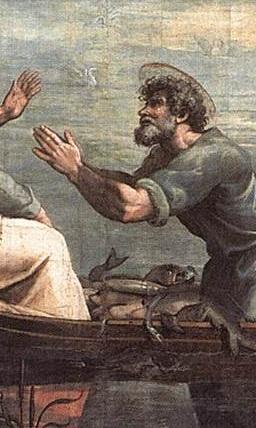
So when they had brought their boats to land,
they forsook all and followed Him.   (Lu 5:11)

In the Name of the Father and of the Son and of the Holy Ghost. Amen.


Let us paraphrase our epigram this morning:

"So they ceased their vain wanderings forsaking all else."

We know these words. Everyone has heard them growing up. Many, in hushed, sacred, and candle-lit spaces, have spoken them. And the English words of our Gospel lesson echo them:

WILTE thou have this woman to thy wedded wife, to live together after Goddes
ordeinaunce in the holy estate of matrimonie? Wilt thou love her, coumforte her,
honor, and kepe her in sickenesse and in health? And forsaking all other kepe
thee only to her, so long as you both shall live?   (1549 Book of Common Prayer)

These are incommensurably holy words, unlike any others we are likely ever to speak. They were revered by the King James Bible translators (1611), most of whom had spoken them at the a most sacred moment in their lives. For when or where else do you utter permanent, unbreakable and holy vows before God .... unless you become an ordained priest or a consecrated monastic. And what, in all the world, is more sacred than Holy Marriage? ..... ordained by God in Eden as the proto-Church: two people joined in holy love and together loving God with all their heart, mind, soul, and strength? From marriage (according to God's Will) proceeds the only miracle commonly seen on earth: the living creation of God's Image in children. Family is God's building block for the entire human lifeworld. And uniquely family is His formation for our spiritual development, preparing us to enter His Kingdom of Heaven, which He has styled as Family having "one God and Father of all" (Eph 4:6). Writes St. Paul, "But you received the Spirit of adoption by Whom we cry out, 'Abba, Father.'"

Marriage is the all-important moment we stop living our selfish lives and are born into a whole, new creation. Says the Lord Jesus,

Wherefore they are no more twain, but one flesh.
What therefore God hath joined together, let not man put asunder.   (Mt 19:6)

We put away childish things and silly self-indulgences and mature into God's Image: in compassion, in empathy, in patience, and in agape-love, After all, few will lay down their lives for their friends, meeting the high standard of the Master, but for their family, few will fail to do so. This is God's school of love, preparing us for His kind of Love, which is the Kingdom of Heaven. That is, the Lord Jesus calls all of us into consecrated, holy life.

Let us explore this, for the unregarded and the familiar may turn out to be sacred ground ordained of God.


Reflection: Exaltation of the Holy Cross
Podcast: Church of the Unfading Flower Icon of the Mother of God

September 14 (September 27, N.S.) At the Crossroads

Download Podcast: "At the Crossroads"

People come to visit from beyond our enclosed community. The have come to see something. Usually they see the outward, material aspects of our lives. One volunteer from an Orthodox parish asked, pointing to our monastic compound, orchards, and planting fields, "Who paid for all this?"

Our reply is simple and direct: "God has done this."

If I am pressed for details — our large buildings, the certified organic farm, thousands of feet of buried water line and valve boxes, hundreds of feet of road, thousands of feet of fencing installed in a jungle — I reply, "Two elderly nuns and their hapless chaplain have built all. For God chooses the weak, the foolish, and the lowly (1Cor 1:27), that in all things God may be glorified through Jesus Christ, to Whom belong the glory and the dominion forever and ever" (1Peter 4:11).

"And you receive no pay?

"That is true. We are adopted children of the Most High. Shall a laborer extort his mother or father?"

"And the Church gives you no support?"

"That is true. The Church does not give to monasteries and parishes; we give to the Church" (Heb 7:8).

"And the farm has run in the red for ten years?"

"That is true, by the grace of God, for 'in Him we live and move and have our being' (Acts 17:28)."

"I just don't understand it," they say and walk away.

But the world is out-of-focus. What most people call "life on the margins" conforms to the Divine Will to "live simply that others might simply live." Simplicity is the acceptable life in God's perspective.

As of 2023, 735 individuals held more wealth in the U.S. than 50% of the population. The stark truth is that capitalism is a zero-sum game. Imagine ten jelly beans: if a few hoarders should take eight (and the top 20% do), that leaves two jelly beans for all the rest of us. During the COVID epidemic, wealth held by billionaires increased 70%. And so, to accommodate their upward adjustment in wealth, more families were forced out on to the streets. It is absurd to blame poverty on the poor, for it is the rich who make poverty necessary. This is beyond debate. It is an immutable, structural feature of our economic system. As I say, a zero-sum game.

Nonetheless, we must all labor in the Vineyard. In that Vineyard a Watchtower is set. It is the Cross, the universal Compass for all mankind. And from that Cross, God watches. He watches us. And His gaze is perfect, missing nothing. And the sun is setting. Glory to God! Glory to Him Who watches in our twilight!

But as it is written:
"Eye has not seen, nor ear heard,
Nor have entered into the heart of man
The things which God has prepared for those who love Him."   (1Cor 2:9)

And how do you love God? He has said it: "Take up your cross, and follow Me."


Exaltation of the Holy Cross

Reflection: Exaltation of the Holy Cross
Podcast: Church of the Unfading Flower Icon of the Mother of God

September 14 (September 27, N.S.) At the Crossroads

Download Podcast: "At the Crossroads"

Today we observe the Universal Exaltation of the Precious and Life-giving Cross. In this, we continue a kind of national holiday of the Eastern Roman Empire, called Byzantium. Before the exertions of the Emperor Constantine and of his mother, the Empress Helena, the Church was slow to adopt the Cross enthusiastically as its symbol. As St. Paul had commented centuries earlier, a stumbling block to faith for Jews and just plain foolishness to intellectuals (1Cor 1:18-25).

But the Emperor adopted the Cross as his personal device ordering that it be clearly displayed upon the armor of his legions and publishing the Cross as his motto: "In hoc Signo vinces," which he had heard from on high and saw a Cross emblazoned across the sky on the eve of a decisive military battle: "By this Sign you shall conquer," expressed in Latin, the official language of the Roman Court. He was determined that the Cross no longer be seen in its aspect of of passive submission, but rather as a banner of conquest.

We can understand how the sensibilities of a world-conquering general might differ from those of a Church whose central message was inner transformation. Military victories can be settled in an afternoon. But the reshaping of the human heart and soul very often requires years or even lifetimes.

Let us pause from our busy lives to explore this mystery. For it is one of the central mysteries of the human story.


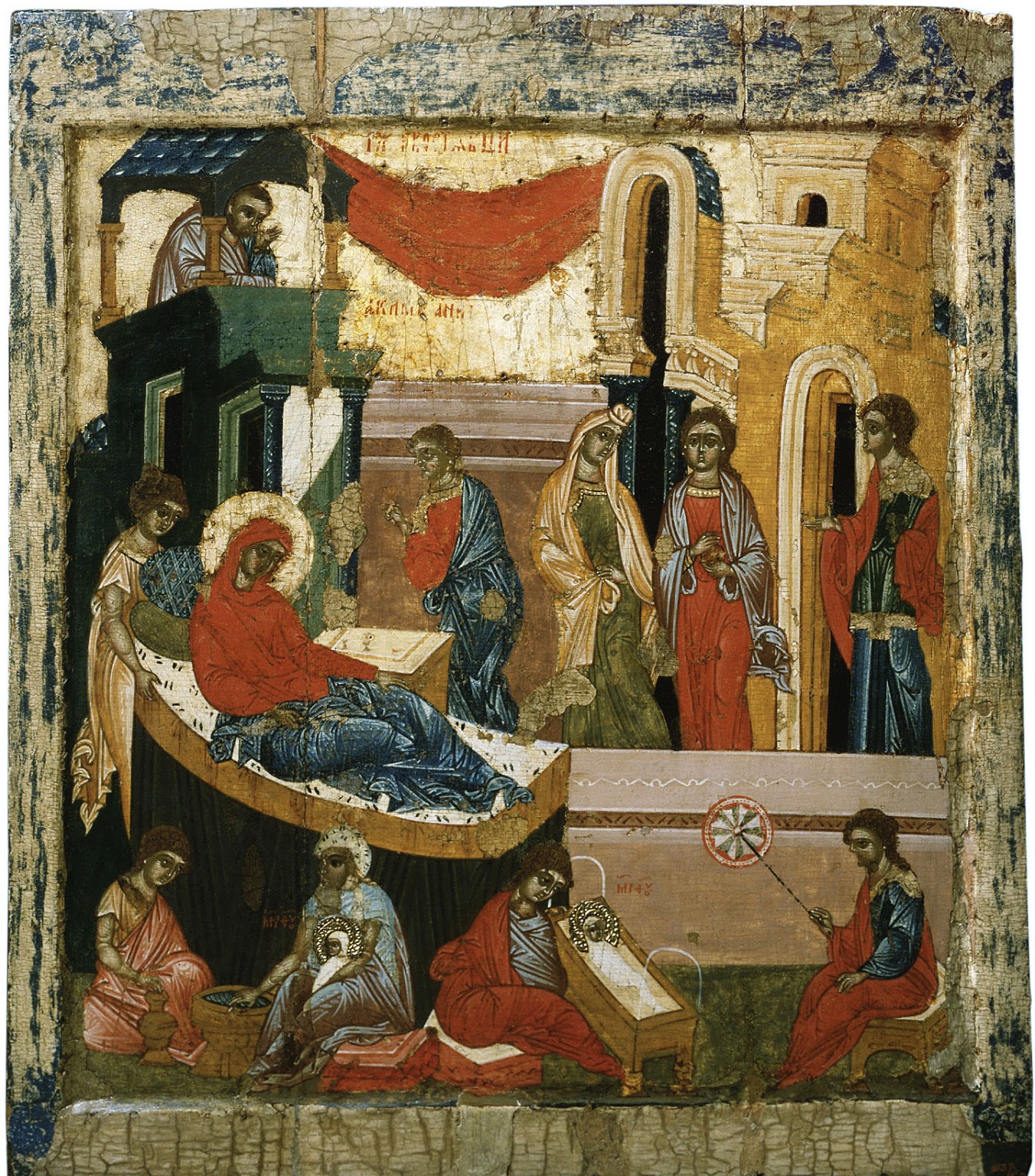
Nativity of Mary

Reflection: Nativity of our Most Holy Lady Theotokos and Ever-Virgin Mary
Podcast: Church of the Unfading Flower Icon of the Mother of God

September 8 (September 21, N.S.) Gentle Woman

Download Podcast: "Gentle Woman"

Do we believe that God chose Ever-Virgin Mary to bear His Son, and that She instantly conformed to perfection as a Chosen Holy Vessel? This daughter of Anna and Joachim was formed within a living web of many people. And She had the freedom and power to choose from among countless choices, on all matters, at all hours, every day ..... as did her parents and grandparents. Formation is no simple thing, and the conditions for arriving to spiritual perfection also take place in a mixed, and often corrupt, world. We have read the Gospels. The lifeworld of the first century BC and the first century AD is no different from our own, at least where the vagaries of the heart are concerned.

The atmosphere surrounding the Theotokos from Her birth was that of humility and prayerfulness. Her parents Joachim and Anna were acquainted with lowliness and suffering.

The hour grows late. With each passing year the situation in Jerusalem grows worse as Judah becomes further deformed and disfigured by the adamantine stones of Babylonian law and stained with the blood of slaughtered animals ..... and upon the holy altar! The remedy must be the Incarnation: for God to become materially, organically, and intimately joined to the human lifeworld. For God's people have become lost to Him, a cataclysmic development declared by the Son as the purpose of His Incarnation:

"I was not sent except to the lost sheep of the house of Israel."   (Mt 15:24)

But first Jesus must find a fitting place to enter the narrative of the human story. For He, alone among the Persons of the Holy Trinity, has a feeling, suffering, and human nature, before all ages, and not God the Father, Who is impassable, nor the Holy Spirit, Who proceeds from the Father alone.)

Who knows how long He has searched for Joachim and Anna — this island of peace and faithfulness and lowliness in an ocean of human arrogance, pridefulness, grasping selfishness, and bruising competition? Indeed, it is their injuries, accepted in prayerfulness, which commends them above all. Russians call this holy suffering podvig, which is the nourishment giving growth to the soul. For if God is to be our model for human life — He will be the greatest human born of woman — He must needs enter an abode after His Own Heart.

Let us also prepare Him room in our lowly and prayerful hearts. Let us follow His commendable forebears. For in the time to come, we will not search far to be also despised and rejected and acquainted with grief. We will not have to scan the world for an opportunity to follow the Holy Ones. But the world will crowd in to revile us. All we need to do is be gentle, faithful, and long-suffering. This was the acceptable life of Abraham and Sarah, the acceptable heart of Joachim and Anna, and the humble obedience of their twelve-year-old Daughter through Whom the example of Divine Life was given once and for all ages — the Life and Mind of our Lord and God and Savior, Jesus Christ.


rich

Reflection: Church New Year
Podcast: Church of the Unfading Flower Icon of the Mother of God

September 1 (September 14, N.S.) Acceptable

Download Podcast: "Acceptable"

We gather at least once a week to reflect on our journey to the Kingdom of Heaven. This journey is all-encompassing. We turn away from our former, worldly lives, body and soul (Lu 18:22). We say that here we have no abiding home (Heb 13:14). We are strangers in a strange land (Exod 2:22). We follow our King Who had nowhere to lay His Head (Mt 8:20). Our only stable identity is the model for all human life: the God-man, Jesus of Nazareth. By His command, we are pilgrims and helpmates to one another. We encourage each other on the journey. We help each other through life's struggles and meet each other's material needs (Mt 25:31-46, Lu 10:25-38). We love one another. And by this we are known as His disciples (Jn 13:35).

The world sees the outward, physical aspects of our lives: our intentional poverty, our chastity, our obedience to our rule of life. But, mostly, the journey is an inward one. We realize that the Kingdom is an interior reality constantly coming about so long as we continue to follow. And we reflect together upon it. Should this deeply mindful life and faithfulness stop, then the Kingdom no longer comes ..... at least, not into our world here at the Hermitage.

These reflections are necessary as our DNA is necessary, for reflection is the means by way we breathe in the spiritus of the Comforter, the Helper, the Counselor. From the beginnings of the spiritual life, reflection was understood — by St. Anthony the Great, by St. Basil the Great — to be basic, as elemental as prayer.

Today, as we observe the Church New Year, the Church of St. Anthony and of St. Basil sets out a text for us to contemplate. We approach this contemplation reverently and in humility. Let us open this text together remembering that "the Word of God is living and powerful, and sharper than any two-edged sword, piercing even to the division of soul and spirit"     (Heb 4:12).


See Also:

Reflections from Church Year 2025-2026

Reflections from Church Year 2024-2025

Reflections from Church Year 2023-2024

Reflections from Church Year 2022-2023

Reflections from Church Year 2021-2022

Reflections from Church Year 2020-2021

Reflections from Church Year 2019-2020

Reflections from Church Year 2018-2019

Reflections from Church Year 2017-2018

Reflections from Church Year 2016-2017

Reflections from Church Year 2015-2016


Home