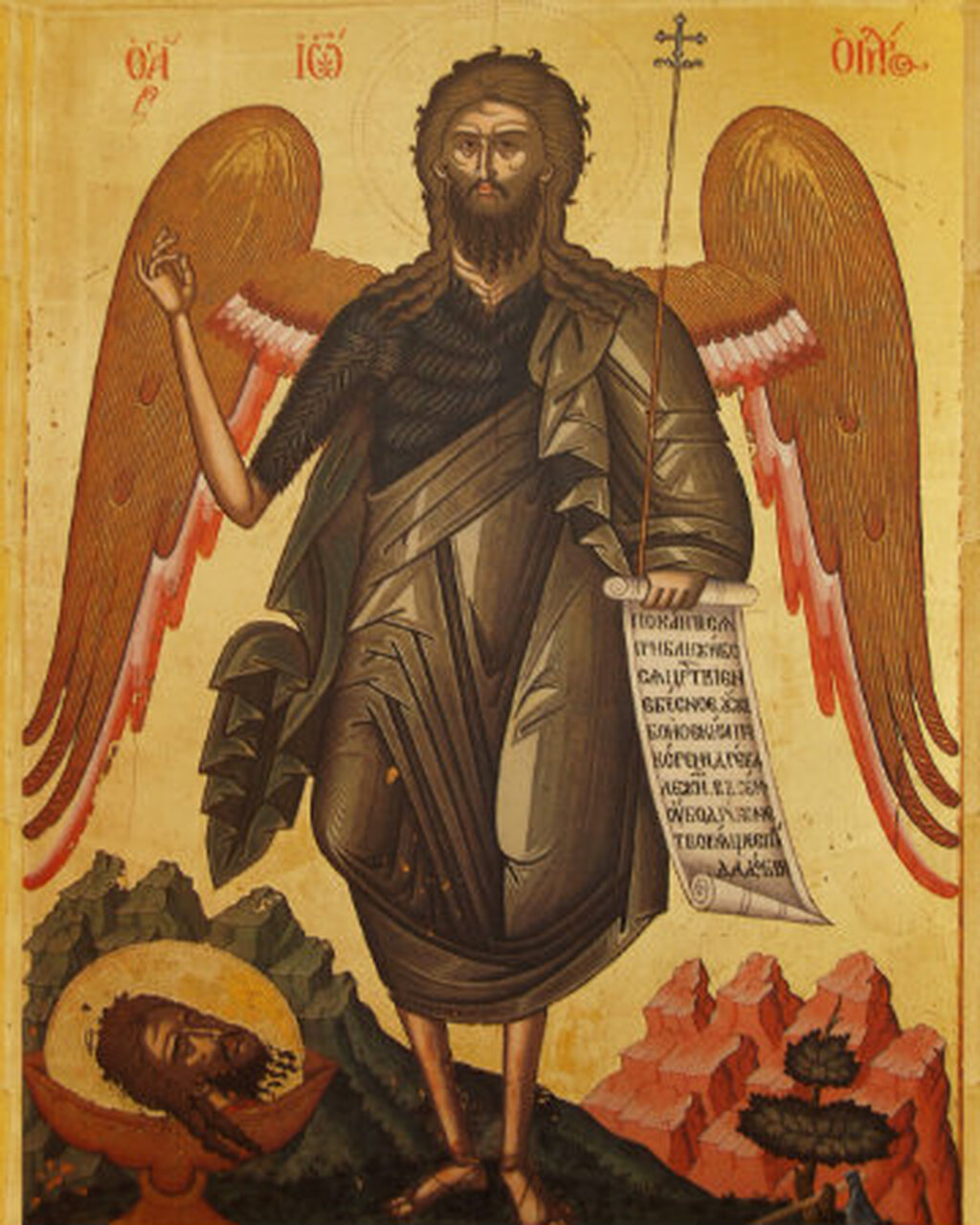
These are reflections from an Eastern Orthodox Hermitage. They are not intended for parish churches but are rather snapshots of the spiritual life as the hermits understand it. They are offered in friendship to those who also strive for Christian conversion. The words of St. Paul are constantly before us:
|
And do not be conformed to this world, but be transformed by the renewing of your mind,
that you may prove what is that good and acceptable and perfect will of God. (Rom 2:12) |
And we follow the teachings of St. John the Theologian, having little contact with the secular world, only to the extent of ministry and farm business. The hermits do not participate socially, are not registered to vote, nor does the Hermitage have radio, television, or newspapers. The few people who do visit (mostly nuns, monks, and clergy) seek peace and sanctuary from the fever of the world. The Hermitage Farm, an enclosure of eight acres, is set apart for prayer and agricultural labors. The lives of the hermits revolve around our temple, Church of the Unfading Flower Icon of the Mother of God, from which our podcasts are sent out into world.
Following the precedent of the pre-history Irish and Scottish saints, the Hermitage has retreated from the world. Like our forebears who eluded Roman influence, the Hermitage is situated on the edge of the earth (an island most remote from any major land mass); at the end of the day, nearly 180° from the prime meridian; and removed from the secular world by thirteen days, following the Holy Calendar of Jesus and the Apostles. Humbly following the example of our forebears, we practice monastic life, serious study, spiritual writing, and labors on a farm — all done in a desire to stay pure that we might approach the light of Christ and share it .... in our case by means of the internet.
Americans say they want life, liberty, and the pursuit of happiness. But without God, none of these things will be possible. Without God is only death, enslavement, and eternal regret. C. S. Lewis wrote that "Human history is the long terrible story of man trying to find something other than God which will make him happy."
We do not suggest that God penalizes us for straying from Him. His Heart is only to bless. He has always already predestined all to Heaven. But He has given us the precious gift of freedom, which equates to sovereignty over our lives. We have the final say. The destinations we choose are of our own devising. Freely, we may reject Him and His marvelous world of holy life, which is the Kingdom of Heaven. Many have rejected Him. The place of willful separation from the Family for which we were all born is called Hell.
What is the next thing people do when they encounter God?
They seek to learn, to be guided, to compare notes.
This is our ministry:
to meet with these many brothers and sisters in Christ,
and
to offer guidance,
to offer learning,
and
to assure them that the unbelievable things they have seen and heard are to be believed,
Download Podcast: "HeavenlyPart"
We sometimes encounter jewel-like passages with transcendent meaning condensed into few words with diamond-like hardness. Such a passage we read this morning.
At Herod's revels the principal offenses against Heaven are compact into one evening's entertainment: rebellion in Paradise (Gen 3) as the man of Eden is overthrown; "the intent of the thoughts of man was only evil continually" (Gen 6:5) as a general lasciviousness descends; father-drunkenness and mother-incest in Noah's family (Gen 9:21-25) as Herod grasps at union with his niece and sister-in-law; father-drunkenness and daughter-incest of Lot's family (Gen 19:32-34) as Herod lusts for his step-daughter; and the disfiguration and murder of the greatest prophet born of man and woman, which we observe today. The culmination of all at a single banquet reaches down into man's darkest imaginings and enshrines them in one tableau.
The phrase capital punishment falls on our ears with a harsh sound. It literally means "removal of the head." For the words capital and decapitation share the same root: from the Greek κεπηαλή / kephalé. Removal of the head represents the most humane way to take a human life. In Medieval and Renaissance England, beheading was reserved for the aristocracy and nobility.
Why should this graphic act so disturb us? We are traumatized at the thought of decapitation. And this is right. For in which other execution do we see our Heavenly part separated from our animal bodies? The Greeks, following Aristotle, believed that man's upright posture revealed his essential divinity. The head is the highest, most noble part. The eyes are the windows to the soul, a premise obviously attested in Jesus' teaching,
|
"The lamp of the body is the eye.
If therefore your eye is good, your whole body will be full of light." (Mt 6:22) |
When we think of ourselves as bearing the image of God, do we think of our feet or our legs or our arms or our hands? No, of course not. We instantly surmise that the head possesses this noble, even Divine, bearing. As the Scriptures record (Exod 34:35) and experience teaches, it is the radiant face which evinces the indwelling of God.
Download Podcast: "Interior_Garden"
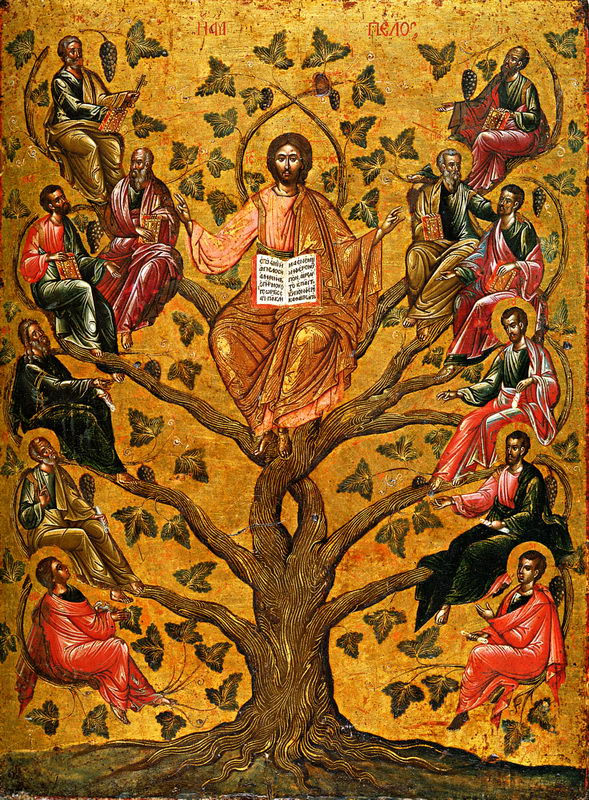
How does one cultivate the interior garden? I say cultivate, for it is already established in each of us from the time of our childhood. It is a goodly place. Its many fragrances are etched upon our souls: the smell of a pine forest, a meadow at dawn covered with dew, the roaring sea under gray skies, freshets and cataracts in remote valleys, heavy snowfall in the woods, even the smell of freshly mown lawns on a Saturday morning and the clarity and sharp outline of every leaf. All of this and much more is still there, but do we perceive it with the same immediacy, the same face-to-face simplicity?
Undeniably, we have been distanced. But how was our joy taken from us? Little by little it disappeared ..... or rather we disappeared from its midst. Our minds were drawn elsewhere. Our egos became known to us. And, as it turned out, the demands of that new world of self-absorption and competition and personal desire took all of the oxygen of our lives. And in proportion, the way back into the selfless world of joy and beauty was lost.
Perhaps here is a clue to that great riddle: the loss of those thousands-and-millions of acres of unspeakable beauty we call Eden, — un-self-conscious, ego-less Eden, for ego and self-awareness and selfish desire had no place here ..... until it did:
| And God said, "Who told you that you were naked?" (Gen 3:11) |
Upon the threshold of the Lord's departure from our lost world, He said,
| "Assuredly, I say to you, today you will be with Me in Paradise." (Lu 23:43) |
What is the golden thread that connects this beginning to its culmination and end? Let us explore this thread, for it is our story, too, and the story of our salvation.
Download Podcast: "Who Then Can Be Saved?"
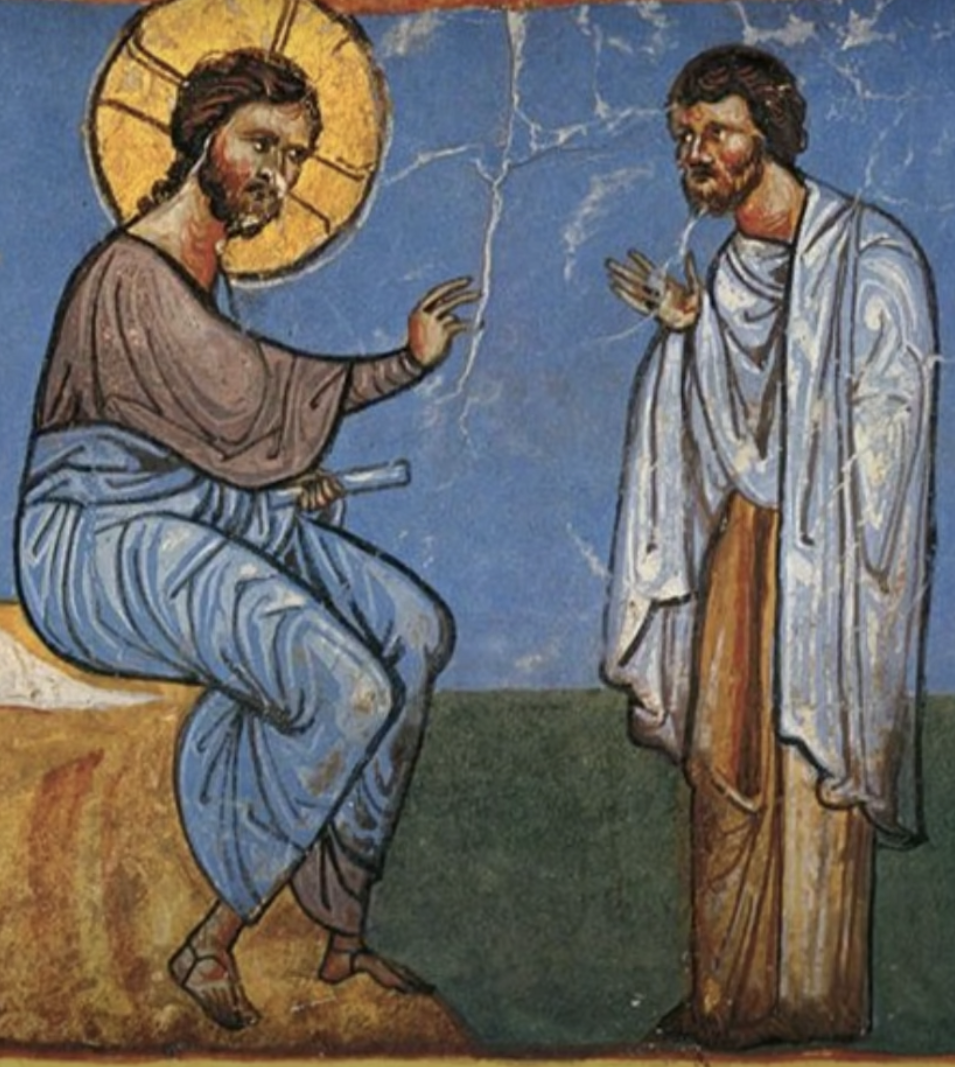
Are you acquainted with rich people? — perhaps relatives, friends, or acquaintances you deeply care about. "But who are the rich?" someone may ask. Before we answer that question, it is well to consider the whole world. God does. Paul Farmer, MD said, "If I could just capture the money Americans spend grooming their pets, I could solve every problem In Haiti." 800 million people go to bed on the edge of starvation every night. Half the world's population lives on about $2 a day. 80% live on less than $10 a day. "But what do these people have to to do with us?" another may ask. Jesus would say, "Everything." And the Gospels attest this hard truth eveywhere.
A very great question is asked in this morning's Gospel lesson: "Who then can be saved?" It is a question that haunts us. And we cling to Jesus' mysterious answer: "With men this is impossible, but with God all things are possible" (Mt 19:26). We cling to these words, for our salvation lies in them ..... or at least the salvation of those we love deeply.
Download Podcast: "Who Then Can Be Saved?"
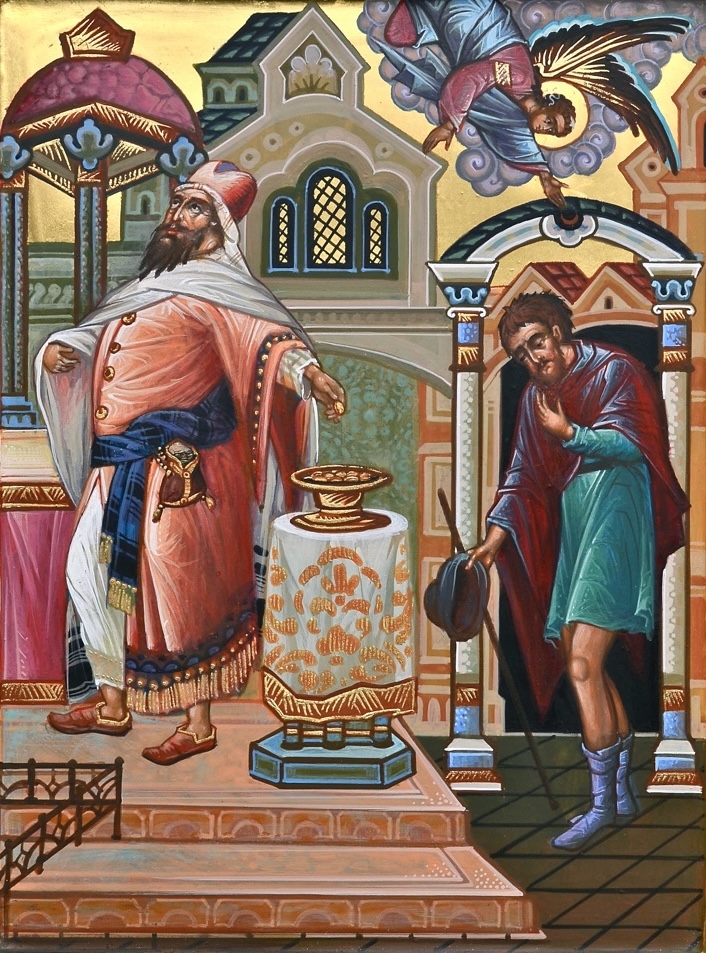
And having heard Jesus' pronouncements, "Woe to you who are rich!" (Lu 6:24) and, this just morning, "For it is easier for a camel to go through the eye of a needle than for a rich man to enter the kingdom of God” (Lu 18:25), let us reflect on a curiosity: a poor man who postures as the rich and a rich man who profoundly regrets his riches. For we cling to Jesus' statement, "The things which are impossible with men are possible with God" (Lu 18:27). What does this mean? For our eternal lives hang in the balance.
Download Podcast: "Family"
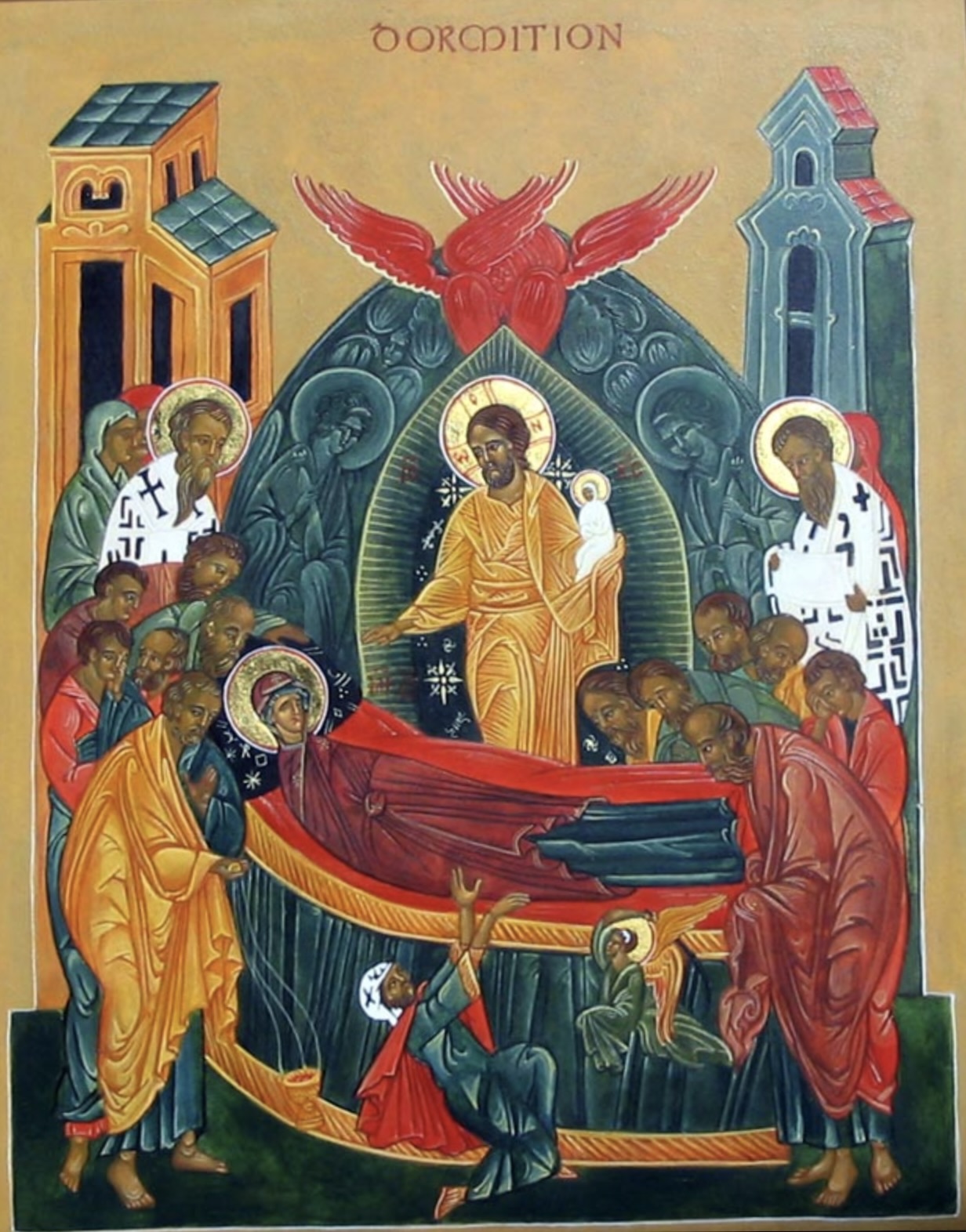
Today we participate in a great feast: the Dormition of the Most Holy Theotokos. From all over the world, disciples rushed to Her bedside (including one whose relics repose in our Altar). We also must take our humble places near to Her, not distanced in any way, for She is our Mother, and we are Her children each of us the apple of Her eye. This was Her Son's Divine command issued from the Holy Cross: "Behold, your Mother" (Jn 19:27). Such is God's manifest will for us. Does this seem odd? If so, then consider Her Divine title: Mother of God, a mind-bending concept. We cannot comprehend it: the Woman Who gave birth to One more expansive than the universe. Our ancient forebears, the first Orthodox Christians in the West (more than a thousand years before the Baptism of Holy Rus'), imagined Her singing at the Nativity:
|
King of kings, Most Holy One,
God and Son, Eternal One, You are my God and helpless Son, High Ruler of mankind. ("Christ-child Lullaby," Trad. Hebrides carol) |
With our acceptance of this Divine Mystery, perhaps we can now fully own Jesus' teaching that we are daughthers and sons of God, to Whom we might cry, "Abba, Father" (Rom 8:15). This is the great revelation disclosed by the perfect prayer: "My Father, Which art in Heaven" (Mt 6:9). Yes, the Greek text from St. Matthew's Gospel reads, "My," not "Our," for personal, individual intimacy between child and Father is the essence of this prayer, perhaps the greatest lesson which Jesus teaches, in which lies our salvation. For the way we are received into this Kingdom of Love is through family. Here is the easy and natural way to honor Jesus' two cardinal teachings, which we call the Two Great Commandments. Above all, we are to love God, Who is our Father-Mother from the time we are helpless infants. And we are to love our siblings as we love ourselves. This love is as natural as the air we breathe.
Download Podcast: "Unbounded"
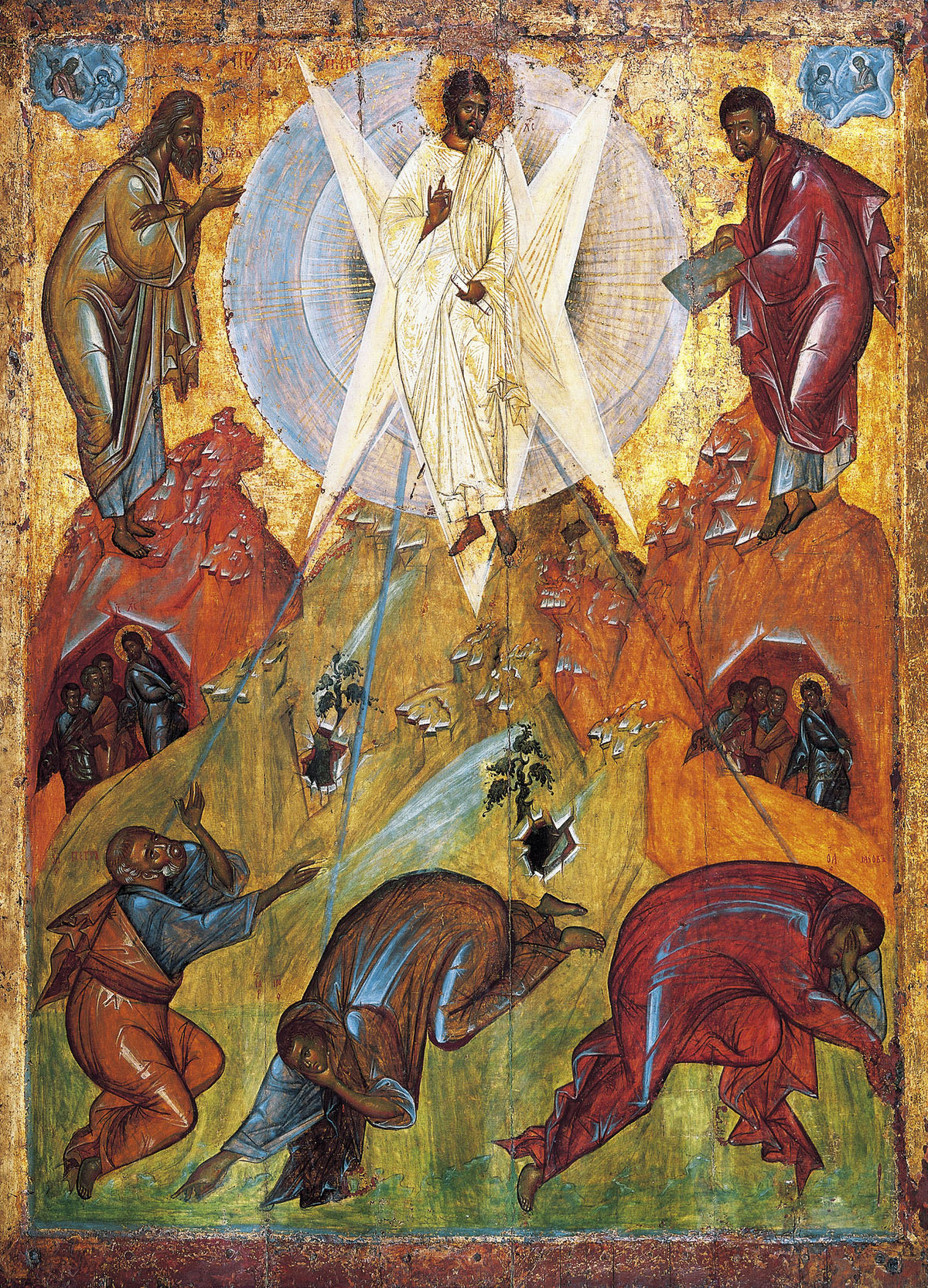
This morning, we stay with our theme, brilliantly revealed on the Mount of Transfiguration, of encountering the Divine One. In today's lesson God's Son hears our petty concerns and then takes us instantly above the clouds, scaling a Mount of Transfiguration which is our own. Perhaps I should say "scaling up," for Jesus stretches our worldly values and expectations past recognition.
We know the story: how Peter claims spiritual perfection by showcasing his willingness to forgive a brother who has sinned against him even seven times. After all, seven is the Divine number, signifying absolute completeness, for in seven days God created the Heavens and the earth and then rested on Seventh Day. But Jesus responds by blowing up this imagined fullness, multiplying it by seventy, which, St. John Chrysostom writes, signifies the "infinite and perpetual and for ever" (Homily LXI).
We enter a world defined purely in economic terms. The unforgiving slave is in debt to the king. The second slave is in debt to his peer. Their family members are inescapably part of the calculus. We might say that a history book of this little world, as it is presented to us, could be written as entries in a ledger. Factual. Uncomplicated. A matter of arithmetic.
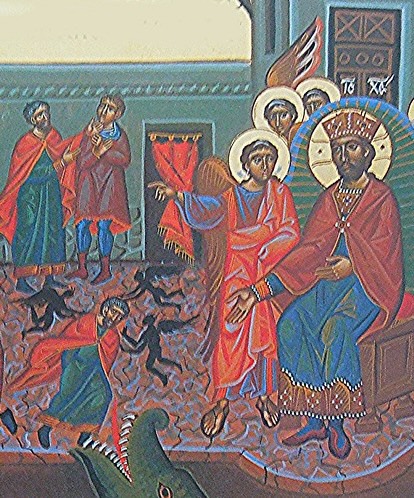
But then a detail is mentioned which superabundantly expands this world beyond recognition, bursting all boundaries, where all ledgers must fail: the king's slave owes him 10,000 talents of gold. While several different formulae might be applied to this problem, none of them really matter. For 10,000 talents is roughly a quarter-trillion dollars in today's money. As one commentator has said, such a sum would have exceeded all money in circulation in the Roman Province of Judea. With this one detail, Jesus has moved the reckoning of accounts upward by many orders of magnitude. Indeed, we are silent in the presence of this stupendous sum, which John Chrysostom rightly calls "the infinite."
What can we about this King? What He is doing here Who is so far above our scale and scope? And what does this say about the Kingdom of Heaven?
Download Podcast: "Who Then Is This?"
His approach was like that of an emperor, yet more than an emperor. The advance of a great sovereign was always preceded by royal heralds to prepare the people to behold his greatness. But His royal heralds were not well-spoken men in soft clothes. They were an Archangel and the Law and Prophets. His birth was attended not by legates from neighboring kingdoms but rather "star-led wizards" (to borrow Milton's phrase) bearing most precious gifts. Hovering above His arrival were ranks of angels with heavenly music ineffably filling the cold night air with its ethereal magic. Even the changeless, predictable motions of the firmament were altered that a miraculous star might burn in the night down on a spot of earth — where God had entered the human lifeworld.
We say He was transfigured. But can we say that He was changed? Can we say that He was altered in any essential aspect of His splendid Person? Is it not we who draw near to Him who are transfigured and purified so as to see all things aright? And even then, when the filth of the world has been stripped off of us, can we say that this was us? We no more believe that than we believe that a sickness now parted from us had defined our essential persons.
The Mount of Transfiguration is forever the journey toward our essential selves. Anything else is error and what was not to be. But today we set our gaze on the One Who Is. He has invited us into One-ness with Him. And in that One-ness only the real and the good and the abiding are. He is the Holy One, the One-Who-Is-Coming-into-the-World, the Only Truth. Glory to God in His Only-begotten Son! Glory to God!
Download Podcast: "Half-hearted"
Our subject, presented by the Gospel of St. Matthew these past three weeks, is half-heartedness. In passing, this may sound like a momentary flaw in an otherwise noble character, or perhaps an occasion for giving someone an encouraging word. But we would be misled.
On the contrary, these Gospel passages contemplate nothing less than the "human problem" as God has been confronted with it since Eden: the cause of the loss of the House of Israel, the occasion for the Incarnation, and the great challenge of our time and until the Last Things.
We wander in a duststorm of untruth. Our constant habit is to trivialize the Divine. And we bravely scoff, when we should kneel in humility.
This week, Jesus calls to mind His Own Divine Visitation among us. He shows us the limits of His patience. And He presents us with that greatest gift, which is to speak plainly and directly to us.
We must be ever mindful: God's very element is love. He is a Society of Love within Himself. He created us, fashioning our every detail, in an act of unimaginable love. And the place where we meet Him, inevitably, must be love.
You see, the great task of our lives is to requite that love with which He has loved us. Are we not taught this within the prism of our lives in our relationship with our parents, who sacrificed everything for us, who set aside their own lives in order that we my go forward, who wept for us and denied themselves for us ..... how can we begin to requite that love?! And how much greater is the love of our God, Who numbers the hairs on our heads and Who ponders our every next word and deed. He has given us the experience of transcendent love to teach us love's ways.
Have you ever given the fullest measure of your sacred love? Have you ever fully opened your heart, stretching every sinew and spiritual nerve? To have done so is to have known greatness. And if this greatness of heart and soul should be met with indifference, even half-heartedness, then you have learned a holy wisdom. You have taken your first step in empathy toward our Father Who is in Heaven. Standing on this sacred ground, remove your shoes and begin this holy journey into the Fire of Love, which is our God.
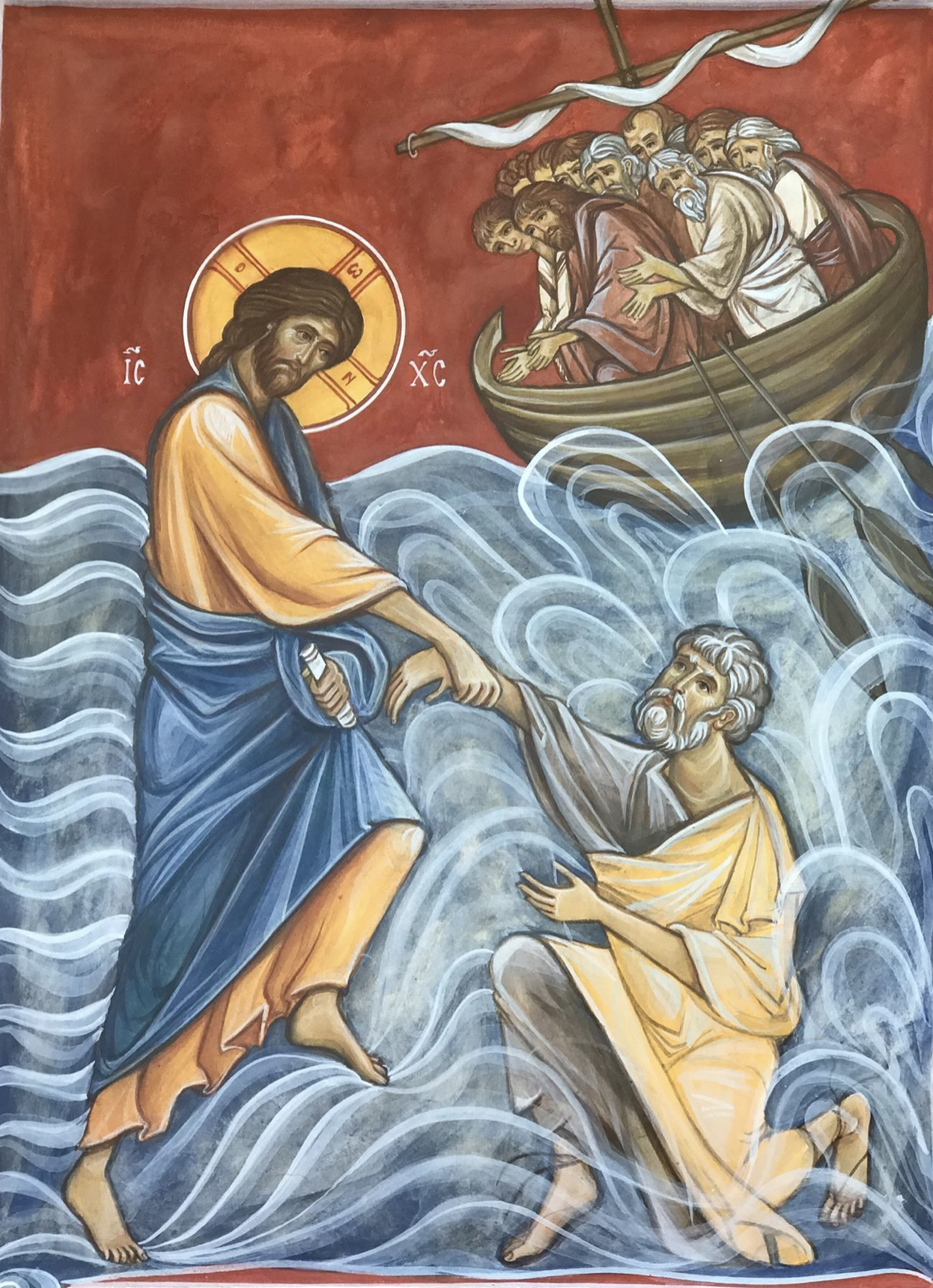
Mastery of chaos is basic. This is not only how God begins, but what we must do in order to to "come in" with Him and "to sup with Him" (Rev 3:20).
In seminary I read the words of a nameless Russian Orthodox monk, and they have never left me:
| Outside of prayer lies only madness. |
I took this to mean that our only sanity lies in the mindful life rooted in prayer. Since that time I have come to understand that the madness lies in our restless seeking after identities, even inventing them, while our only real and stable identity can only be one: a child of God, seeking one-ness with the Father, sent for and saved by the Son, and guided by the Holy Spirit.
What are examples of the chaos in our lives to be mastered? Do we begin a drive by turning on the radio? When we get home with the groceries, do we instantly turn on the television? Do we live habitually seeking distraction, checking our smartphones every few minutes? All of these things are a pushing away of the Divine and a rejection of God.
We should view each drive as an opportunity to be alone with God for prayer or meditation. The groceries are always a time for giving thanks for the myriad miracles springing up even out the ground. And smartphones? Scientists now view them as serotonin delivery systems carried by addicts seeking a constant fix.
Our lives are intended for one-ness with God. But we will have nothing worthy to say if we have not prepared for our supper with Him. Indeed, we may be removed from the feast because our wedding garment is not right (Mt 22:11-12).
We must empty ourselves of the garbage-culture. It proposes ridiculous ideas such as living a life of constant distraction, inflaming our passions with disfigured imaginations, filling up our bodies and minds with vileness until we draw our last breath, at which moment we are instantly plucked into Heaven. At least, that is the trend of conversation I hear at every memorial service I attend.
Master the chaos! This is the Divine command. Walk on the unruly waters as a whole nation once trod through the Red Sea.
And if He should later declare, disconsolately, that we have little faith, then we must examine our lives to see how little our faith-life is. At the very least, our preparations for the journey into faithful life begins by throwing out the television, turning off the radio, and folding a flip phone into our pocket. For, otherwise, we will not hear Him knock. And, if we should progress that far, we will have nothing to say at supper, for to speak with Him is to share a common heart, a common will, and a common love.
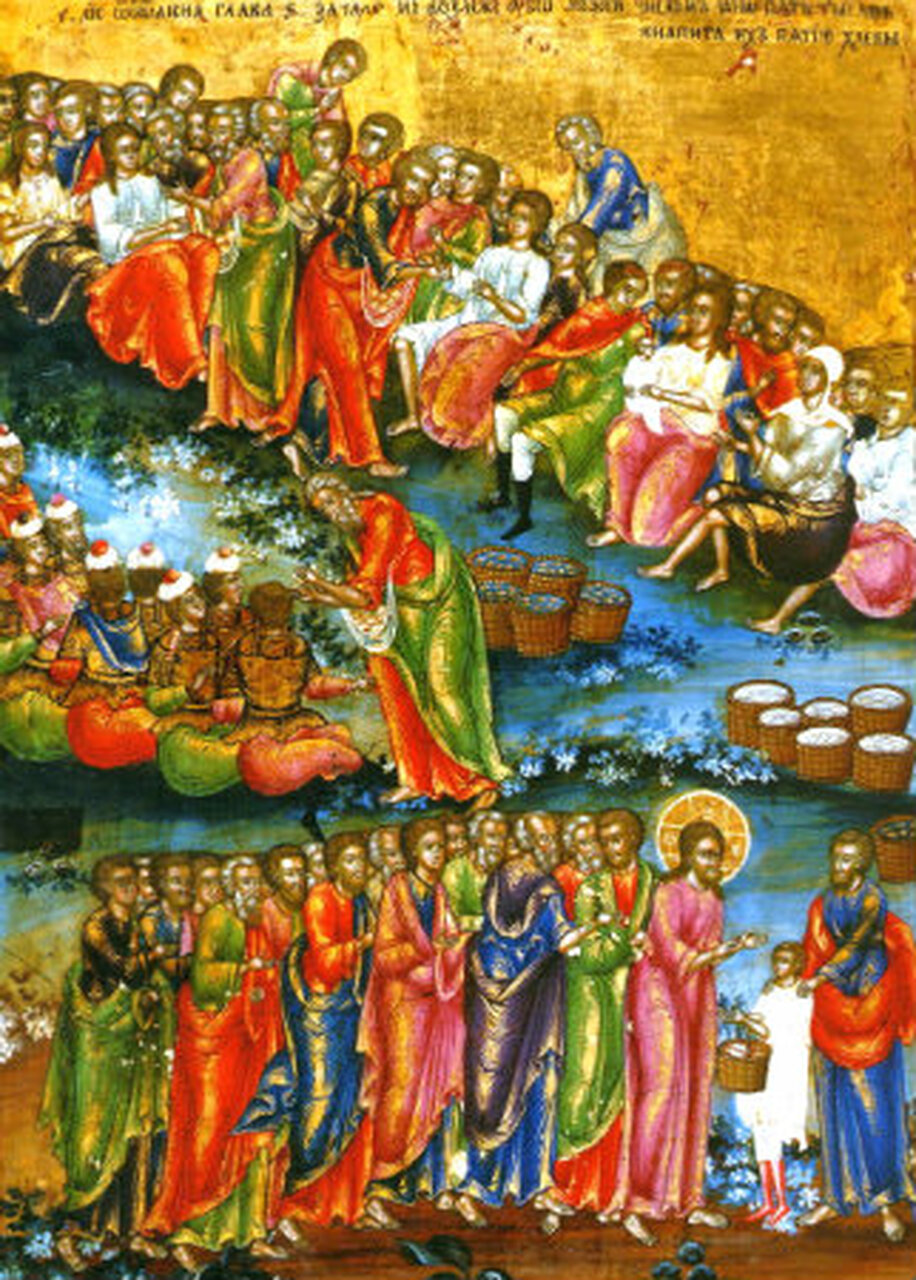
God has come making us aware of the greatest fact of our lives: the Kingdom of Heaven surrounds us, towering above all else with its royal splendor. And we have been called as royals! This is a high calling requiring self-mastery and due comportment.
Do you struggle with chaos? Do your passions have the upper hand? You cannot be an heir to the Kingdom if you are not even master of this chaos. We are made for Heaven. But we have abandoned our noble obligations if we tolerate chaos in the sacred precincts of our inner lives. We are born and raised up to face formidable foes. Shall we now be stymied by the ignoble and the trivial: darting thoughts or random impulses?
When we encounter God but choose the ways of man, we feed this chaos, and we unleash our passions as never before, ..... as Herod did. The result is depravity. And our end is assured: chained to the house of death and riddled with demons by the legion like the shattered forms in Gad.
He sent His Forerunner, the man of Eden, to change our course and be purified. He began His royal progress through the winding streets and byways of humanity with the same proclamation: "Metanoeite!" Then He commanded us, "Take up your crosses and follow Me." He said, "No greater love hath anyone than to lay down one's life for a friend." He said, "The one who seeks his own life will lose it!" If we do not follow Him in this cruciform-shaped life, then we have rejected Divine life. If we do not lay down our lives for the benefit of others, if we do not enter the journey of becoming Him, we have squandered a priceless possession. And, then, later, when we hear Him say to us, "Lord, Lord, you call Me Lord! I say that I never knew you! Depart from Me, ye evil-doers!" are we not silenced by the truth of His words.
Here is the famous crossroads. Here are "the two ways." Turn to the right. For life in this world is brief and treacherous, and the demons always laugh at our stupidity in preferring the worthless and the ignoble. Choose life. Choose nobility. Choose God.
Download Podcast: "Every Kingdom"
We deceive ourselves in our dual focus — above, Heaven and below, earth. All is one. There is no reality other than God. His Goodness is the whole extent of the Creation. All else is rebellion against Goodness, whose multifarious forms we see around us, called perversion. This is not a question of multiple "cultures" nor of "cultural differences."
The good news is that the Divine Plan contemplates all people: "the kings of all the earth" and "the nations" stretching out in every direction as the Psalm 2 (written a thousand years before Jesus' birth) assures us. No one has been forgotten. And our God does not rest. His great love overflows every boundary until the last lost lamb has been found. Truly, "Heaven cannot hold Him / nor earth contain." This is all of Scripture. Not the story of a faithful people (we grieve to say) but the story of a faithful God.
Today, He receives two blind men representing all humankind. They cry out, "Son of David" invoking the Christ and the author of Psalm 2. Like them, we cannot see where we are going. We don't know who we really are. We are confused concerning the story of God. But if we believe, we who have not seen, then our soundness of sight will be restored. For He is Way ahead, the Truth in all things, and the Life everlasting. And we too might rejoice and go forward "spread[ing] the news about Him in all that country" (Mt 9:30).
Download Podcast: "Go and Learn What This Means"
Jesus will elaborately contrast the Patriarchs' religion of virtue and mercy with the abomination of bellowing bulls and slaughtered goats in His "Parable of the Good Samaritan," whose protagonist rejects the religion of sacrifice and exemplifies the religion of virtue and mercy.
Two thousand years later, nothing has changed. For our God is changeless and constant. He expects not rituals of blood or related theologies. He requires our faithfulness. He is not distant, but He appears to us. He calls to us in the night. He numbers the hairs on our heads. And He asks us the eternal question, "Who do you say that I AM?" We must reply. We must answer with our words and prayers and thoughts and conduct of life. That is, we must be like Him.
It will not do to point to His Crucifixion as a blood-sacrifice offered as atonement for our sins. This idea would have to wait for a thousand years to be invented. Remember, the Fathers saw the Gospels as an exposition about the Incarnation, not the Crucifixion. It is His Divine Life that saves, not His disfiguring death. And He commands that we exemplify His Life of virtue and mercy. This will mean a long and demanding road ahead. It will mean constant self-denial. It will mean a life committed to self-sacrifice as on the Jericho Road or wherever we find our neighbor in need. It will exhaust us, and no one will thank us .... but quite the opposite.
And it will cost us. It will cost us our upward mobility. It will cost us the leisure we had pictured in old age. It will cost us homes and cars and world travel. Finally, it will cost us our friends and family (Mt 10:37ff). But in the place of all these things we shall discover Friendship with the Son of God (Jn 15:15) and adoption by His Father (Mt 19:28-29). There is no other way to enter into their midst or to receive their royal welcome.
For this is the Divine command of our Lord and God: ".... go and learn what this means."
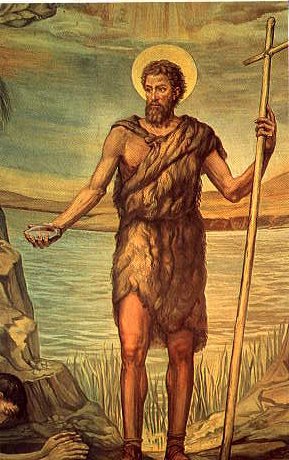
Download Podcast: "Highway for God"
Whatever became of the Persian-inspired blood-sacrifice religion practiced in Jerusalem? This cult, God literally wiped off the map of the world in 70 A.D. and turned it into field of rubble, once overseen by Sadducees, who rejected Heaven and the angels. They were never heard from again. Their world was reduced to dust and carried off by the four winds. Many Pharisees converted to the new Way (which had been the original Way). Those who did not convert and who escaped the general destruction of Judah took with them a kernel of their faith world. They would become the Rabbinic Judaism we know today.
But the mainstream — the thousands and tens of thousands — who followed the Apostles would prosper. The Gospel According to St. Mark closes with God's success in hand:
|
And they went out and preached everywhere, the Lord working with
them and confirming the word through the accompanying signs. Amen. (Mk 16:20) |
God succeeded then as He succeeds now. And the Way of the Patriarchs, the Way of relationship and conversation with God, the Way of Bread and Wine in the tradition of Melchizedek, the Way of God's own visitation to His beloved humans as at the Oaks of Mamre — all of this was to continue.
But whatever became of the Way of the ancient Hebrews? Who are the modern-day descendants of these people? They are us. We are those people. And we might say tersely after the style of St. Mark's Gospel, We are God's victory.
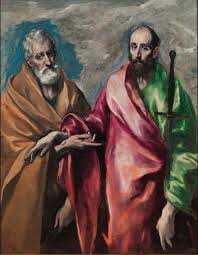
Download Podcast: "Cleaving Souls"
Peter and Paul. Oil and water. The keys that bind versus the sword of liberation. The importance of tradition versus the imperatives of a Gospel that calls us above and beyond the past. The old man who was set in his ways versus the mercurial, young man one who could be all things to all people. The cautious man who shied away from risk versus the bold gambler. The bartering fisherman who demanded his money versus the theology student who chased after God without counting the cost. The immovable Chair of St. Peter versus the restless man on horseback ... and in boats and trekking across continents on land and always peeling back and encountering and discovering in the endless process of conversion to Christ.
Come, let us contemplate these two men who, down to their genes, were cast to be implacable adversaries. One was called to leader of the Apostles; the other was not called at all. One reviled Judah-ism; the other came to revile it. Yet, they became a living paradox which would frame the broad borders of a world made for the people of God. Yet there is "still more room" at the Great Supper.
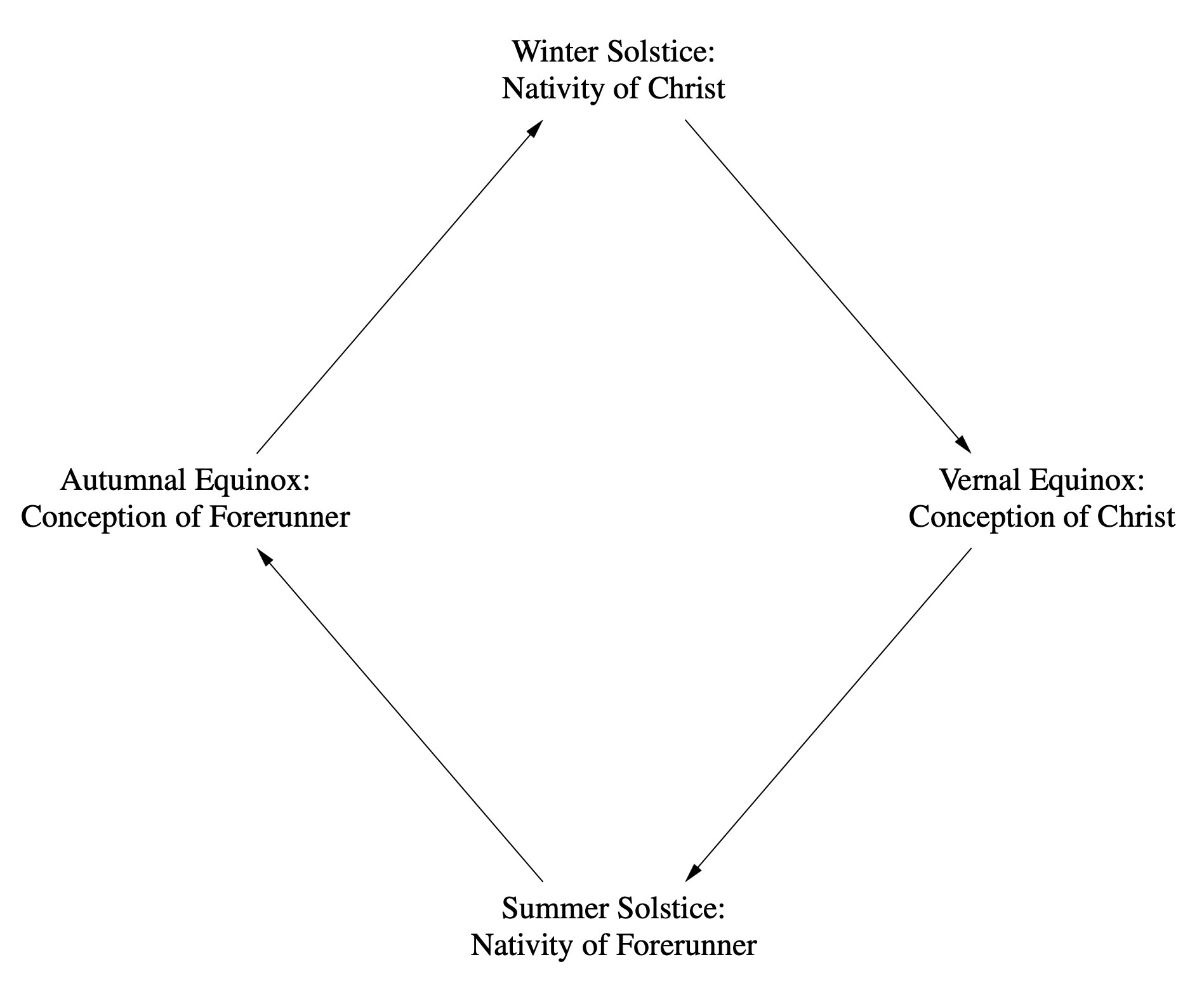
God fastened the Creation upon these four eternal pillars. For He knew that, in the fulness of time, the constant Will of His Son and the loyal will of His Forerunner would be faithful to His Own.
It is ironic, therefore, that St. John the Evangelist and St. John the Forerunner are remembered as being Jews — that most circumstantial and historically timebound among religious expressions. In fact, both men reviled Judah-ism, the invented religion that sought to usurp the eternal Hebrew lifeworld and overturn its holy practice and traditions. It is more ironic still that Jesus is remembered as being a Jew, but that is a topic that towers above and dwarfs today's simple note.
The name name John in Hebrew was Yochanan — a word in which God's Name, YHWH, is contained ("YHWH is gracious"). And both men acted boldly for the cause of YHWH. They, in fact, play the role of bookends for YHWH's pivotal act on earth — the Forerunner announcing its coming and the Theologian composing the Gospel crescendo, briefly outlining rules for Christian life, and describing the climax and of the earthly phase.
The principal feast of St. John the Forerunner is observed by the Russian Orthodox Church on January 7, as part of the Feast of Theophany (the Lord's Baptism).
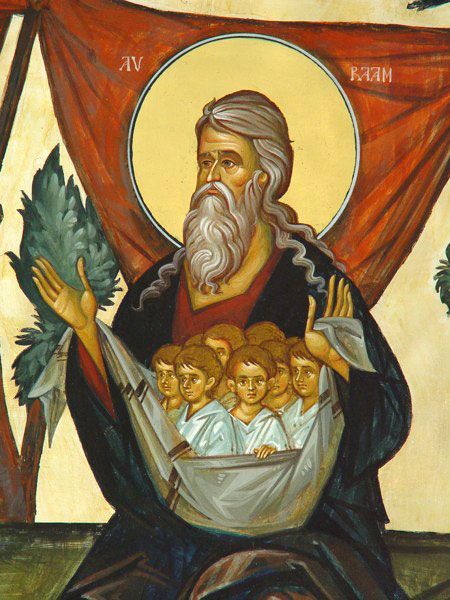
Download Podcast: "East and West"
It is said briefly, almost in passing:
|
.... many will come from east and west, and sit down with
Abraham, Isaac, and Jacob in the Kingdom of Heaven. (Mt 8:11) |
Where else in Scripture is so much revealed in so few words? And it is said to one whom we would call an "outsider" ..... which itself reveals much.
Come, let us explore this together. After all, the subject is our own salvation.
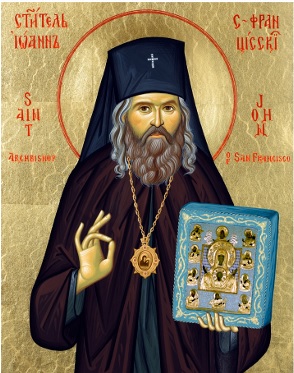
Download Podcast: "St. John the Wonderworker"
Enough people have asked me the same question that I can see that it is on most people's minds: How is it that the Hermitage has ended up in the Russian Orthodox Church? Our own attorney, who dropped us for this reason, put it more pointedly: "Why did you do that."
The question comes from several directions. Among people who were formed in the 1950s (as the Sisters and I were), the Russians were the enemy and undoubtedly evil. Bob Dylan captured it with one sentence: "I've learned to hate the Russians all through my whole life" ("With God on our Side," 1964). The leopard doesn't change his spots I am told. But I'll leave that question to others, pointing out that the Russian Orthodox Church Outside of Russia (who recently celebrated their centennial in this country) came to that conclusion — that the Soviet Union was evil — long before Americans did.
But this whole conversation is wrong-headed. For when one sets out to find God, it is not through a political calculus, it is not though social customs and their associated values, and certainly it is not through convenience. If the Gospels have one ringing message throughout its four volumes, it is this: God came into the world so we would know Who He Is and, its corollary, to know who we are. And while He was on earth, He taught us repeatedly that we must foresake the world in order to follow Him ..... through this earthly life and into Heaven. There is no other way. "Follow Me," He commanded.
Would you join us as we contemplate the great change in our lives as we celebrate the patron over all of it? Pray for us, Saint John the Wonderworker, for you are our eternal Spiritual Father and glorified Saint embracing an aching and needful world.
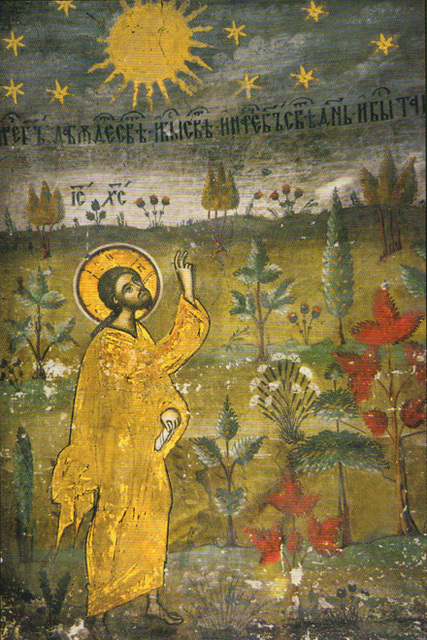
Download Podcast: "Lamp of the Body"
What rules your life? What dominates your thoughts? Are you a "Foodie"? Is your kitchen filled with all kinds of herbs and spices? Do you shop in the most select shops for cooking supplies?
Or perhaps wardrobe governs your thoughts. You fancy yourself well groomed seeking out the best tailoring from the finest materials and can't wait to appear in public.
This described the world which surrounded Jesus. Indeed, the first century marked the beginning of a frenzy that would persist for the next fifteen centuries — as spices from the Far East and that impossibly soft material, silk, arrived to Arabia and thence to the Levant.
But can silk match the "weave" of a flower petal? Jesus suggests. Is silk endowed with that gentle, pristine fragrance that always surprises? God surrounded His precious human creatures with unrivaled beauty because He wanted us to know that the Kingdom of Heaven is beautiful with a goodness that is God's alone.
Be careful where you direct your eyes, for they are the lamp of the body. And they were made for God's goodness alone.
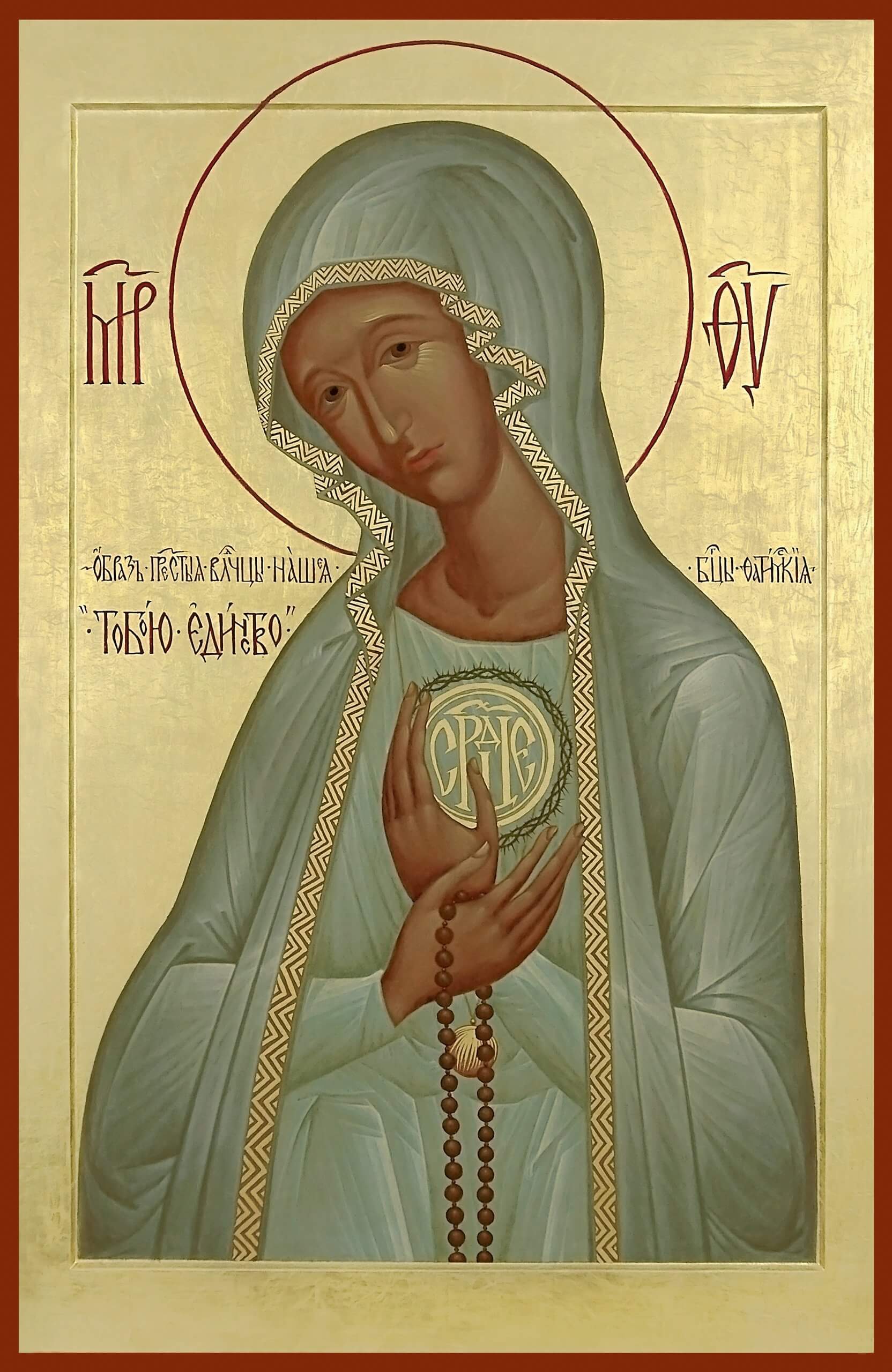
Download Podcast: "Consecration of Russia"
Today we commemorate All Russian Saints. No question, Russia, receiving her baptism in Kiev in 988, has a long history of red martyrs. But no period can compare to the many millions who died and suffered during the regime of the atheist colossus known as the Soviet Union (1917-1991).
Yet they would never be alone. No less as a Personage than the Mother of God appeared before 100,000 witnesses (including skepical reporters and photographers) and foresaw their devotion and martyrdom. She held up their consecration to Her heart — a land known for its longtime and intense devotion to the Most Holy Theotokos — as being of particular Divine importance. Only she knew that their faith would be consecrated in sacred blood. For Her final miracle was performed in Fátima on October 13, 1917. Twelve days later Bolsheviks led an uprising in St. Peterburg that would later be recognized as the inauguration of the Soviet Union.
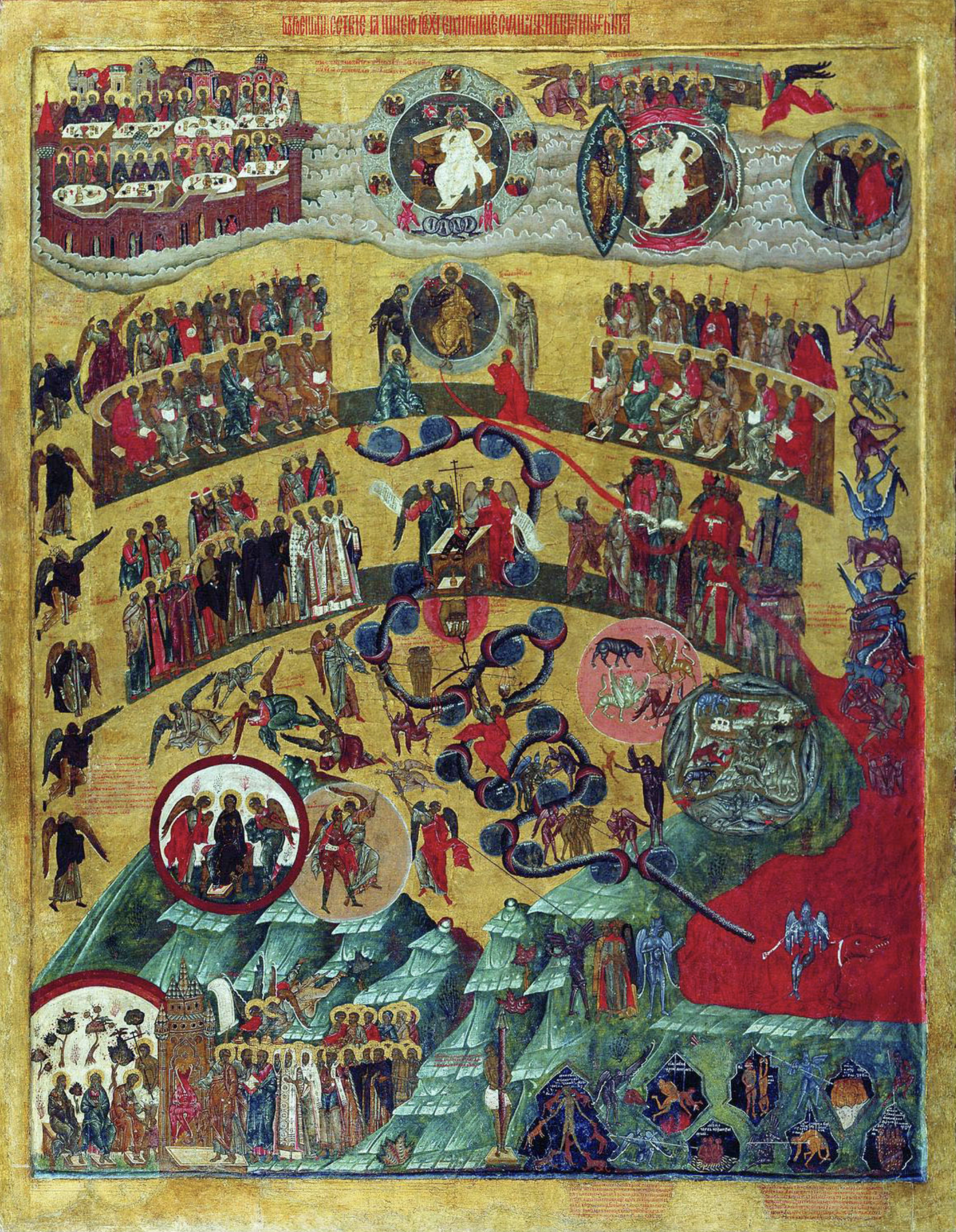
Download Podcast: "Great Chain of Being"
Today, we commemorate All Saints, so let us ask the question, What is a saint? What is saintly life both on earth and in Heaven? Much is revealed in the Gospel of St. Matthew, where we find those singular phrases, "the Kingdom of God" and "the Kingdom of Heaven" and in the Book of Revelation, where Jesus is depicted in the fullness of Kingly glory. For it turns out that being a saint is defined by our proper place in the Kingdom and by our individual relationship with the King. For to be in right relationship with the King is to be a saint. But that's not the term Jesus would use. He would call them royal, crowned with glory, and seated upon thrones.
I am obliged to say that I began this reflection well in advance of the "No Kings" riots currently sweeping the country. Therefore, I am equally obliged to observe that here on this Sunday I am humbled by the sovereign power of Divine timing, which cannot resisted nor refused. For God alone is the First Word, and He is the Final Word.
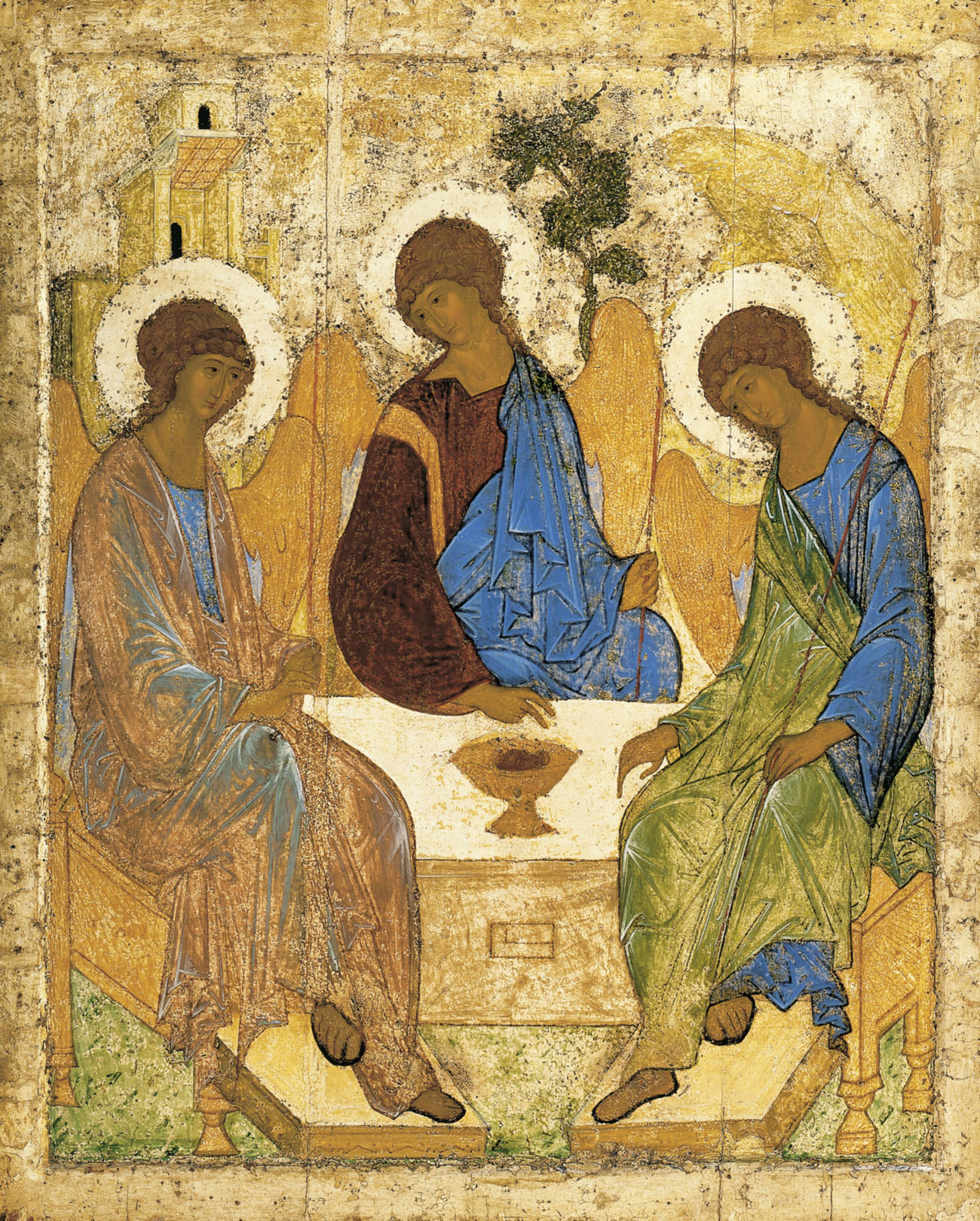
Download Podcast: "Humble Heaven"
| I have said, "Ye are gods; and all of you children of the Most High." (Ps 81/82:6) |
And in revealing our permanence to us, God reminds us of the high dignity of our persons, which had been taught by the Psalmist:
|
What is man that You are mindful of him,
And the son of man that You visit him? For You have made him a little lower than the angels, And You have crowned him with glory and honor. (Ps 8:4-5) |
Make no mistake about it: our home is Heaven. We were created with the Essence and in the Image of God, and like our Creator, the Logos, we are fully human and fully Divine. In a statement that is both a horrible sentence pronounced and good news proclaimed upon the mountains: we shall never die. The question has never been whether there is life after death, but rather where. For it turns out that what we have wanted every day of lives, the sum of all our desires and daydreams, is what we will have unto ages of ages: a world of light, of pristine and ever-fresh goodness or a world of loss: of lost chances, of incurable diseases, and of eternal death.
Those who wanted to "be in touch with their inner animal" have retained their hoggish minds in a grotesque eternity where the decency they mocked is nowhere to be found. And those who have requited God's kind of love in all its beautiful humility have united with God in His humble Heaven.
I say humble Heaven, where the saints abide whose thoughts and prayers continue to descend for our sakes, where the angels who look upon the face of God continue to guide and protect us, and whose God lovingly numbers the hairs on our heads. And the gift of the Holy Spirit, which betokens God-with-us at every moment, represents the ultimate humbleness and solicitude of God.
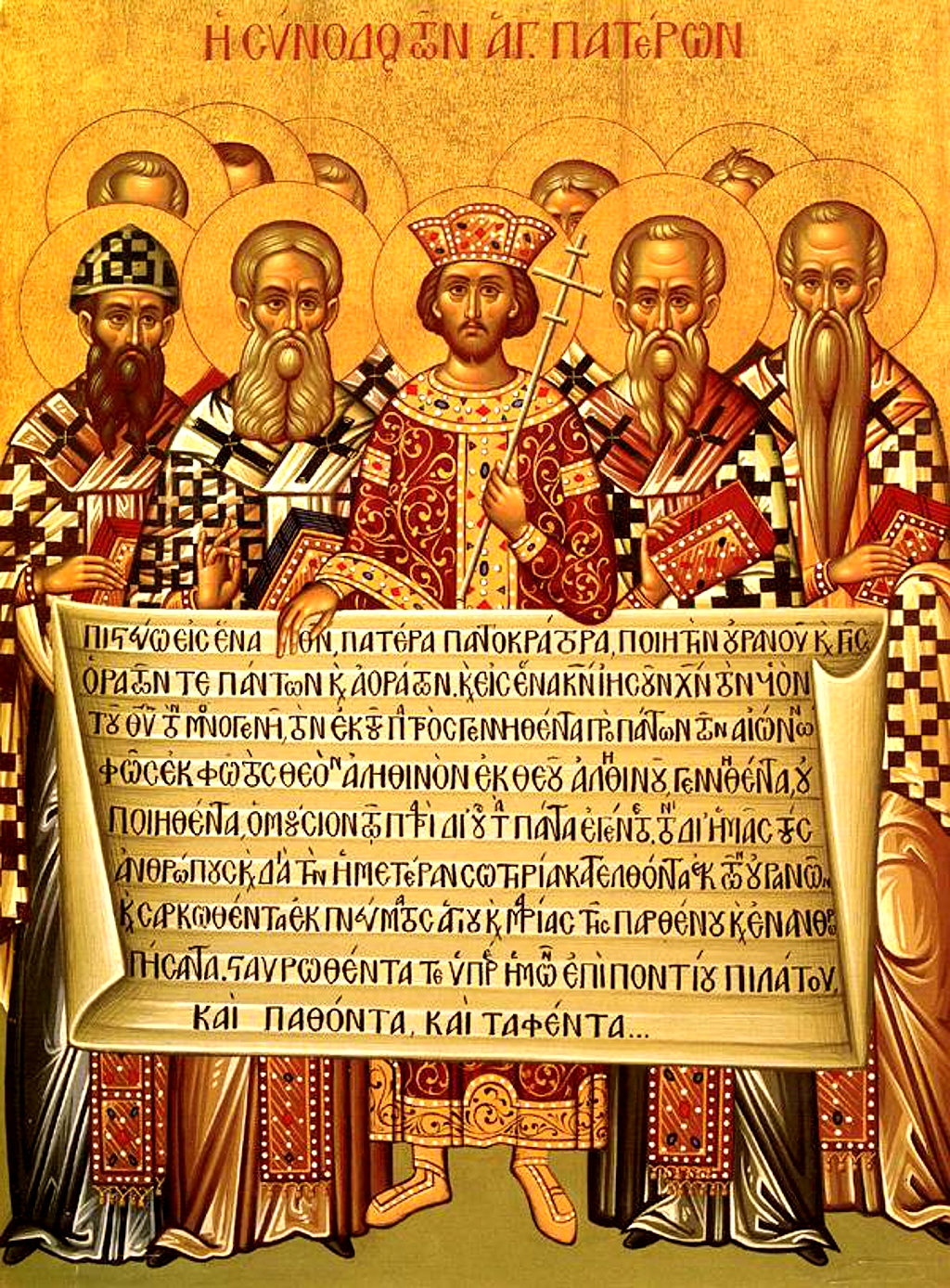
Download Podcast: "This Rock"
"I do not pray for the world
but for those whom You have given Me,
And all Mine are Yours, and Yours are Mine,
and I am glorified in them." (Jn 17:9-10)
Today we celebrate a kind of birthday of the Holy Orthodox Catholic Church. For the First Ecumenical Council represents the first meeting of all bishops in a universal council formally accepting the the Friendship of God. It is ironic that it should be convoked by an emperor, for to confirm oneself in the Church means a turning away from the world. That is not a theological proposition but rather a plain fact: the Rite of Baptism marks our entrance into Church, the moment our membership becomes real. And the vows of Baptism include a repudiation of the world.
In our rush to pray for the world, in evident opposition to the final teachings of the Lord Jesus Christ, these two sentences have been obscured by habitual neglect to the point we no longer see them, indeed, find them alien.
Yes, I am familiar with the Beatitudes and, in particular, these words of the Master:
.... pray for those who spitefully use you and persecute you,
that you may be sons of your Father in Heaven. (Mt 5:44-45)
But I point out that the first clause of this sentence, which is in the stark imperative mood, has naturally eclipsed the second clause, which is in the elusive subjunctive mood. "Do this ..... that a great wish be fulfilled."
As we have contemplated together, the Beatitudes are the "Proverbs of Heaven." Anyone who commits himself to live by them will either be forced to admit that it cannot be done or perseveres until they destroy him. For example, Francis of Assisi lived the Beatitudes boldly and with exactitude until they used him up, dying with the wounds of Christ etched upon his body at about age 33. The preeminent and universal Example, of course, is the Fool on the Hill, Who was obedient to the Proverbs of Heaven unto death on Cross.
Let us explore the deeper meaning of what it means to accept the Friendship of God.
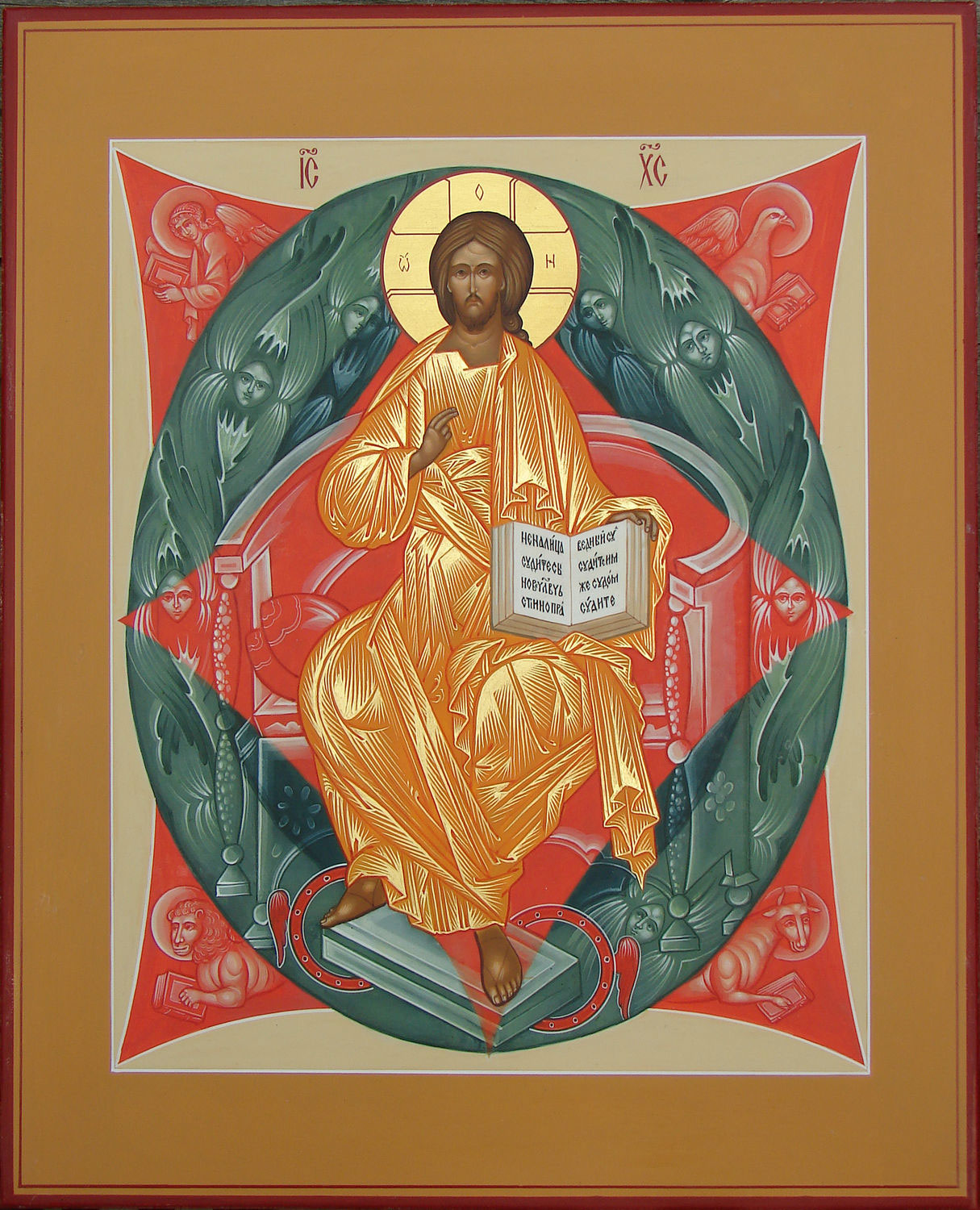
Download Podcast: "A Mysterious Kingship"
What sort of Kingship is this which Jesus teaches? As His angels do, it ascends and descends. It is Heaven itself stooping to the lowest and most reviled places. And it is an exaltation of the low to the highest heights. The Disciples are to sit upon thrones, yet they are not lord over anyone. And the Exemplar, our Lord and God and Savior, is in the appearance of a despised beggar.
He made His Royal Progress from Heaven entering the gates of earth in a filthy hovel. And He returned to the Fullness of His Divinity from a cross fashioned to humiliate Him in every way possible. What sort of Kingship is this? It is the Kingship which alone is fit for the Courts of Heaven.
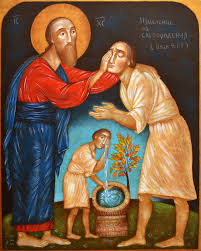
Download Podcast: "The Works of God"
We cannot really say that the man-born-blind is healed, for he never had sight in the first place. You cannot repair what was never broken. The more accurate adjective is not blind, but uncompleted. Jesus does not, therefore, utter the command, "Be healed!" as He does elsewhere. Rather, He renews the act of creation and completes His creature:
|
.... He spat on the ground, and made clay of the spittle,
and He anointed the eyes of the blind man with the clay ... |
My brothers and sisters, are you and I completed? Are we sufficiently unselfish to be declared "Finished!"? Is not unselfishness the unerring mark of the mature human creature? Conversely, is not immaturity revealed in self-centeredness, in headstrong egoism? Consider the counter-example. When we meet with a thoroughly unselfish child, a child whose cares are habitually on those around her, what do we say? "How mature! An old soul!"
The Gospels teach us that we are still in God's care. Jesus enjoins us to call Him "Father." Father is watching us, and His angels are always near. And what is our part in this marvelous loving, familial relationship? To grow up.
God sent His Only-begotten Son into the world to redeem us. And He does that through His Life — certainly not a bloody trade of His Most Holy Person for our lives, but a re-creation of ourselves and everyone to mature as we ought to. His life is the great Example. St. Athanasius wrote that the portrait of humanity had been defaced by our own hand. But who was left to sit for its restoration? God had to send His Son. He would sit for it.
He created us in the greatest act of love we shall ever know. And He continues to dote on us, to nurse the highest hopes for us, to encourage us to finish the course, and in the end to unite with Him. For He made us for this One-ness, as the Son and Father are One (Jn 17:22). And a selfish, headstrong, and egotistical man-child (or woman-child) is not fit company for God.
And this is the meaning of Scripture. This is the purpose of the Incarnation: that none should perish. And all might mature to the dignity of our Lord and God and Savior, Jesus Christ.
Download Podcast: "The True God"
Certainly, the first-century A.D. was the all-important century. God had entered His great Masterwork as a historical character, Jesus of Nazareth. But it was all-important, also, because humankind, God's highest creation made in His Own Image, was slipping away from Him. And this slipping away was not mere estrangement, but rather another marriage being brokered. It was upon this most urgent crisis that He sent His Son into the world: to which are associated these strange words:
|
For God so loved the world that He gave His only-begotten Son,
that whoever believes in Him should not perish but have everlasting life. (Jn 3:16) |
The key phrase here is believes in Him, which is the religious commitment of the heart and mind.
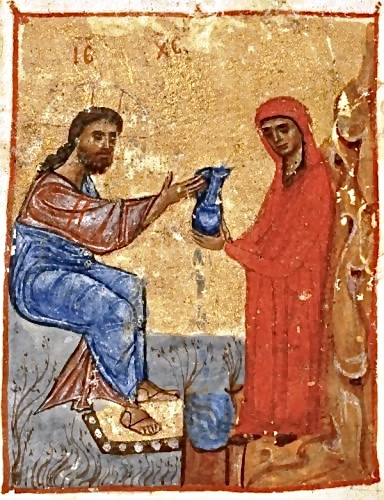
The confusion of the world (then and now) is voiced by the Samaritan woman. Once she realizes that Jesus is a Prophet, she instantly asks the one question that has been burning in her heart: "where ought one go to worship God" (Jn 4:20). Where or what finally is God?
Jesus replies with a startling answer, for there is no precedent in the religious experience of Israel to explain it:
|
"the hour is coming, and now is, when the true worshipers will worship the
Father in spirit and truth; for the Father is seeking such to worship Him. God is Spirit, and those who worship Him must worship in spirit and truth." (Jn 4:23-24) |
If effect, Jesus announces the Kingdom of Heaven to her. It will have no geography. It will require no political allegiances. It will be everywhere. Its God will not be distant nor dangerous, but rather He is to be called "Father." He is alone is the True God, and His temple will be erected in every human heart, now, ever, and unto age of ages. Amen.
Download Podcast: "Through a Glass Darkly "
This past week, on different days, two people presented themselves to the Hermitage unannounced — a man and a woman. They are seeking God. I suppose that is the highest praise one can allot to anyone — to seek God. And I contemplated once again how one does that. Yes, certainly God has each of us as the principal character in a cosmic drama we call salvation. Certainly, He writes messages to us on the walls of our daily experience. He displays brilliant "coincidences" to us, for the timing of things is His special Divine instrument on earth. Yet we cannot navigate our way to the Kingdom by triangulating from references in our culture. For our wholehearted embrace of the world makes an inauspicious start to following God:
|
Do not love the world or the things in the world.
If anyone loves the world, the love of the Father is not in him. (1 Jn 2:15) |
In fact, this doctrine is one of the primary teachings of St. John the Theologian. While the phrase "the world" appears once in Mark's Gospel, five times in Luke's Gospel, and eight times in the Matthew's Gospel, it occurs fifty-five times in the Gospel According to St. John. And that Gospel stands as the highest textual authority for the Orthodox Church.
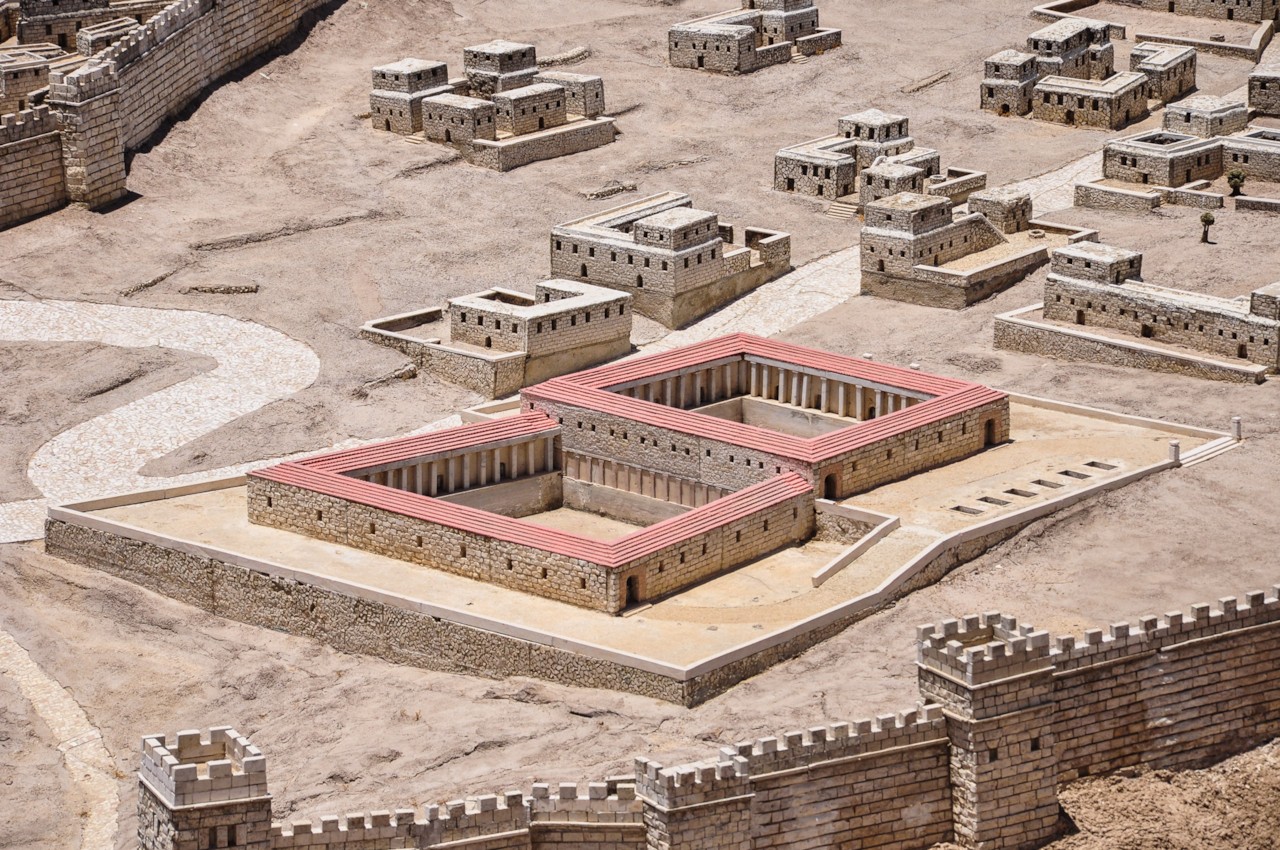
What exactly constitutes authority as we attempt to follow Jesus. Certainly, the holy sites in Jerusalem must be understood, for they are a foundational part of the Gospels. And we cannot understand Jesus until we understand the Gospels aright, said St. John Chrysostom (Homily 15). And we cannot understand the Gospels until we understand them at the historical level from which the other levels of interpretation proceed.
But this is no simple matter. Almost 2,000 years ago, the Holy Land was sealed off, never to be reclaimed by any succeeding generation — covered by a heavy bed of stone and marble and concrete rubble. For the Roman Empire decreed that the whole lifeworld of Judea should be erased from the earth. What we today call "Jewish Culture" arose from only one sect: Rabbinical Judaism, which arose from Pharisaic Judaism, and the Pharisees represented the minority. Unfortunately, Christians over the centuries have come to equate Judaism with all things Hebrew. The word derives from an invented religion: Judah-ism ("religion of Judah"), which is a hybrid of the ancient Hebrew religion married to Persian cultic beliefs, in particular blood sacrifice. And this reckless equation has substantially disfigured our understanding of Christianity and Christian worship.
Join us as we join many others in peeling back the many layers that separate us from earliest and original. And we may find that the latest is apt to be the oldest and the most recent just might be the original.
Download Podcast: "Holy Tears"
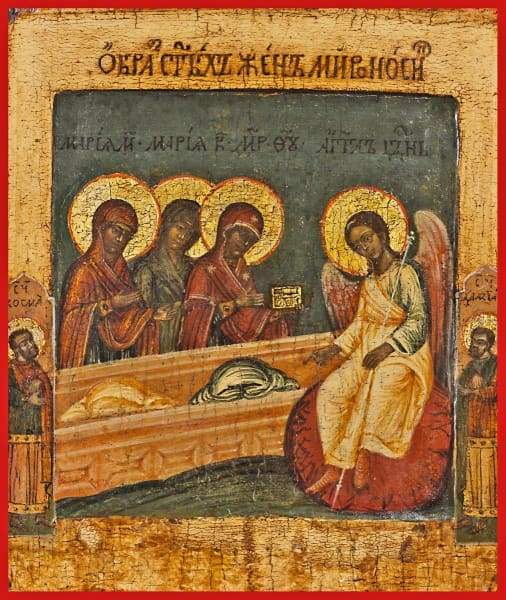
What is the most remarkable thing about Gospel accounts of the myrrh-bearing women? It is so simple that it is commonly overlooked. Nearly all of them have the same name, which is also the name of the Lord's Mother: Μαρία / María. And, of course, there is yet another Mary, Mary of Bethany, who had chosen "the one thing that is needful," had "chosen that good part" (Lu 10:42). And, Jesus adds, "it shall not be taken from her." And what is that good part, that one thing that is necessary, the without-which-there-is-nothing? It is single-minded faithfulness — the decision to turn your back on the "many things" (Lu 10:41), which is the world, and make a whole-hearted decision for God: the love of heart and soul and mind and strength which God requires. This is far more than a possession. It is your life, your all, your identity, This will not, nor cannot, be taken from you. This is the "treasure in Heaven that does not fail, where no thief approaches nor moth destroys" (Lu 12:33).
The myrrh-bearing women possess the same name, and that name will be first and forever most blessed: "..... henceforth all generations will call me blessed!" (Lu 1:48). Its meaning surely "a love that cannot fail" — faithfulness in the face of danger, faithfulness that bears unspeakable sorrow, faithfulness under threat of maiming or murder.
For with the Culmination of All Things, as the Creator of Life is crucified, everyone and all fled before this awesome and terrible enormity .... all except the Marys (and, by one account, a boy, who would be a son to one Mary).
Download Podcast: "Redoubtable Thomas: the Twin"
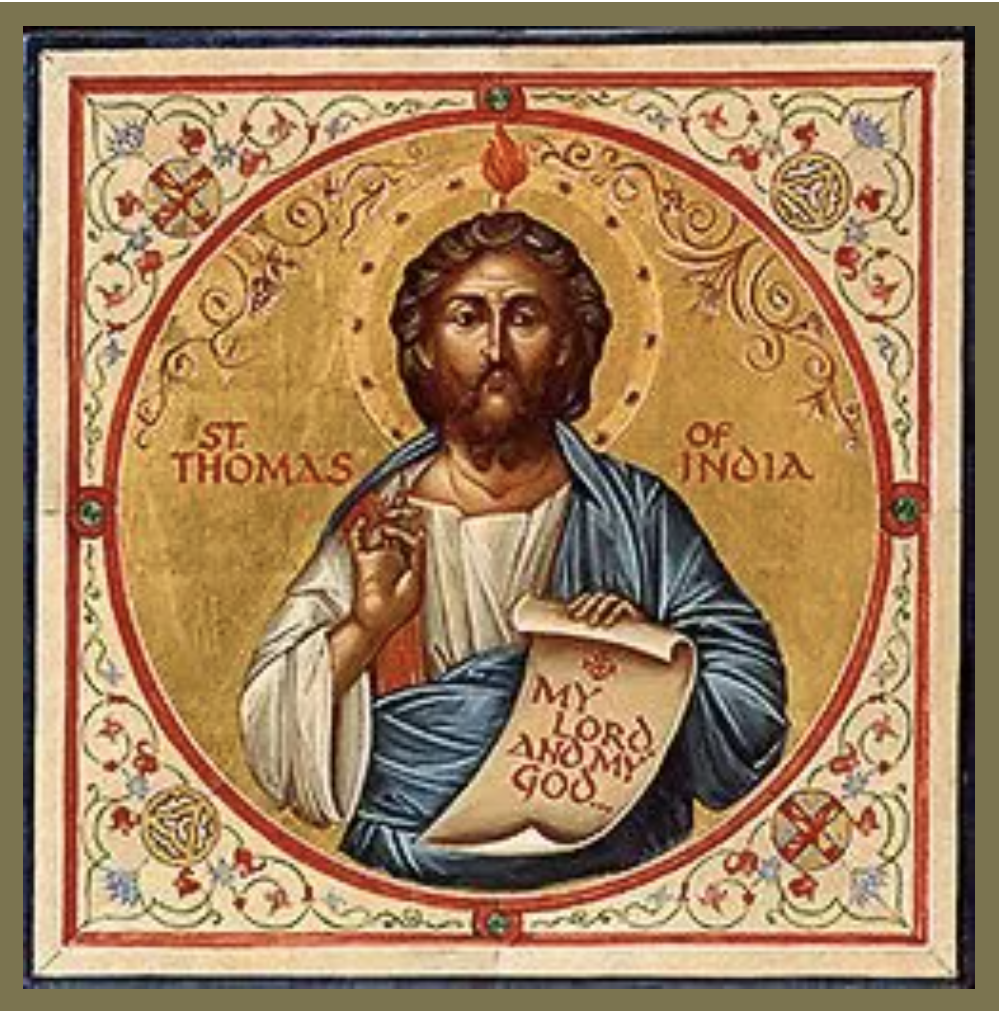
Back on earth, we have the very fallible disciples of Jesus now endowed with the Spirit of God. They have been imbued with the very stuff and essence of the Church. They are the Church, wrote the Apostolic Father St. Ignatius of Antioch in his Letter to the Smyrneans. And the Master, our Lord and God, has not forgotten His Twin, the stalwart and redoubtable Thomas, to be numbered as one of the pillars of His imperishable Church.
And the Twin, for his part, is contented, even fulfilled, to occupy the Master's erstwhile place: to be esteemed last, to be mocked by idlers in the public square, and if he might be of service, to teach one of the greatest principles of Christianity, which is faith.
Will we give the One, Who has given every gift we have our faith, even our simple belief? Let us raise our voices in prayer to the Twin, who was foremost in belief yet forever after would be slighted as the Apostle of Doubt. St. Thomas, may we join you in your perfect humility?
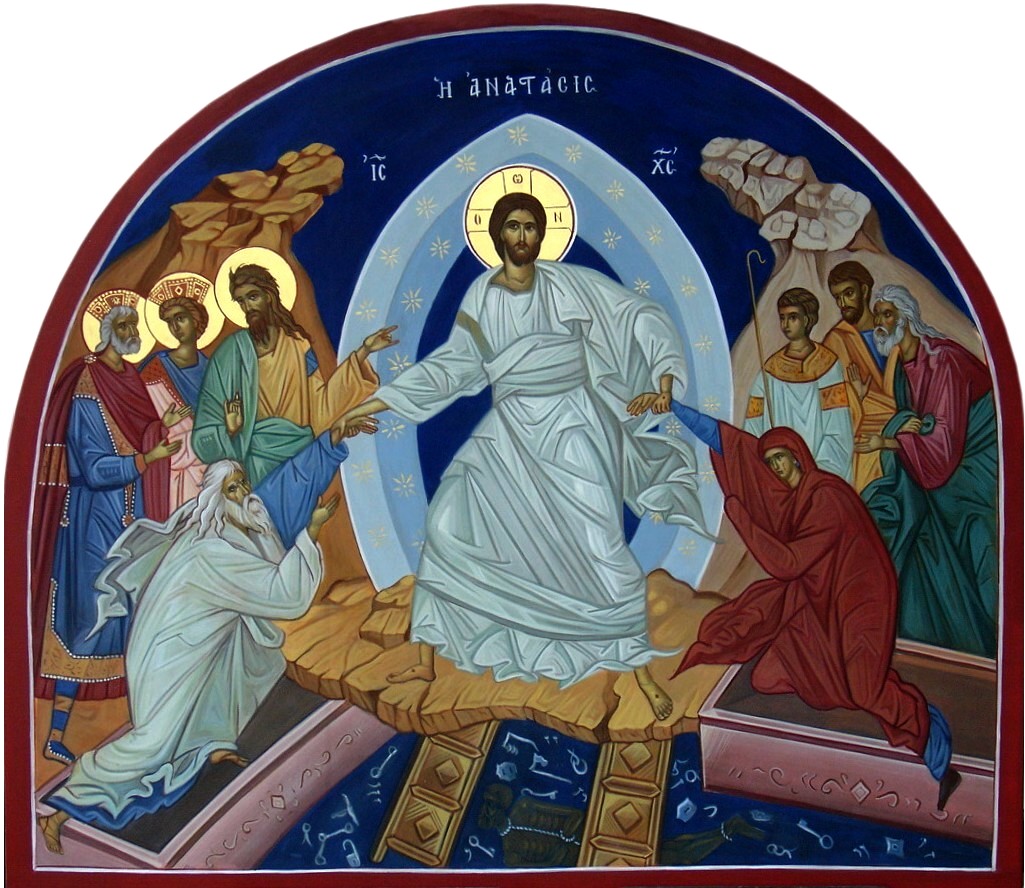
Download Podcast: "Clearing the Way"
What shall we say of His Resurrection, which all shall see or learn of .... news traveling more than seven miles to surrounding villages the same day! (Lu 24:13). The Resurrection would be the great touchstone for the indifferent, the gadfly, and the casual onlooker — a public possession now and forever. For those who did not have eyes to see nor ears to hear — who saw Him raise the dead .... three times; who saw Him feed the multitudes in the wilderness .... twice; who witnessed Him on the Mount of Transfiguration, where He was frankly revealed to be the Son of God — for these and all those like them — "an evil and adulterous generation," He called them (Mt 12:39) — He would finally provide the sign that He had promised: the sign of Jonah.
He was hung on the tree, the Fathers wrote, being reduced to nothing, just a bare, bloodied frame .... having not the clothes on His back — a teacher leaving no writings nor even disciples to carry on His work, for all (but a boy) ran.
But wasn't this His message? In the world seek nothing. We must clear the clutter to attain salvation. We must be cleansed of the world which weighs us down. We must attain the lightness of an angel. And with clear eyes we begin to understand His lessons. Choose the poverty which is untold riches. Choose the foolishness which is profound wisdom. And we behold Him on the Cross as Victor over Death.
We too must put to death the culture of death. For our chains consist in nothing more than our wrong thoughts and desires. Our cares consist in nothing more than ceaseless rivalries and hard-won possessions. We are heavy with them, weighed down. We must choose the death of all this, which is life. We must reduce ourselves to nothing:
|
Trampling down death by death
and upon ourselves, in tombs of our devising, the bestowal of Life. |
Truly, He was the One Who would be last: Jesus Christ, Son of God, the First-born of Creation.
In the Name of the Father and of the Son and of the Holy Spirit. Amen.

We have entered our great fasting season. The word fast — it means many things. Certainly, it signifies "to abstain from food." And it means the opposite as in "fast living." It means to hold with extraordinary firmness as in "to hold fast." And It is an adverb having the sense of the extreme, for example, "to run hard" as in "she ran fast." It means to be "dyed in the wool" as in "color fast." And it means to be firmly attached as in "all the boat lines were made fast." And yet all of these usages derive from the same Old English word, fæste, which means "firmly."
I look at all of these, and I picture essences — the greatest speed you can attain with not a thousandth of a second to spare, the tightest grip you can exercise, even "go for broke" dissoluteness. No distractions. Nothing extra.
Fast. It was the very next thing our Lord did following His Baptism. He got right down to the business of life, to the essences of spiritual warfare. Forty days in a wasteland and nothing else. Isn't that the point of a desert place — no one and nothing else in sight. The Hermitage community has come to that place. And we shall set nothing else before us — only prayer and the bare necessities of the farm. Forty days, which end in the Passion and Death .... then giving way to the Lord's inexorable Essence, which is Life.
|
Heaven cannot hold Him / Nor earth sustain
— Christina Rossetti |
Blessed Lent, everyone.
Fr. Columba
Sr. Mary Anne
Sr. Mary Martha
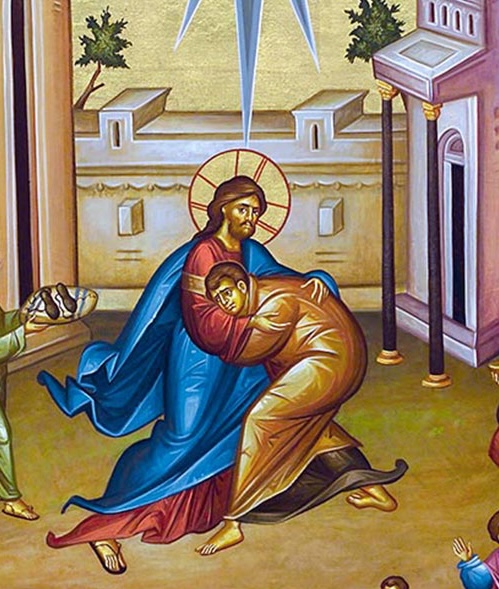
Download Podcast: "Love Alone"
We ourselves are born in perfect innocence and goodness. To depart from that native goodness, we must choose evil. It is a marvel and a mystery that among those who chose not to depart from God's goodness (or found their way back to it, by the grace of God), there exist those who have made goodness their vocation. Instead of living their lives for themselves — seeking their own happiness, their own advancement, their own pleasures — they have chosen to minister to the horribly twisted and disfigured. That is, they have gone back into the world which they refused, but others chose. And they strive every day to be a light of goodness in that cruel dark.
Now, the way ahead for them is hard. Which way should they go? We could say that there are no maps, that these are uncharted waters, that this is undiscovered country. But it is more accurate to say it has been crossed by few. We are fortunate that the Gospel stories have survived. For in those pages we find the golden lessons describing the notable path of Goodness through the world. God entered our darkness as One of us, St. John tells us. He crisscrossed it thirty-three years. He was the sign of contradiction, pushing back darkness in our souls wherever He went.
And the good ones who have followed Him, read and re-read these accounts. They feed their hearts with His holy words. And they commit them to their inmost memories. This is how they are able to understand what they must do, to know how they must act, and to find the words they are to say. They look to the font of all Goodness, to the Incarnation of God's unsurpassable love for the world. And especially they are fixed upon that brilliant moment, that burning place, where pure Goodness square-on to pure evil. And He said: "Forgive them for they know not what they do."
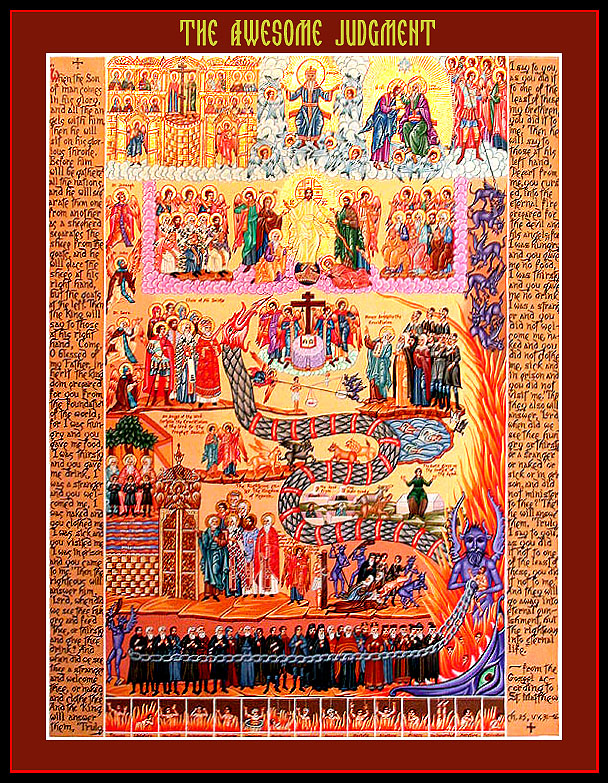
Download Podcast: "I Can Do Nothing For You"
What our Gospel lesson at Matthew 25 proposes this morning is to peer into the state of our souls, the business of our lives, and the direction of our thoughts. Are we "all talk" like the proud Pharisee? Alternatively, do we lay it all down on the line for Jesus every day but lie in a sinful bed every night? What God asks is that we commit our entire lives, every part of us in a wholesome integrity, to His way of life, becoming the sort of children who live as the Father would have us to live.
Like the Prodigal Son, it will not matter how much love has been poured out upon us if our hearts and souls fall beneath the standard of God's own heart. The famous compassion of Jesus will not matter if we have not risen in our own lives to the standard of His compassion. We will not wear the ring placed on the Prodigal's hand or wear the best robe until we can look at eye level into the Great Judge's unerring gaze, and He sees a heart like His own, which is the nature and essence of the Father in Heaven Who sent Him.
It will not matter how merciful or how understanding the Lord Jesus may be.
Of His Own He can do nothing for us.
As He sees,
He will judge.
In the Name of the Father and of the Son and of the Holy Ghost. Amen.
Download Podcast: "2Sons.mp3"
Here is a homily I preached in 2001. As we had no digital recorders back then, I offer it on Prodigal Son Sunday 2025. I believe it is no less Orthodox, my clerical collar and unseasoned "youth" notwithstanding.
How often I have asked the question, but how could God forgive me? How how could God, Who is so perfect and Self-sufficient stoop to love one so imperfect, dependent, and unworthy? It is only through my experience as a child, who had a mother and a father, that I might have a precedent for a love like this. Not an understanding, mind you, but a precedent.
But when I became a father, and raised two beautiful little girls, I understood. We begin to understand a Self-denying, Self-sacrificing God, Whose love never ends when we have children. This is God's lesson plan.
It is through the sacred and miraculous experience of family — as children, as young adults, and finally as parents — that reveals, however dimly, God's mind and His sacrificial, constant, and forgiving love. Indeed, we learn in Genesis 1:27 that God made us in his image: "...in the image of God he created them, male and female he created them." It is the union of these opposites that renews on earth the image of the Living God. And it is this union conceived in love, that enables God's love — unfailing, self-giving, and holy — to become vocation for all of His people.
Wherever we are in that family — the younger son, the older son, or the father — we strive onward secure in the knowledge that our journey is sacred, that our roles are as sound as Heaven, and that our Guide cannot fail. For His Name is Wonderful, Counselor, the Mighty God, the Everlasting Father. Amen.
Download Podcast: "Contradiction.mp3"
You know the world. It has never been very different than it is now. It does not take long to realize, reading, say, the fourth-century Fathers, that the same foibles that bedevil us were seen in our ancestors too. In the West, we probably do not realize that the "Seven Deadly Sins" was written by an Orthodox monk in fifth-century Asia Minor. That's fifteen centuries ago! Yet the list he compiled hits home: gluttony, including substance abuse; sleeping around and prostitution; miserliness; envy and jealousy; out-of-control anger; laziness; boasting; arrogance.
This tells a tale not only of ourselves, but of an anti-Creation. For God made the world and saw that it was good, which is to say our worst habits and thoughts agressively turn God's world over and topple its ideals. Now, imagine God strolling through all of this, taking note in amazingly precise detail (as God is wont to do). What would He say? What would He do?
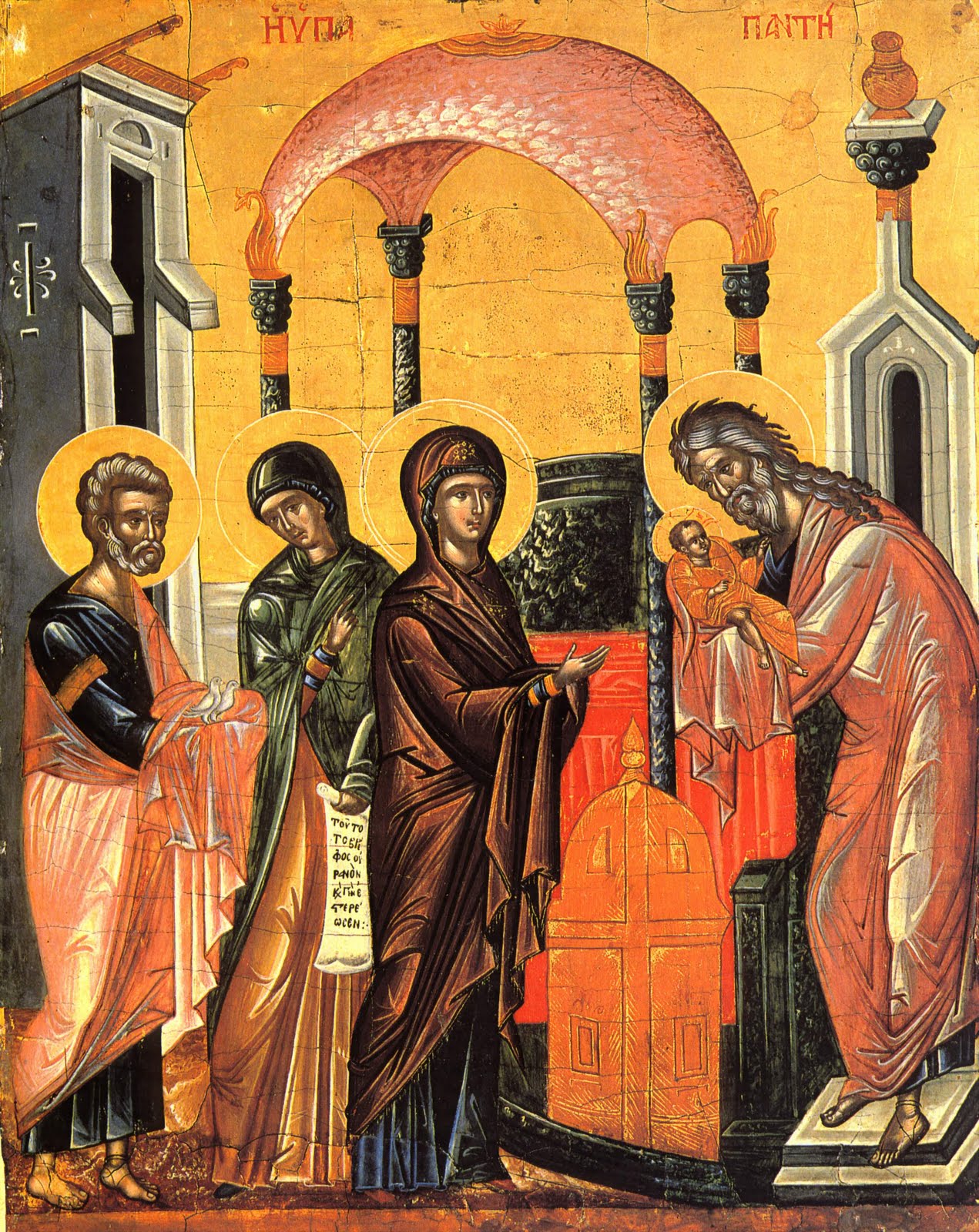
Today, we commemorate the world's formal Meeting of the Lord as we do every February 2. He is presented to a wise man who also possesses uncommon powers of perception. In an instant he realizes Who this is that he holds in his hands. And in that same instance, he realizes that a collision such as the world never saw nor shall ever see is about to occur. "This Child," he said, "is the Sign of Contradiction." Contradiction! Contradicting God! For that is what we do when we turn His world upside down. And that world in God's sight, which alone is level and right, is seen for what it is.
He has already restored the blueprint of the Creation from death to life by His mere Presence (Athanasius). And now He will turn His attention to us, His difficult creatures, Who cannot be changed so easily.
Download Podcast: "LivelyFaith.mp3"
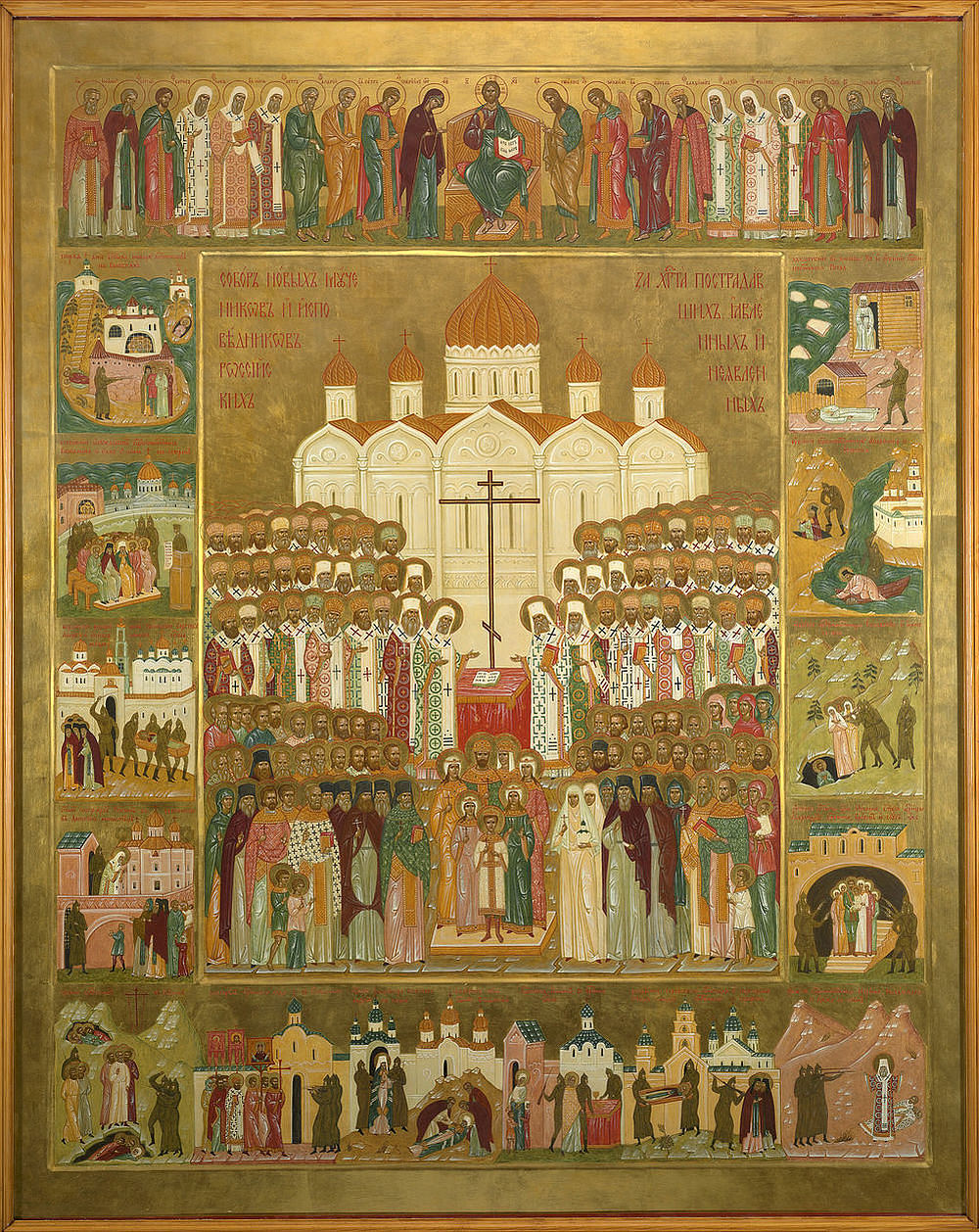
The history of Christianity is the story of martyrs. We think of the men and women who were martyred in their faithfulness as being the foundation of the Church. Perhaps we don't realize that this was but a modest prelude to a much longer and broader history of 70 million red martyrs.
In the recent history of the Russian Orthodox Church — in particular, the two-year period 1937-1938 — 168,300 Russian Orthodox clergy were arrested and over 100,000 murdered according to records of the Moscow Patriarchate. In all, 2,749,163 believers were martyred during the Soviet persecution according to official Sovietrecords (source: Gen. Georgy Zukov, former Minister of Defense and Marshal of the Soviet Union).
As converts to Eastern Orthodoxy in the Russian Spiritual tradition, the Sisters and I, long accustomed to commemorating saints of the Early Church, have been struck by the nearness of these Russian martyrs to our own lives. Many of them were still living when we were born. And their stories enable us to draw still closer to them. One is particularly significant to us, for (by virtue of a tiny relic) she reposes in our Altar. We have the privilege every day of venerating the Grand Duchess, St. Elisabeth the New Martyr, and read her story with rapt attention.
This is very present to us. This is personal. This is the living faith. We invite you to join us to learn more about the people who, but for the grace of God, could have been us.
These days are particularly holy to the Hermitage, for it was during these days in 2019 that we were Illuminated, Chrismated, and our priest Ordained in Holy Orthodoxy.
We sought the Russian spiritual tradition,
because,
enduring
the fires of atheism and progressivism,
it never wavered.
This may seem like an abstraction to many, but to monastics and clergy who have lived in helpless obedience to cruel masters devoted to the gods of this culture, it is very real.
Finally, to cooperate with evil, formally and materially, was too great a burden to carry any further.
To live holy lives, to pray holy prayers, to say the holy words of Eucharist with a clear conscience and with clean hands ..... what else is there in this evanescent world?
And to show others this way to Eternal Life .... what greater work of mercy?
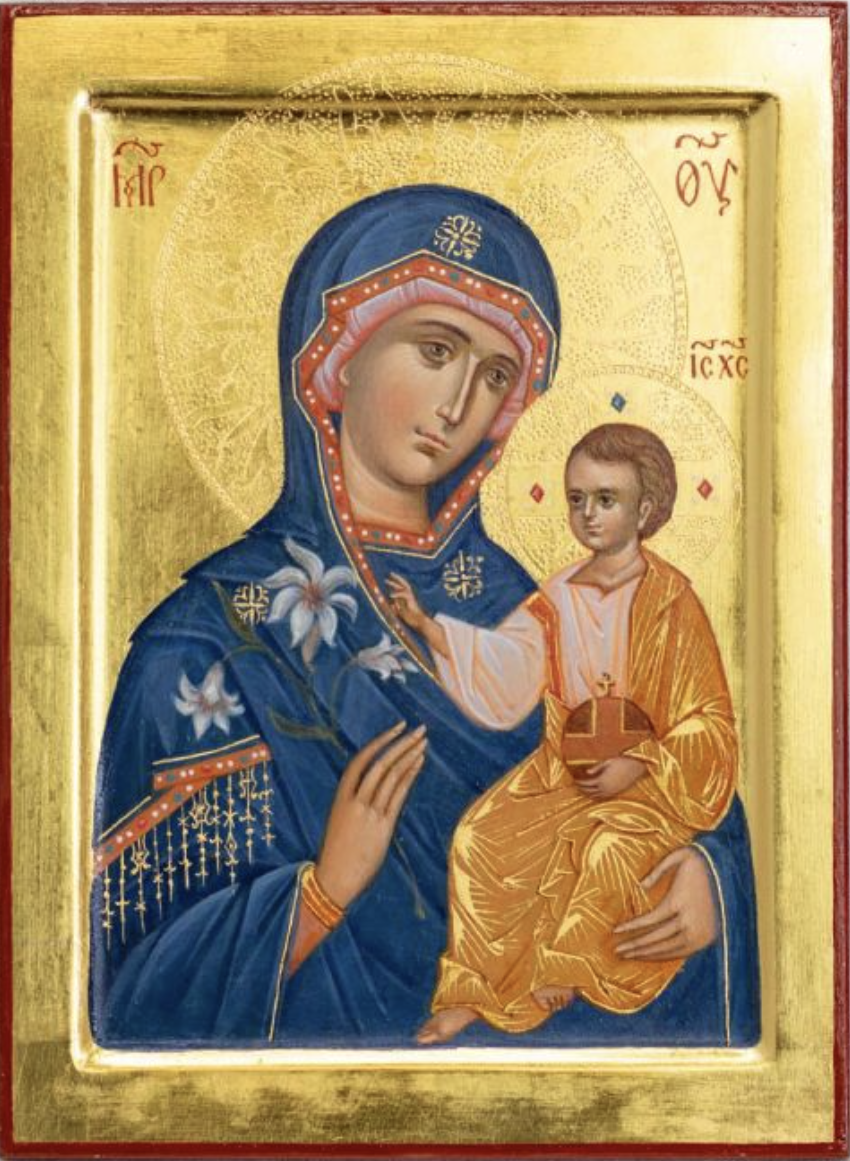
Here on the anniversary of our salvation, Na Pua Li'i Hermitage has received a new name
for our katholikon:
Church of the Unfading Flower Icon of the Mother of God.
Henceforth, our website will be
unfading-flower.org.
Please offer a prayer of thanksgiving and rejoicing for our peace.
I am put in mind of a prayer from our spiritual heritage:
Be present, O merciful God, and protect us through the hours
of this night, so that we who are wearied by the changes and
chances of this life may rest in your eternal changelessness;
through Jesus Christ our Lord. Amen.
Download Podcast: "Salvation.mp3:
St. Luke remembers. He remembers what it was like to throw off his worldly glory and dignity and gravitas in order to enter a new world, the world of a disciple of Jesus. He wanted the heart of the Master to beat in his own breast. He wanted the thoughts of the Master to be his own thoughts. He wanted to look out on the world and cherish what the Master cherished. He wanted to become a lamb of God, (as the Baptist had said). He wanted to be a pure one.
No wonder, Jesus had said that we first must first burn down our whole world in order to become His follower. For He asked no less than the board of health: burning all our clothes and possessions and perhaps even our house in order to eradicate a virulent plague. Certainly, this plague still holds most of humanity in its deadly grip.
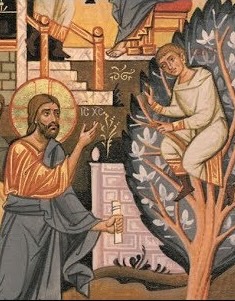
In todays' Gospel lesson, Jesus uses the word "salvation" (soteria) which mean "safe return." It summons up visions of innocent Eden. But how does one get there? We get there by a complete transformation (metanoia) of who we are, what we think, and what we value. And it must happen from within. God can guide us. But we must do it.
St. Luke captures all of this in one of his famous icons. Read on, this Zacchaeus Sunday, for rejoicing is just ahead. Today salvation has come!
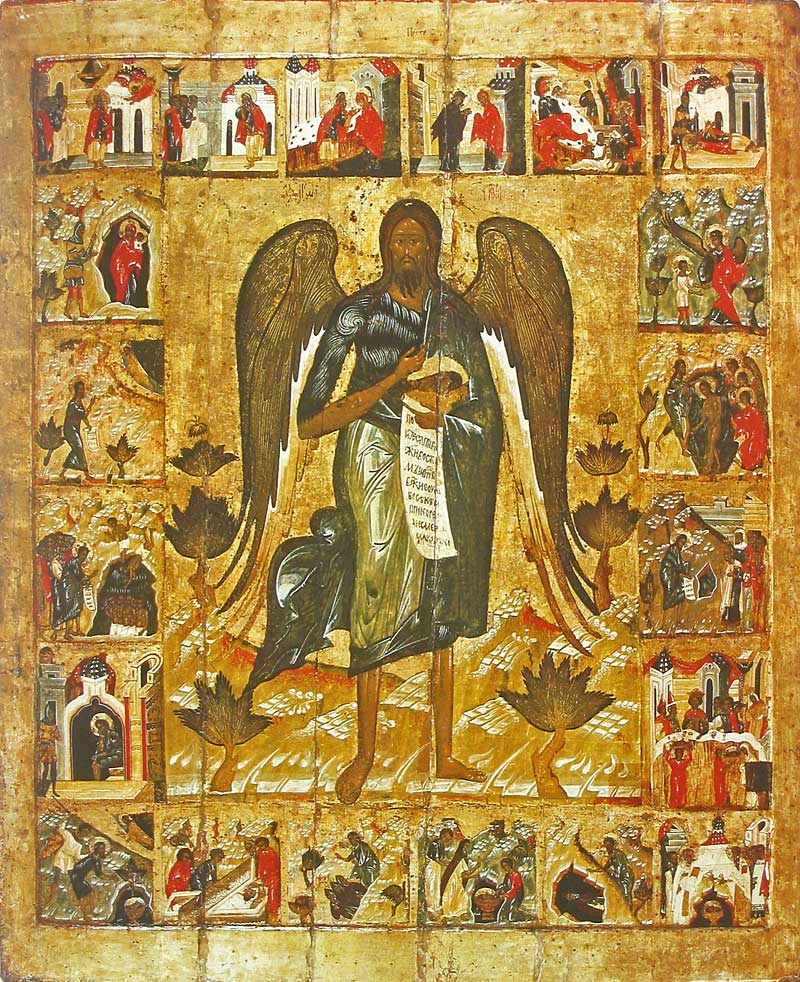
Download Podcast: "Fulfilled.mp3"
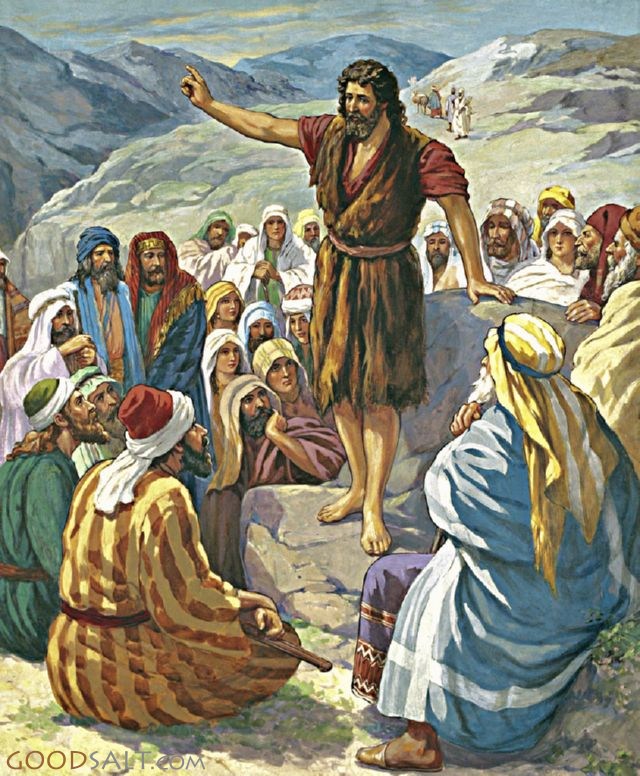
Here on the leave-taking of the Baptism of the Lord and of St. John the Forerunner, we remember that Jesus said of John, no prophet was greater. The Baptist is himself the culmination of prophecy, and his life continues to contain within itself all the elements of spiritual struggle, of spiritual sacrifice, of purification, and of union with God.
He was the man of Eden who came back into the world to lead us to Paradise, into a journey of theosis unto union with God, which is our first state.
Inevitably his vocation was one of spiritual warfare. His principal opponents were demons who found harbor in the passions of cooperating men and women. But he is eternally the victor, and even now he shows us the way through these burning streets into safety and ultimately to the pastures of Eden.
Download Podcast: "ToEden.mp3"
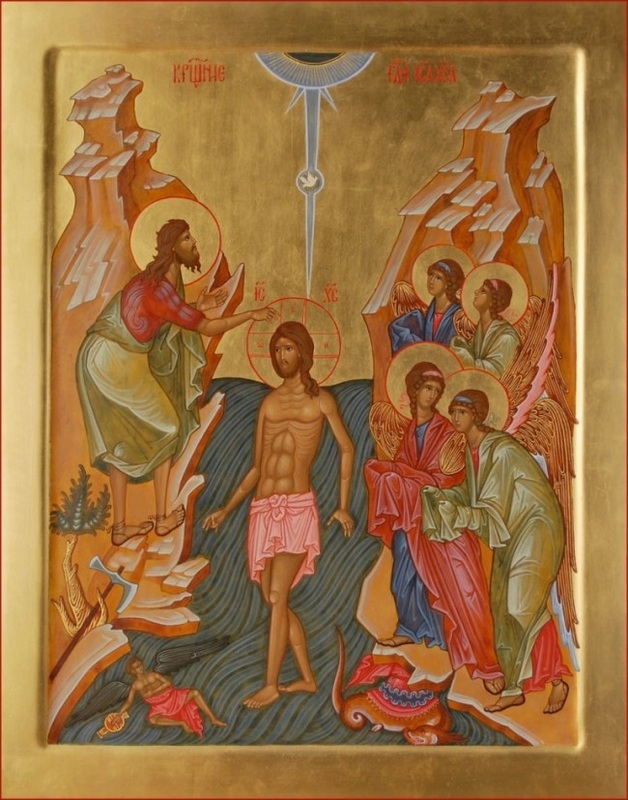
He hung on the Cross, the great Compass, which would set direction for all humankind. The four Greek letters announcing the cardinal points of the compass spell "ADAM," for Eden was the good beginning: the place where God set His Image upon humans, the Image of the Son of God, upon humankind. Untarnished. Bright. The fullness of God. Eden.
What is salvation? What is the fullness of divinity with the human person? What is perfect union with God? Eden. The completion of our sanctification and the end point of our journey of theosis mark the return to Eden.
If God were to send a Forerunner, a human messenger, to announce a return to goodness and to union with Him, what would he look like? What appearance must he have, what tone must he sound in order to ring true? He would be a man from Eden. And he was.
Just being near to him one could detect a faint fragrance, a strangely familiar scent, stored in the deepest recesses of our racial memory. It was a goodly scent pouring balm upon the spirit and enlivening the cells within. It was the sweet air of Eden. Among those who saw St. John the Forerunner, there was no doubt as to his identity: dressed only in natural clothing, having no spot of the corrupt city life upon him, eating the perfect food of honey cakes called manna. As the Greek word for this manna, ενκρίς / enkrís sounds very much like the Greek for locust ακρίς / akrís, we have been handed the ridiculous image of this vegetarian from Eden preying upon insects!
Who could possibly be a more perfect image of preserved Israel than this man of Eden? The preservation of pure humanity. Preserved, like a creature from a prehistoric time, frozen in clear amber, perfect in every detail: St. John the Forerunner.
Download Podcast: "Behold.mp3"
At the first creation, God ordered the heavens and earth out of the void of chaos, but He did not do so permanently. And following man's fall from grace, the creation has retained a flaw in God's good masterpiece. Physics has discerned and common experience has attested the persistence of chaos. In fact, disorder is the dominant trend and theme of our world.
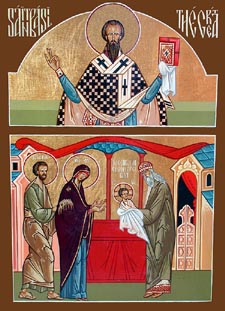
At His second creation, the Logos once again stands before chaos. Icons of the the Baptism of the Lord depict Him as Master over the elements. He is Present in the Fullness of the Holy Trinity. But it is not primordial chaos He faces, but rather moral chaos, which is the great and permanent decider of eternal death or life.
He has appeared once again, this time among us, to cleanse, to transform, and to guide us into the Kingdom of God, which He says, is at hand. His Baptism is nothing less than the second Genesis. But will we attend, will we reverence it as incommensurably holy? Or will we ignore it as we ignored Him when He came to avert the greatest catastrophe the human lifeworld could ever know, which is eternal death?
Download Podcast: "Named.mp3"
The cult of human insignificance and unworthiness is the devil's invention and weapon. Yes, many good people have fallen into this trap. We must not think less of them for that. But it is a trap. Do not the Scriptures declare the wonder of God's precious human creature, Whom He loves so completely and so well? This is the story of the Bible. Certainly, the Orthodox Church does not affirm the Calvinist doctrine of essential human unworthiness and depravity. The ancient Church has not embraced St. Augustine's doom and gloom of Original Sin. Metropolitan Antony Khropovitsky, the initial overseer and First Hierarch of the Russian Orthodox Church Abroad, deplored this error and the many errors that proceeded from it.
In fact, the Church affirms the worthiness of Humankind — that our essential purpose in life is to accept God's offer of Friendship and to enter into the work of Deification, or Theosis, to embrace the goodness God has set before us and to give a wide berth to evil and nihilism, which is a noble and free choice. Is this not the teaching of the Orthodox Church?
God has called us to His wonderful light. He has already issued this invitation to each and every one of us. Let our apostolate be the Possible, the Believable, and the Trustworthy. And let us hear no more about being a speck, a nothing, and the most lowly among all. For we are named before God. And He has bigger plans for us than speck-hood.
In the New Testament, we see that the ritual of circumcision gave way to the Mystery of Baptism to which it is essentially linked. The Feast of the Circumcision of the Lord is attested in the Orthodox Church through the fourth century. The Canon of the Feast was written by Saint Stephen of the Saint Savva Monastery.
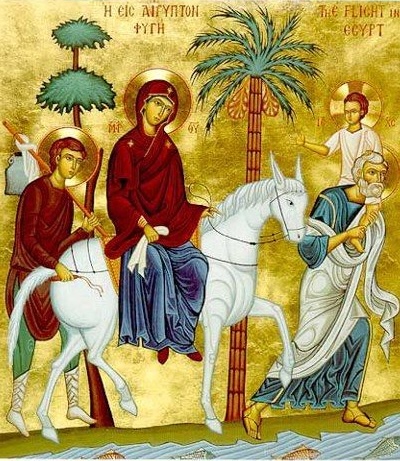
Download Podcast: "GodsEye.mp3"
Today we celebrate the Feast of St. Joseph the Betrothed, David the King, and James the Brother of the Lord. The Gospel reading for this feast contains the only historical record, recounted in full, of the Slaughter of the Innocents, which the Church commemorated yesterday.
Why is this feast observed so close to the Great Feast of Christmas? And why should a holy day remembering Joseph the Betrothed, King David, and the James the Just include the Slaughter of the Innocents? Surely part of the answer must lie in the collision between two royal lines — the lineage of King David, the anointed of God, which includes Joseph and his two sons, one by birth and one by adoption contrast with the lineage of a counterfeit line, the Herodians, who were Arabs. The Slaugher of the Innocents was merely the latest among Herod's desperate measures to cling to a throne he had no right to.
Here is a strange tale of the man who would stop the Advent of God. He would turn back God's plan to heal the Creation with Innocence itself, and responds by stamping out all Innocents .... at least all males two years and younger. Here madness lies and murder and the executions of his sons and his wife. Here lies the territories East of Eden. Here is the world into which the Holy One is born.
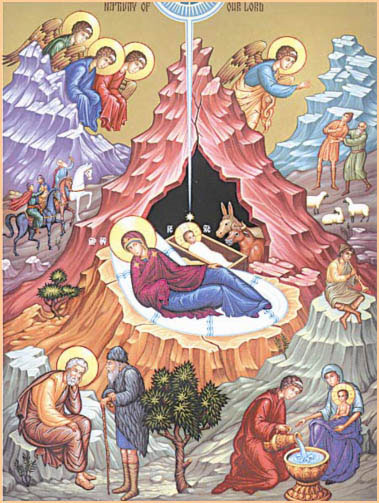
Download Podcast: What Child Is This?
I can still recall candlelit Midnight Mass as a young man at my family's Anglo-Catholic parish, St. Uriel the Archangel. The place was hung with green holly and red berries. The organist played various Christmas motifs in a low, meditative tone. Families came into the pleasant place still cold from the late-night, December air, now warming in the presence of God and of each other. How reassuring this scene was — peace on earth, good will towards men. And the Midnight Christmas service magnified this good feeling. All was calm, all was bright .... until the sermon, until I heard the priest say to one and all,
"This was the Child Who was born to die! You see, this is the significance of the myrrh laid down at His crib."
My young heart rebelled and cried out in response, "No! This is the Child Who gives us life!"
To Orthodox eyes and to Orthodox ears, myrrh is dew from Heaven — God's grace quietly and profoundly upflowing from our Holy Icons. To the ancient Church, myrrh on Christmas is nothing to do with the mortician's art (as this priest would argue). The mortician can lay no claim upon this Child. Myrrh is rightly laid before this Child of utmost grace. He is the Incarnation, at once, of Elsewhere and here .... and the grace standing behind every instance of living beauty.
Meditating on Christ's Nativity, (On the Incarnation), St. Athanasius wrote that His touching our world with His person so shocked the Creation that it reversed human destiny (telos) from death to life. You see, this happened at His birth, already done! Our destiny was reversed from eternal death to eternal life.
The Lord of Life had touched the earth. And His gift to us cannot be His death. Death?! Why, Life Itself swallows death whole. Have you not read that He shattered the Prisonhouse of Death at the moment it sought to grasp Him? "Heaven cannot hold Him / Nor earth sustain."
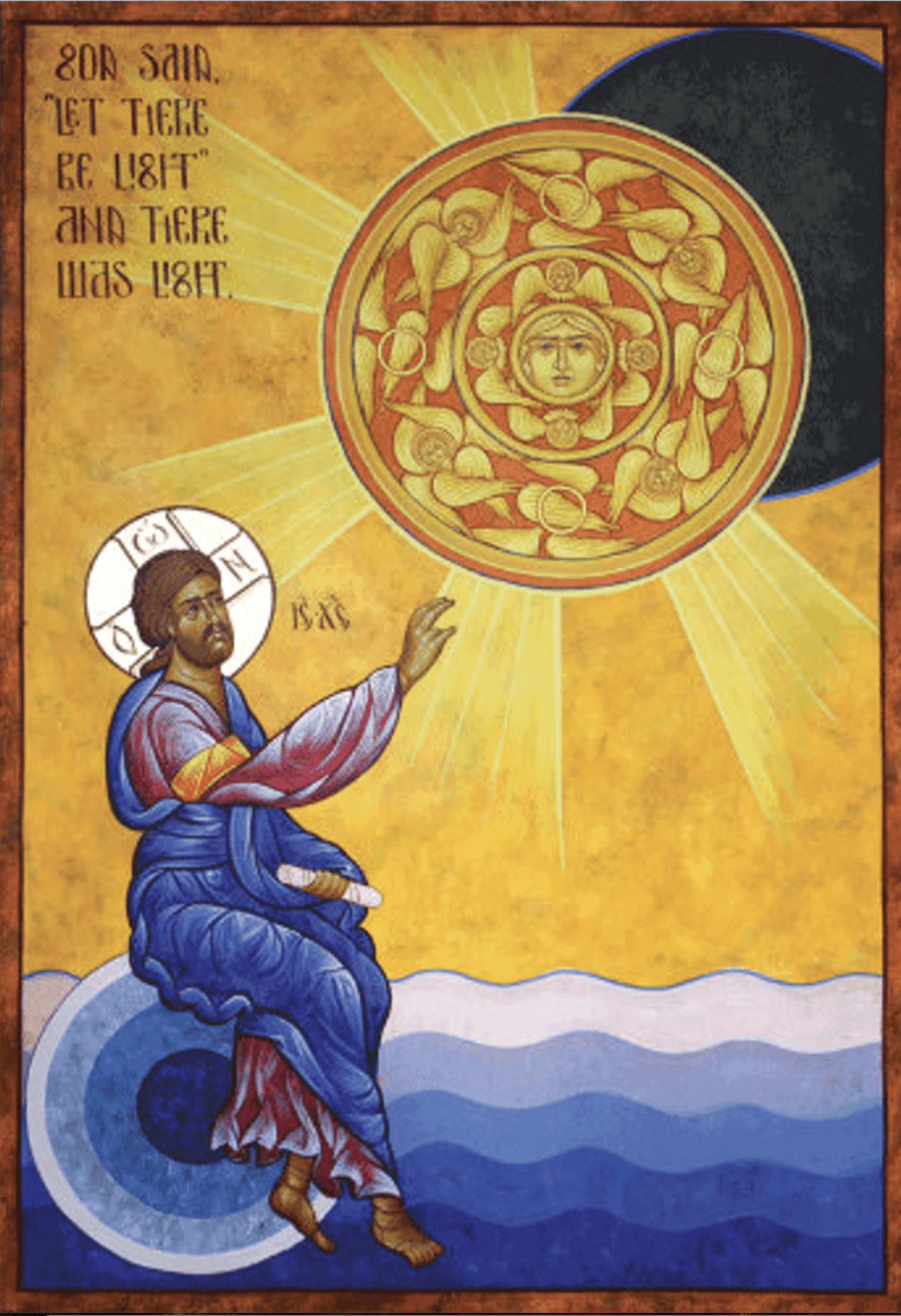
Download Podcast: Light-Giver
Jesus is born to a strange sort of family tree. Actually, He inherits it by adoption. Some names we read down through the ages stand out as being notorious, not uncomplicated paragons of virtue. And, beyond family trees, the immediate circumstances of His birth are unvarnished degradation and homelessness: barnyard animals with their mud and dung-stained hay and a crib fashioned out of a manger, that is, an animal's wooden feeding trough. As this is part and parcel of frank inhospitality, we may well imagine that there is no place to wash or relieve other needs.
Yet the One Who knows all and understands everything has come of His Own free will. He does not have to be schooled in the ways of our world. For it is our sorry state and the many who suffer that have cried out to Him. He has come to save and to redeem.
And He will transform the family tree that He received as His Nativity. He will transfigure it into a birthright to Heaven and adoption by Father God. He has come to bring light and new life. And He still does. Who will not raise up his head or walk away from her shameful secrets to claim this legacy, this inheritance to riches beyond our furthest dreams?
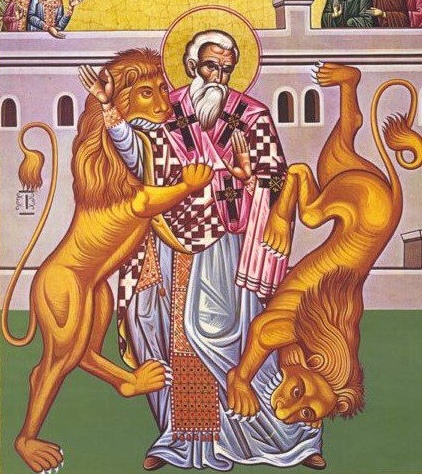
January 2, 2025 (December 20, Holy Calendar), St. Ignatius of Antioch
He quipped, "I give thanks to the lions who have spared those I love the chore of preparing my body for burial." His Letters to some of the early churches are a treasure house of Patristic doctrine based on Scripture.
He first proposed the Communicatio idiomata (the communication of properties), which is the foundation underlying Theosis.
He wrote, "Where the bishop is, there is the Church" anticipating the danger of wandering, free-lancing priests.
He laid the groundwork for the three-fold ministry, noting that bishops and deacons are established by Scriptural warrant, and priests are constituent parts of their bishop (symbolically carrying particles of the bishop's fermentum to the communities of the faithful.
He is third in the Patriarchal line of Antioch following Peter and Evodius.
Download Podcast: Bread in the Kingdom
We have spoken about living in God's Now. "What is the time zone in Heaven?" It is Now. Always Now. Where and when have no place. No plans are necessary, for there is nothing left to achieve. All has been fulfilled. Regrets for yesterday and fretting for tomorrow no longer make sense. Heaven is the Now that has no end, where living present to the living God is our all.
But there is another Now we must not neglect. It is not declarative or indicative grammatically, but rather imperative. It is God's command. As distracted children we were are familiar with this command: "Now!" And it might have been followed by other words: "And I don't mean later!"
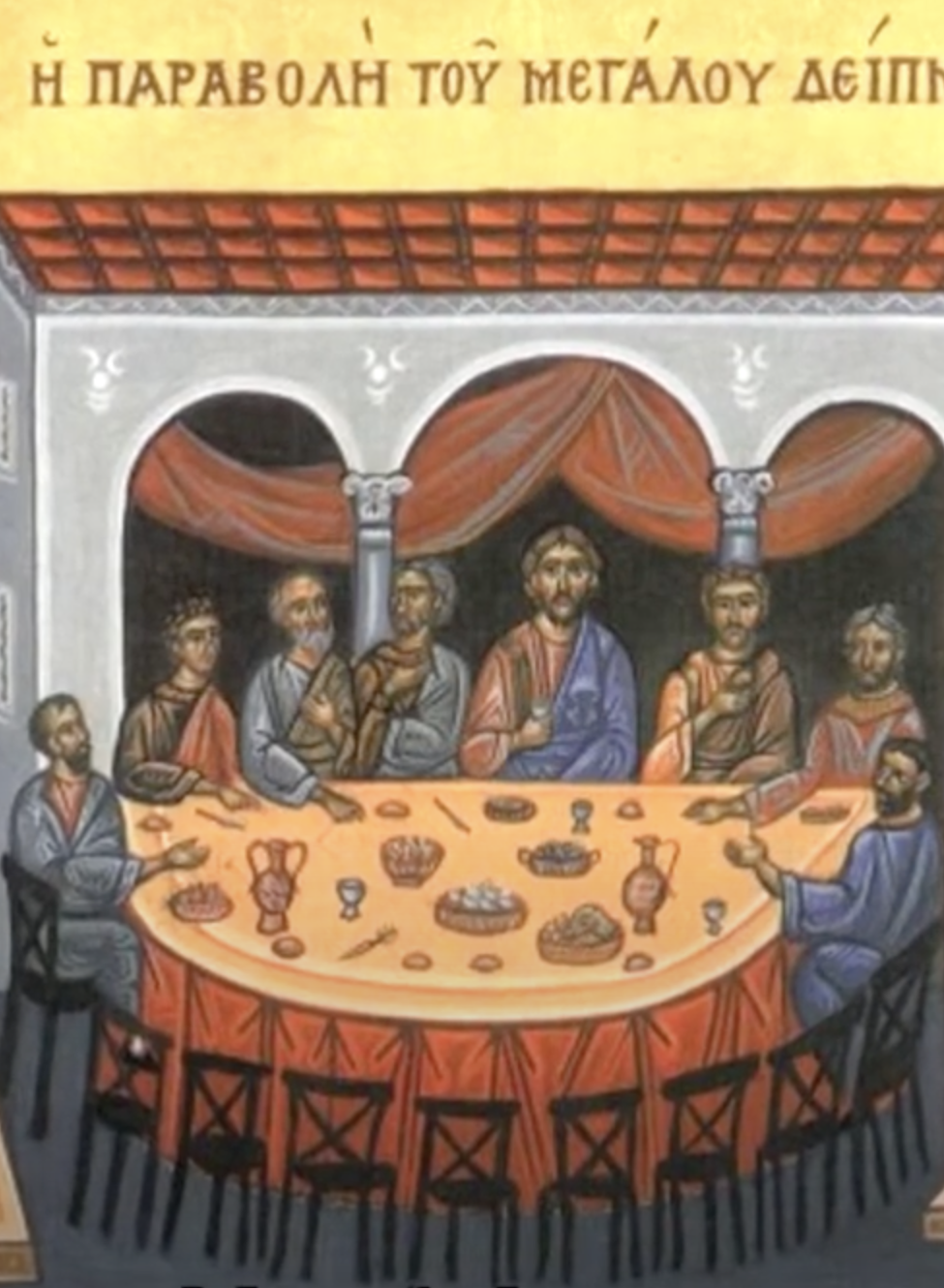
Doesn't this go to the heart of our Gospel lesson this morning? "A certain man has prepared a great feast and invited many." The rest of the tale we know. The intended guests behaved childishly giving the sort of excuses one is apt to hear from whining teenagers: "I'm busy." What is this mysterious meal to which to which so many have been invited? It is revealed in the verse preceding our Gospel reading:
"Blessed is he who shall eat bread in the Kingdom of God!" (Lu 14:15)
The moment for which all the Creation longs has reached fulfillment: the feast in the Kingdom of God. But the intended guests have fallen into "the trance of the world," where the insignificant has come wholly to preoccupy them.
Join us as we reflect upon that most common experience of the spiritual life: deadness.
Download Podcast: Family Tree
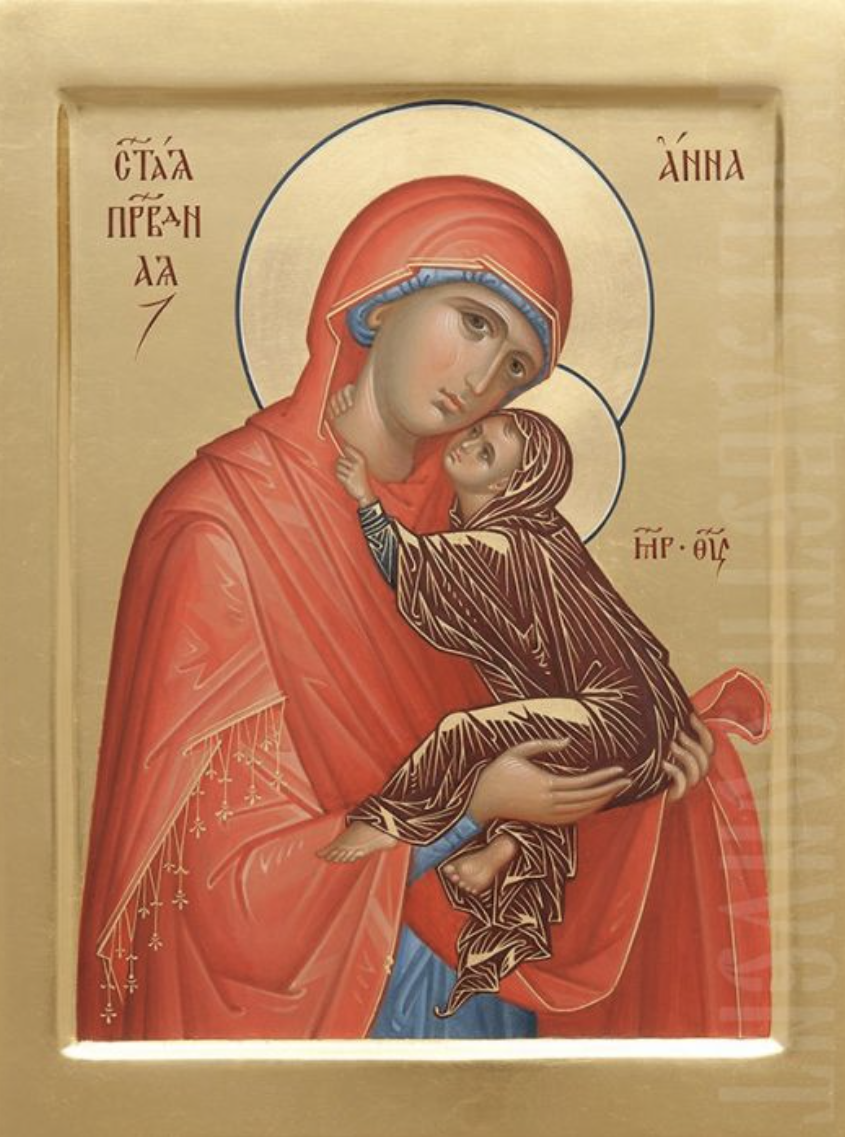
Today we commemorate a great feast: the Conception of the Most Holy Theotokos by St. Anna. With this, the final three generations of a geneology are announced. In fact, Sacred Tradition holds that St. Anna is the daughter of a priest and a descendant of the Tribe of Levi. All things have been made ready for the birth of our Great High Priest.
But the brief Gospel reading for this feast day depicts Jesus as brushing all this aside. The only genealogy worth recording, He says, is our descent from the King of Heaven. What is more, He offers that royal lineage to us. All we need do is stand ready to receive God's command and do it.
Pray for us, St. Anna, for we long to receive God's word and to have a place in His and your and your Holy Daughter's family tree.
Download Podcast: "The Imagination of Their Hearts"
God is interested in this world only insofar as it leads us to His Kingdom. God sees the fullness of time. He sees everything in the light of the Eschaton. And in that light our vain imaginings instantly vanish. Our frames of reference, on which we have relied for self-justification; our possessions, our furnishings, our plastic surgeries which have propped up our false identities; our class status and worldly importance .... all gone, vanished in an instant. What will remain will be only ourselves shown in the light of unsparing truth. It turns out, God does not have compassion on our vanities. It is only when we have been completely stripped and bared that His compassion begins. And this helps to explain His special heart for the poor, the sick, and the oppressed. They have been stripped down, and their hearts are tender toward Him.
Jesus' disciples are troubled at the Master's comment,
"For it is easier for a camel to go through the eye of a needle
than for a rich man to enter the kingdom of God." (Lu 18:25)
So He adds,
"The things which are impossible with men are possible with God." (Lu 18:27)
In this He returns to the sayings of the elders:
"The Holy One said, open for me a door as big as a needle's eye
and I will open for you a door through which may enter tents and camels."
The needle's eye which is needful is the little chink in our armor of ego
that lets divine light in.
We must be
flooded with divine light
—
first revealing all, humiliating us,
but
then relief, the relief of a smothering burden being lifted,
for our egotism, with all its high maintenance, finally has fallen away.
Like the wealthy ruler,
we may clutch at our material attainments and possessions but the time is coming and now is,
Jesus says, when only our spiritual lives will matter (Jn 4:23-24).
Only our spiritual lives will endure
"where no thief approaches nor moth destroys." (Lu 12:33)
Download Podcast: "Daughters of Abraham"
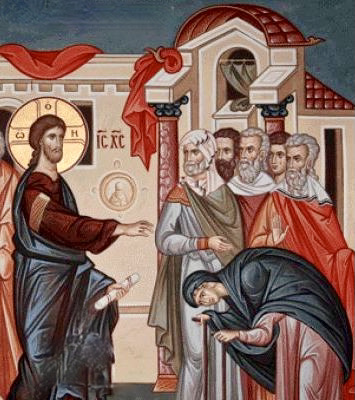
We contemplate today four daughters of Abraham as the Son of God peers into life of one of them whom He actually names "daughter of Abraham" (a phrase never before heard in Scripture). She has known the spirit of fornication, and it has come to possess her. Jesus discloses that she has been bound by Satan. The Greek phrase describing her inner state is pneuma éxousa, meaning someone who is "unable to resist moral corruption"; one who is "unable to attain glorious things." God is unable to dwell in such as these because they habituate filth. How common is this? To choose animal desire over God's kind of love, which is agápe? I need hardly answer this question. For it has become our cultural normal.
Jesus now sets His all-knowing gaze upon the bent-over woman. During a period of eighteen years, this daughter of Abraham has trodden the path of clay, each year bowing lower and lower to the earthy things she has made her god. And now she is permanently bent over. She cannot, under her own power, become upright again. She is completely possessed. She bows to earth and clay, and clay manifestly will become her portion.
Withal, the woman this women seen in the synagogue on a Saturday has almost completed her journey to earth. She has become nearly all clay. What began as an error in judgment became habit. Habit became possession. And now her life, being taken over, has hardened into unrelieved prayer before an idol. She bows before the demons who first invited her into carnal life. She has trodden much farther down the clay path than the woman at the well. And now she cannot hide her secret life. Her dark devotions are now manifest to all. And then, on a day, she encountered God.
As He did with Photini, Jesus knows everything that she ever did. His singling out the detail of the eighteen years discloses that He knows the rest of the story as well. His bearing is that of a king. He does not go over to her in solicitude, but rather He summons her. He does not stand, but He is in the chair, as a sovereign. He announces her release by fiat: "Woman, you are loosed!" His words are not descriptive. They are a Divine command: the speaking of them is the doing of them.
Join us as we enter the synagogue on this remarkable Saturday afternoon. For we shall discover that the story is uncannily set in the twenty-first century, and the plot and characters depict ourselves.
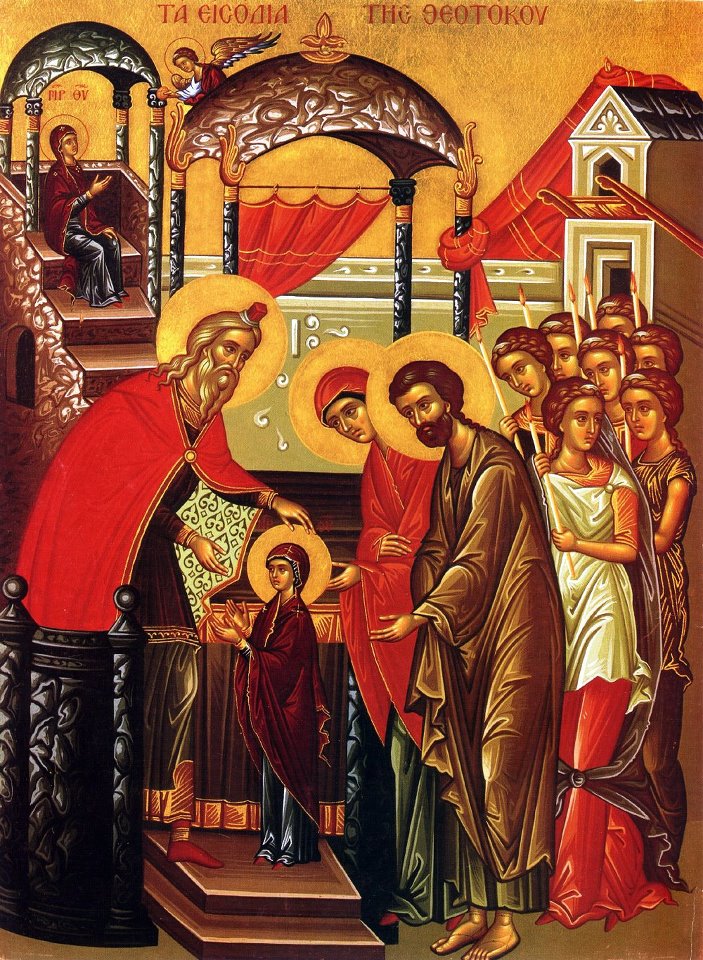
Download Podcast: "True Worshipers"
Today we celebrate one of the great feasts of Holy Orthodoxy, the Entry of the Most Holy Theotokos into the Temple. It is a momentous feast, observing the end of a whole life-world.
* * *
After the long, bitter, lifeless winter .... the sky is gray, the earth is hard, a winter which never ends, a little, delicate blossom is seen forcing itself up between the enormous stones of the Temple. A breath of fragrant, warm air is detected. These are the first intimations of spring. The ice begins to crack. The sound of dripping water is heard .... everywhere. And the centuries-old oppression begins to fall, rotting from within.
For a tender Virgin, little more than a toddler, enters the Temple. Her pristine feet are set upon the Temple's heavy steps. Her little frame proceeds past its massive columns and stones. Her innocent soul ascends toward the slaughterhouse. For she — this powerless, diminutive girl — will be the replacement for this colossal fortress. She will be the place by the grace of God, in Whom the vastness of the cosmos and beyond will dwell.
She will be the new and definitive Holy of the Holies. For in the First Temple, far from being a bloodbath of terrorized animals, the High Priest attained the furthest reach of theosis, which was perfect spiritual union with God.
Can we conceive of something above and beyond this perfection? This Virgin's body in every fiber of her being will participate with the heartbeat of God — her every cell, her blood, her bone will be intermixed with God's. Talk about union with the Divine! For a time she will be indistinguishable from God Who grows inside her. And God will proceed out of her, offering divine union to all people.
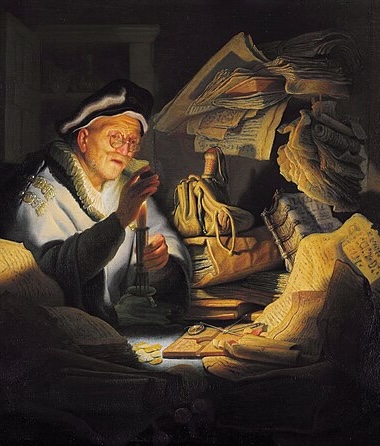
Download Podcast: "Master of the Granary"
Our Gospel lesson appointed for today is a brief parable: five sentences. In fact, we might call it a tableau. Small wonder it should proceed from our icon-writing Evangelist, St. Luke. Here we have the proverbial scene of the "king is his counting house." He is alone, of course. Around him are all his riches, and his imagination is sated. He is like the man who over and over again regales you with stories of his success: "Who could have guessed that I would attain such glory!" He thinks of nothing else and no one else. His own happiness and security chart the fullest extent of his thought-world. He seems to think that he is master even of his destiny. But, of course, we are never alone, and all our thoughts and words never go unheeded. We live our lives in the brilliant light of God's judgment. Accordingly, this brief parable features two characters: the rich fool and God. This is the literal level.
The allegorical level opens to us as we look to Scripture for other rich men who are masters of the granary. The most imposing figure, of course, is Jacob's son Joseph. We imagine his granary doors to be high gates, indeed, for they enclose the granaries of mighty Egypt. But if Joseph has "built greater," he has done so in order to achieve the happiness and security of each Egyptian family as he prudently stores up grain against a time of famine. He characteristically thinks not at all about his own gain.
As we search through the four canonical levels of Scriptural interpretation, join us. For we have begun our journey to a crib side. And our right and meet work especially in these weeks of our most holy expection is reflect on Scripture, and He did.
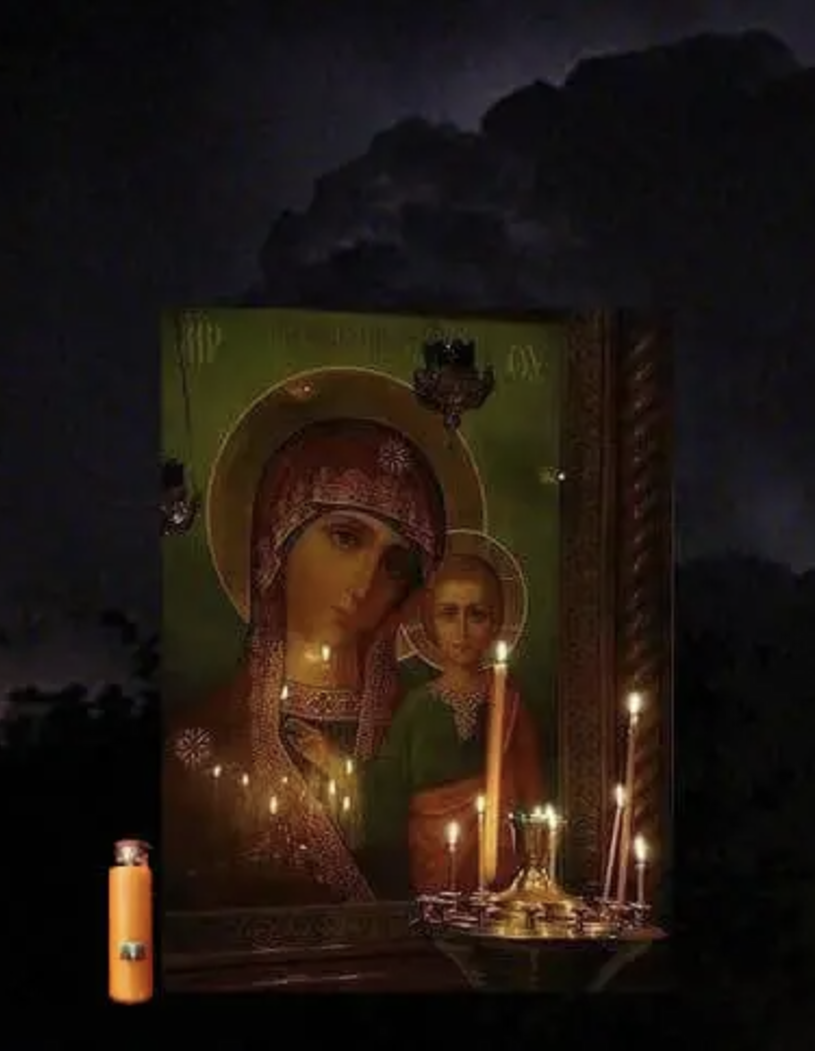
November 27, 2024 (November 14, Holy Calendar), St. Philip's Fast
"Follow me." (Jn 1:43) These were words we read yesterday in our Gospel lesson. The world was in darkness when He spoke these simple words of hope.
Darkness was falling. The light was failing. God's people languished under a double-yoke: Roman occupation and the deceitful promotion of Judah-ism, distancing God and His true worship. But God heard. God did not forget. And God would be born even among us.
Let us hasten down the road to Bethlehem. Who can eat?! Who can tolerate distractions?! The Light of the World is being born to us! And of His Kingdom there will be no end.
As were all of the Twelve (except Judas Iscariot), St. Philip was born in the historical Northern Kingdom. It is not accurate to call him a "Jew," which signified an ideology outside Judah: "Judah-ism." According to St. John the Theologian, the day after Jesus called Andrew and His brother Simon, he called Philip and Nathaniel, who He termed an Israelite in Whom there is no guile. The Eleven are all Israelites — guileless and sincerely seeking God. That is, they are Abraham's true sons and Hebrews — still strong in Samaria and Galilee. Jesus tells them that He saw Nathaniel beneath a fig tree, implying to them all a return of good and sanctified times — each man dwelt safely under his vine and fig tree, from Dan as far Beersheba (1 Kings 4:25). And they would see Heaven open and the angels of God (Jn 1:25). Indeed, these were heady days.
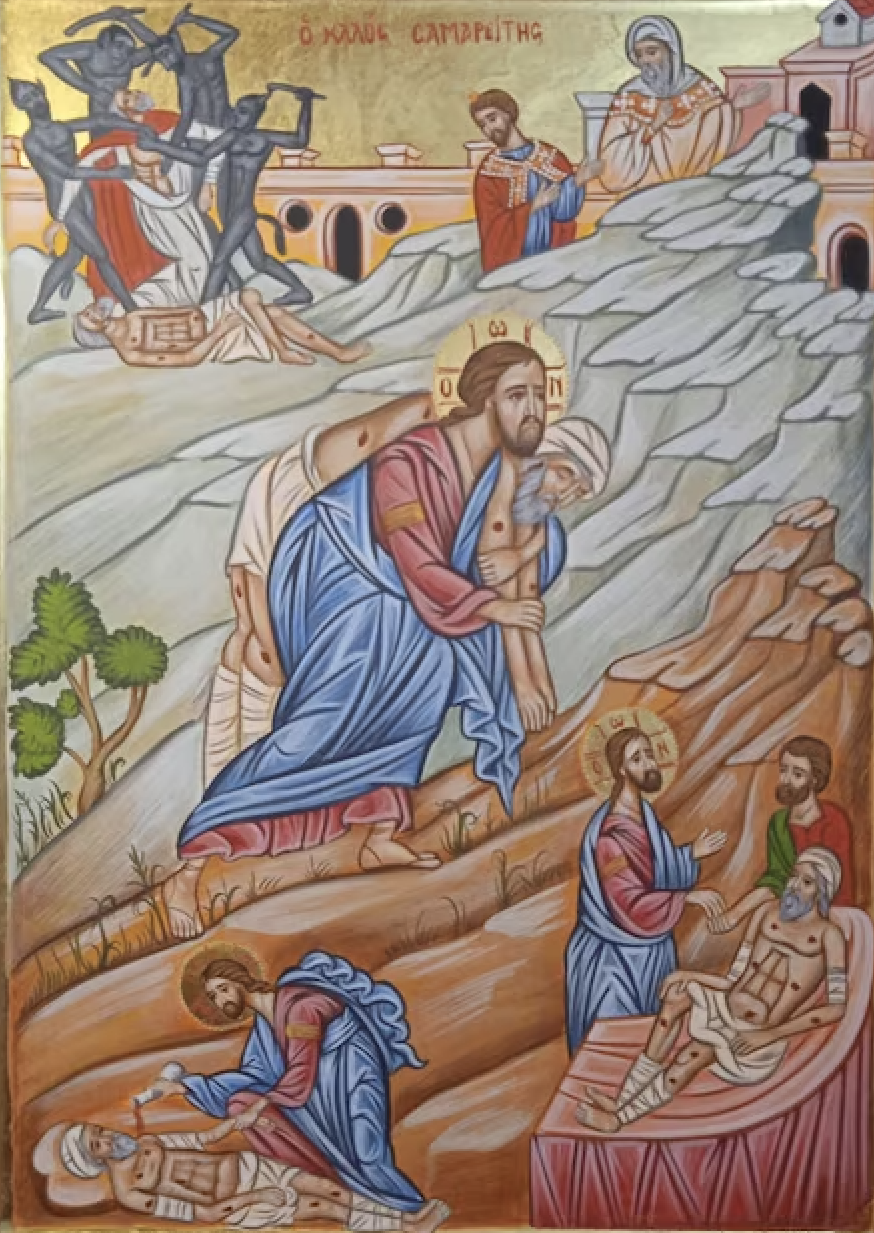
Download Podcast: "Who Is My Neighbor?"
The occasion for the Parable of the Good Samaritan — one of the most important Gospel passages explicating the Advent of God — is often depicted as a bitter encounter with an accusing Pharisee.
But there is nothing in the underlying Greek text to support this reading. In fact, if the general background for this encounter were considered, most readers would come to the opposite conclusion.
Let us consider the setting, the characters, and the plot carefully and then sort through the meaning of the Parable and its purpose in Jesus' teachings.
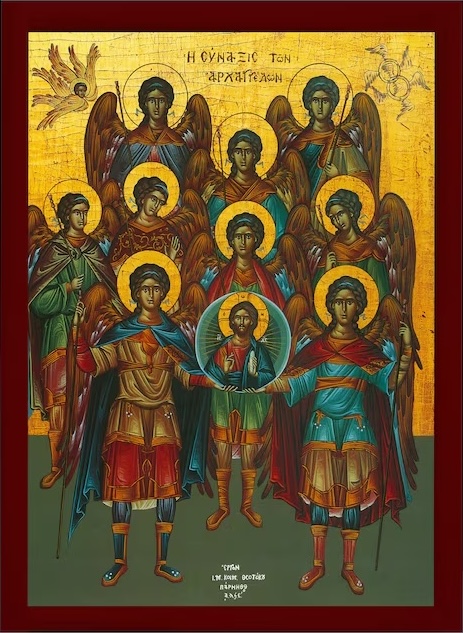
Download Podcast: "You Shall See Angels"
Why do we call Archangel Michael, always depicted as a Man-at-arms, the "Prince of the Heavenly Host"? For that matter, why is the Synaxis of all Angels (or Bodiless Powers) called a host? In the first century the word host was intrinsically a military term. It had no other meaning. And the Angels are inherently warriors. That is their nature. Their God is called "the Lord of Hosts" more than 200 times in the Bible. That is, YHWH, their Master, is intrinsically a Warrior.
Heaven has has been marked (or should we say "gored") by rebellion, and earth, to which the vanquished fell, is a dangerous place. Accordingly, we are inducted into the ranks of God at our baptisms, swearing our allegiance to Him and declaring our everlasting enmity against the forces of Satan. It is right that this is the moment we receive our Guardian Angel. He is a guardsman and fitted to defend us.
St. Kosmas of Aetolian said without understatement that
Life is spiritual warfare. If you are not fighting, then you are losing.
This is the nature of things. We must struggle to attain the Kingdom of Heaven. For in our condition of freedom, warring impulses, a conflict among choices, a war between two minds is always the case. This is the nature of free will.
On this great feast day, let us re-dedicate ourselves to the Heavenly Host. Let us renew and refresh our baptismal vows, for this battle will rage until we consent to God. Till then we shall have no peace. How could we while God and His Angels must fight unending rebellion?
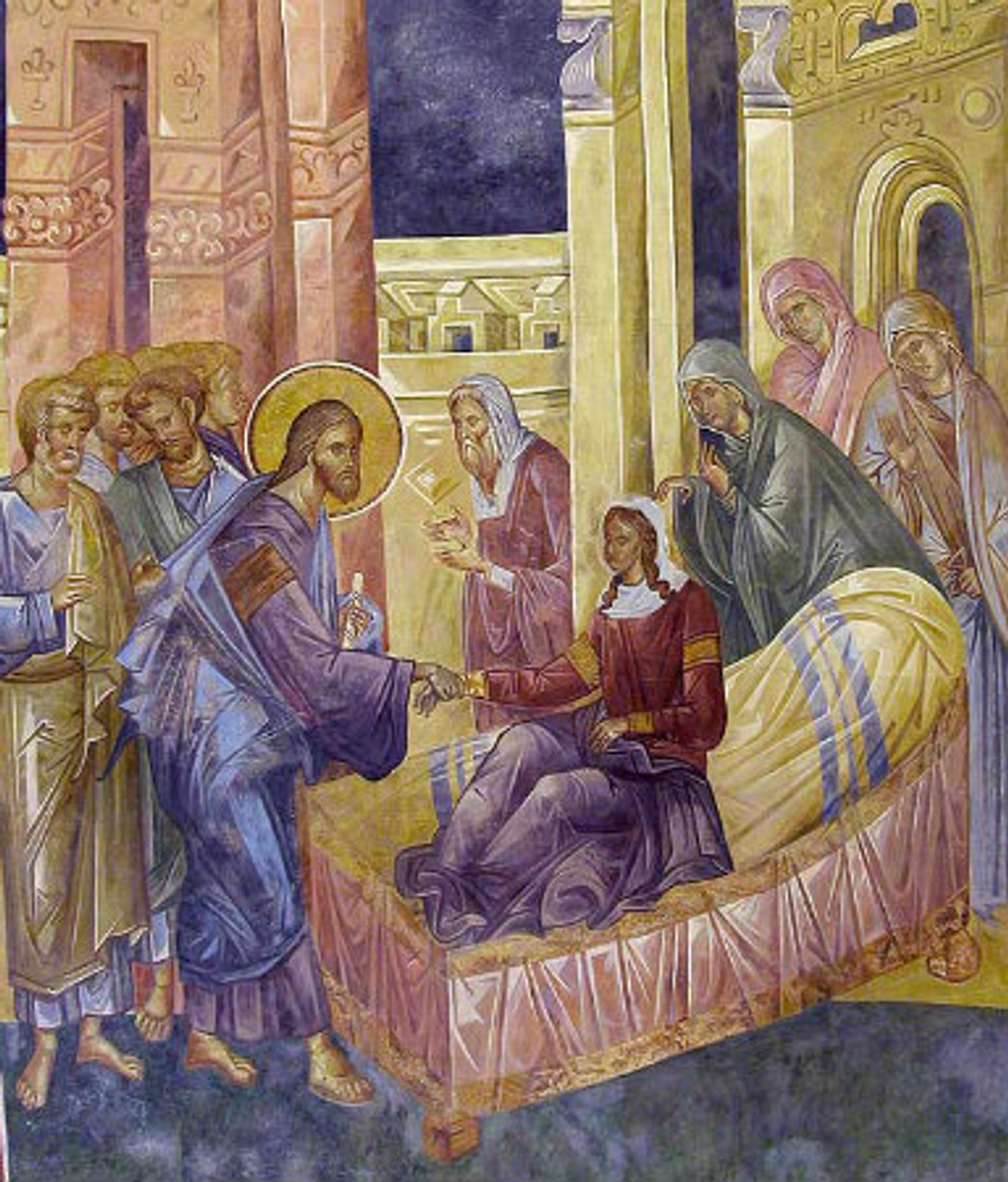
Download Podcast: "Two Ways There Are"
For centuries readers have marvelled at the Gospels for their awe-inspiring spareness. For the most expansive subject imaginable is expressed in so few words.
The subject matter before us is a case in point. Having revealed His Divine Identity, Jesus then openly displays His purposes — to expose the way of death and to invite all into the way of life. But there is so much to say: the way of Abraham and Melichizedek set against the blood-sacrificing Temple; the culture of the Northern Kingdom set against the ascendent Southern Kingdom; the traditions of Isaiah set against the Second Temple prophets; the ways of Heaven and servanthood set against the grasping culture of Sadducees; the Sermon on the Mount set against the Laws of Sinai .... the list is a long one that would occupy many hours to rehearse. Yet the sublime artist, St. Luke, renders it in a few scenes. He has opened the Divine to us through windows to Heaven.
Let us enter into this mysterious place where he has done so much with so little. Let us reflect, for he reveals the marvelous, the filled-with-grace, and he shows us the way to the Kingdom of Heaven.
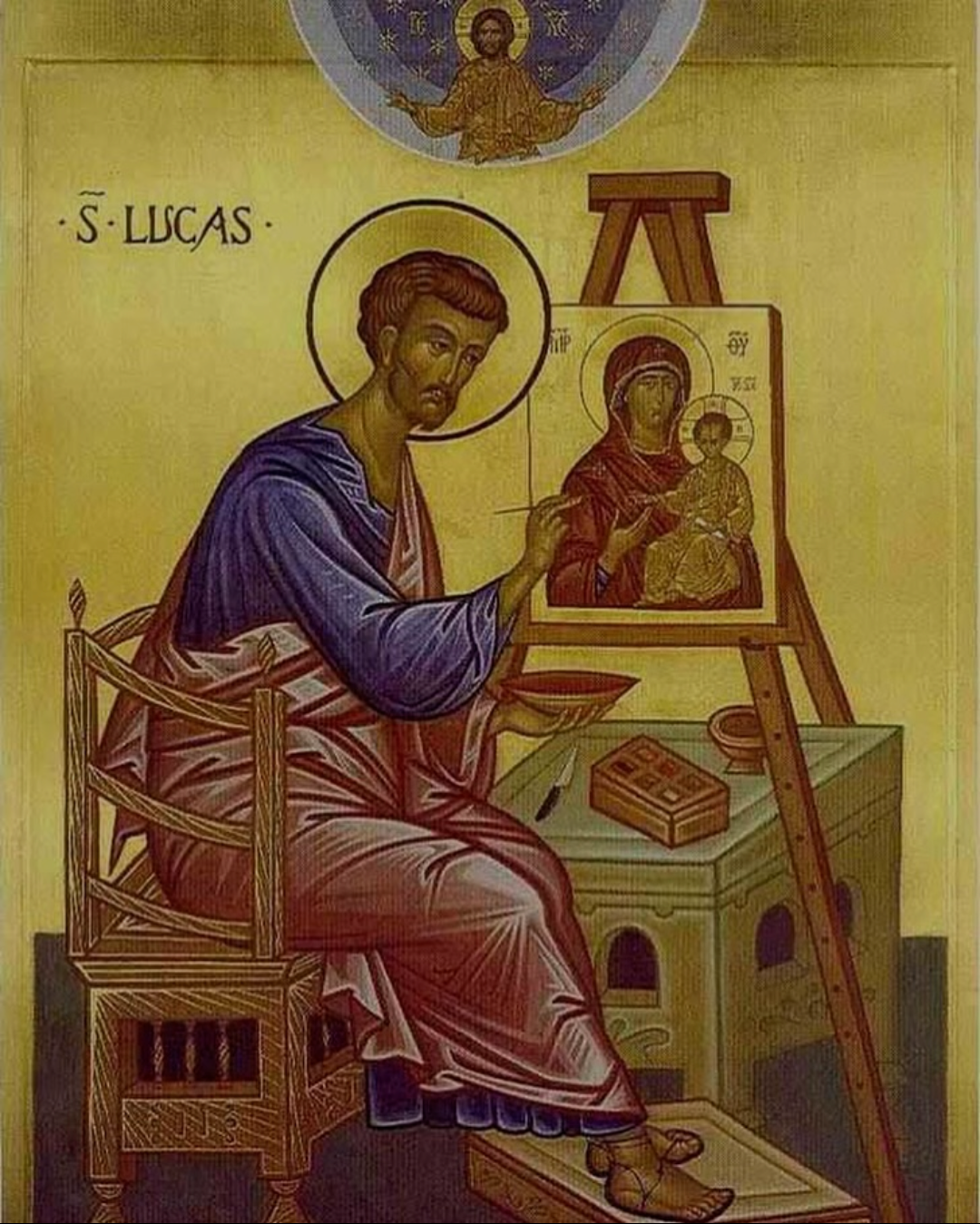
Download Podcast: "God Among the Ruins"
Who could rise to the heights of telling this most extraordinary tale in human history? God roams the ruins of the world that He made. His people are demon-possessed, wholly entranced by the lowest things in their nature, feeding on the garbage of their animality. They tread the path that leads to incurable disease and eternal death. To make matters worse, they are inured to worshiping a god, who is not Himself. Indeed, the forgotten true worship, mindlessly offering blood sacrifices and forbidden to mention His Name. How can He turn them away from these vile habits? How can He rouse their spirits from these deadly stupors? How can He turn their faces back towards Heaven?
To tell this tale one had to draw on all that learning and spiritual journey had to teach. One had to draw on the highest rhetoric that could be mastered. And one more thing: one had to be elevated by the inspiration of the Holy Spirit.
The erudite and highly literate physician Luke had a vocation to write a Holy Gospel. He was the master of many fields ranging from what we would call the sciences, the fine arts, and the liberal arts, including philology and an interest in Hebrew culture. We have spoken about his painterly style of writing. Today, let us reflect on more of St. Luke's gifts. For He was chosen by God to offer to us a dazzling work of his deepest arts.
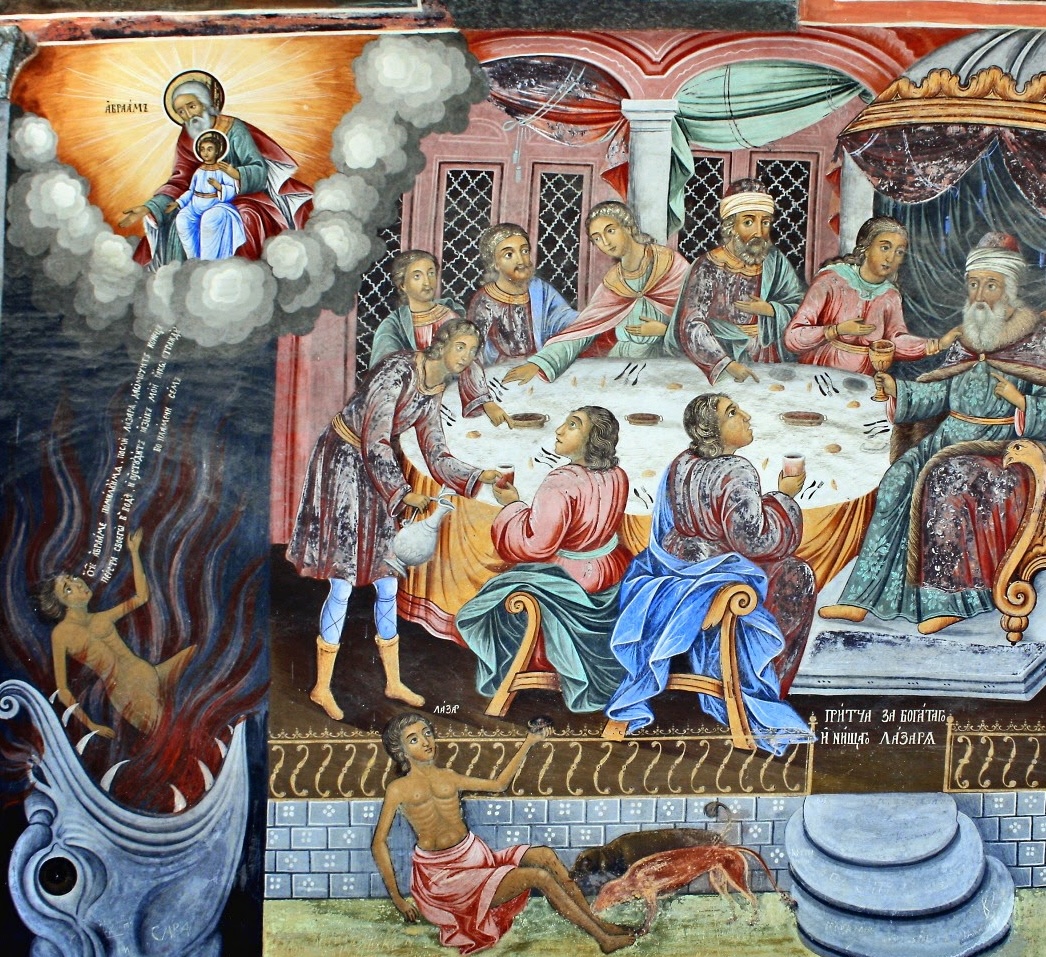
Download Podcast: "All There Is"
Here in the week when we venerate the Evangelist and (with St. Paul) Apostle, St. Luke, we again reflect on one of his icons written with words. Aside from his works as a painter of icons, his written Gospel is a veritable icon book.
The present artwork is an icon of all there is. In it are depicted God's principal creations, where are boundless and eternal Hell and infinite and everlasting Heaven. Included is that limited and temporary creation we call "the world." And one more thing: the creation for which God mysteriously has made all: Man.
Our Gospel lesson presents what is perhaps Luke's primary icon. Not only does it include everything, but it also presents us with a paradox which goes to the very heart of God's Creative Genius.
Please join us as we gaze on St. Luke's divinely ingenius art imitating His Master.
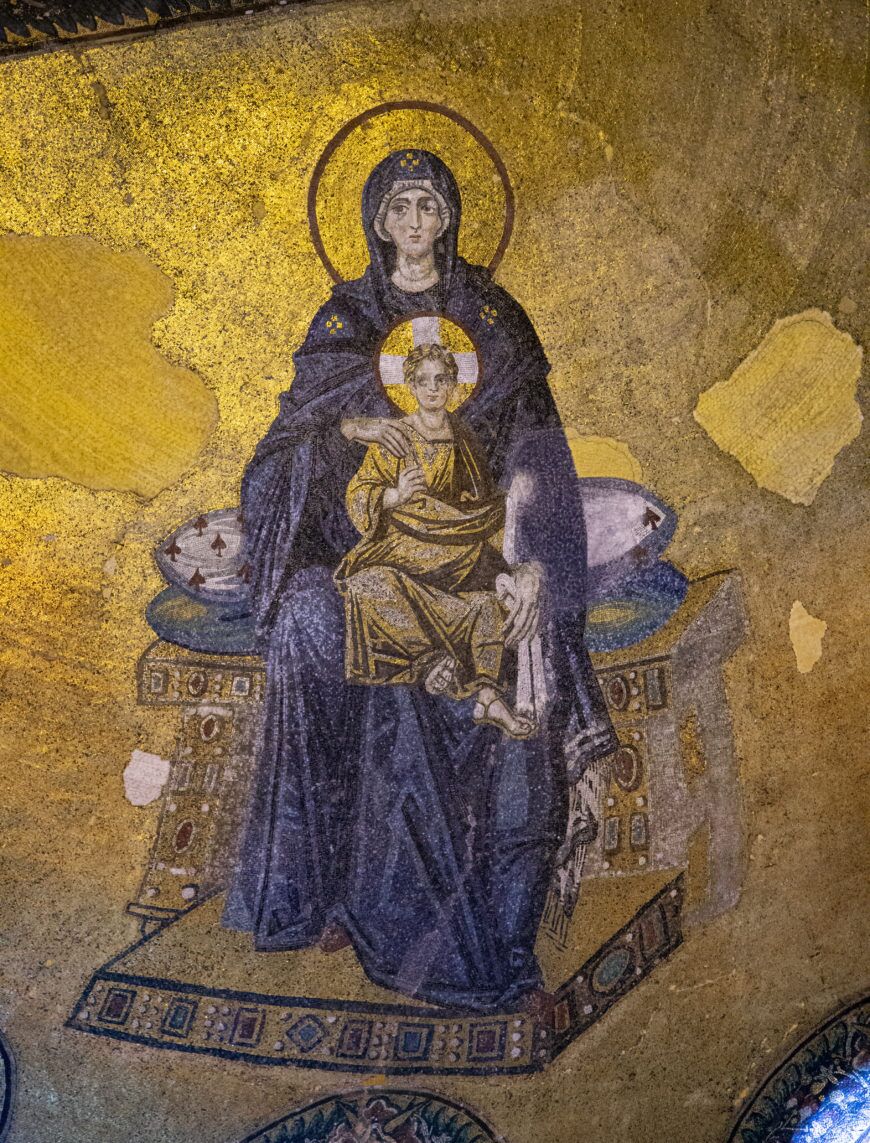
Download Podcast: "The Un-secret"
Today, we reflect on a world intent on destroying the holy, brought into sharp focus by iconoclasm, which literally means "to smash icons." The Second Council of Nicaea (seventh in the sequence) was convoked to settle this controversy which threatened to rupture the Church.
Icons are not art. They are not the comforting familiar. They are the un-secret. They are the eyes of eternity looking out on the unredeemed world and on the world's desperate attempts to paper over the unspeakable and to domesticate the unutterable.
And in our grave sins against God, vainly eradicating the holy (as if we ever could) — whether they cry out to Heaven from eighth-century Byzantium or from Soviet atheism burning churches, smashing icons, and murdering 100,000 clergy or, in our own time, defiling and desecrating the Eucharist in giddy public ceremonies .... — be sure of this: the sober eyes of eternity look on. They continue their holy witness, and they set out a mirror to us disclosing the real even as we frantically attempt to conceal our true natures, the true meaning of life, and the ultimate reality of everything.
But the eighth century has vanished like a dream, and all empires turn to dust. Without fail, the eyes of the Holy Ones look on forever from perfect light. In the poet's words,
|
An aged man is but a paltry thing,
A tattered coat upon a stick .... O sages standing in God's holy fire As in the gold mosaic of a wall, Come from the holy fire, perne in a gyre, And be the singing-masters of my soul. Consume my heart away; sick with desire And fastened to a dying animal It knows not what it is; and gather me Into the artifice of eternity. (William Butler Yeats, "Sailing to Byzantium") |
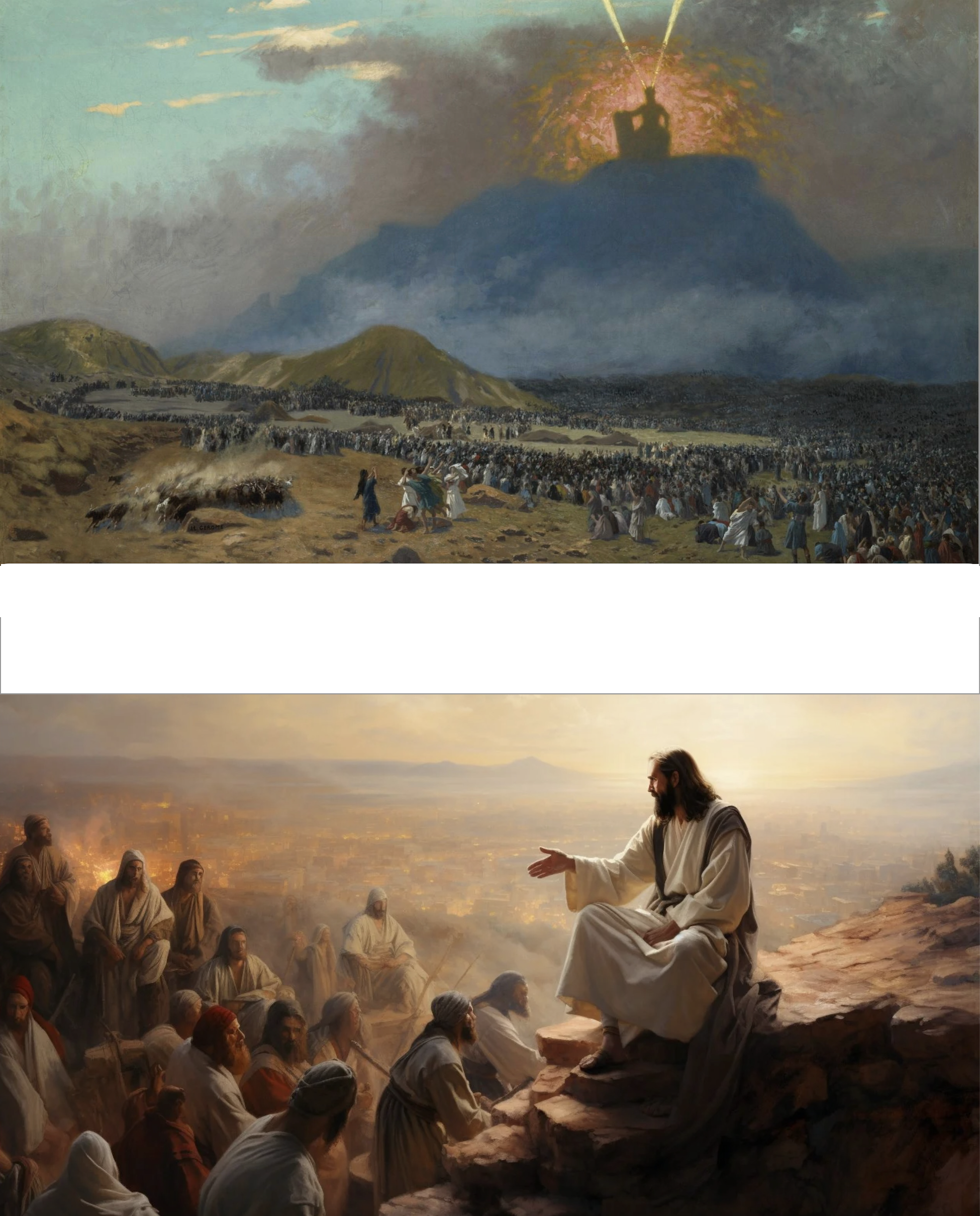
Download Podcast: "Upon God's Holy Mountain"
When it comes to Scripture, we are often "text-oriented," using individual words to open hidden roads from passage to passage. But St. Luke, our proto-icon-painter, departs from the other Evangelists conspicuously conceiving these holy events in term of images revealing divine mysteries.
Now, this is not news to our readers. We have been exploring this aspect of Luke's art for the past ten years: his two, companion icons (a dyptich) of Gabriel's divine visitation to Zacharias and then to Mary; his depiction of Pentecost as an "operatic" stage set featuring a locked upper room opening out onto a many-peopled Jerusalem — sweeping, grand spectacle; his other "arias," assigned to Mary (the "Magnificat,"), to Zacharias (the "Benedictus"), and to Simeon (the "Nunc Dimittis"), anticipating grand opera by more than a thousand years.
Last week, we were again ushered into the holy precincits of his expansive art, taking in another dyptich: Last week, we were again ushered in before a great dyptich, the Sermon on the Mount hinged beside the fiery summit of Mount Sinai. St. Luke actually depicted only the former. The latter he implied. But the contrast between them was the mystery he sought to unlock. The work could well have been titled "God upon His Holy Mountain" — a bold contrast between the God-Who-Is, Who-Is-with-Us, and the distant, forbidding figure worshipped in the Jerusalem Temple.
But it is not a simple contrast: the Laws the Lord Jesus gives from the Mount are not less rigorous but rather more so: prohibitions not merely on murder but even on anger, not merely on adultery but even on lust or sexual fantasy, not merely on false witness but even on giving any oath. We are to love our enemies and do good to those who mean us harm. The point of the two-paneled icon is, God does not seek merely slavish rule-followers. He seeks friends (Jn 15:15). He wants to transform our hearts that we might enter into true fellowship with Him, indeed, that we might become His adopted children.
The image of the mountain is crucial if we are to understand the following chapter, Chapter 7, as we find Him roaming about Galilee doing what we might call "the works of the Holy Mountain": — healing incurable diseases, raising the dead, and announcing the good news.
How beautiful upon the mountains,
Are the feet of him who brings good news ....
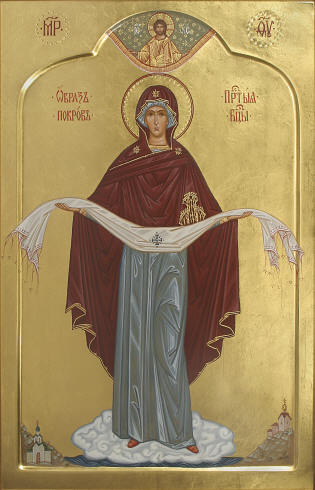
Download Podcast: "Under Her Mantle"
We at the Hermitage live only two timezones from the eastern shores of the Russian Land but about 7,000 miles from Moscow (such if the breadth of the Russia). But we join them today in a blessed Feast venerating the the Protection of the Most Holy Theotokos. In Russia, the hustle and bustle of daily life stops in order to bow before our Most Holy Mother, but in personal terms. From individual apartments in Moscow to snow-covered cabins in the Taiga, people draw near to her in her icons and speak to their Most Holy Mother. For it is Her care for us, Her desire that we come to no harm, which we reverence.
The Feast of the Protection of the Theotokos is among the most beloved of feasts among the Slavic peoples. The signature cathedral which we associate with Russia, called St. Basil's in Red Square, is formally known as Pokrovsky Sobor. The Russian word pokrov meaning "cover" generically but in particular on this feast day, "mantle" or "veil." The Most Holy Mother of God shelters us "under Her mantle" and under the protection of Her intercessory prayers — all expressed in this word, pokrov.
On this day especially, remember Your Most Blessed Mother. Her prayer is simple: that each of us be the apple of Her eye and that each live under the shadow of Her wing.
|
Pray for us, O Most Holy Protectress!
Keep us under your holy Mantle! Help us to grow into the fullness of your prayers! Help us to become worthy of the promises of Your Son! |
Download Podcast: "God's Kind"
For centuries people who do not necessarily believe in God have pressed Jesus into service as their spokesman. He is the "apostle of kindness," they say. And the Gospels form the world's classic text on being kind. But here is a surprise: the words "kind" and "kindness" in their sense of gentle compassion appear only once in the Gospels: Luke 6:35, and there as part of a distinctly otherworldly discourse. As countless writers have pointed out, the Incarnation of God was not to offer advice on virtuous living in the world. In fact, the opposite is true. The Life of Jesus calls us away from the world to an entirely different kind of life — a marvelous Kingdom which Jesus says over and over again is plainly not compatible with worldly ways.
No question, Jesus teaches us. Certainly, He calls to us. But He calls away from our worldly lives to be with Him far away from what we know to a new way of seeing and a new way of being.
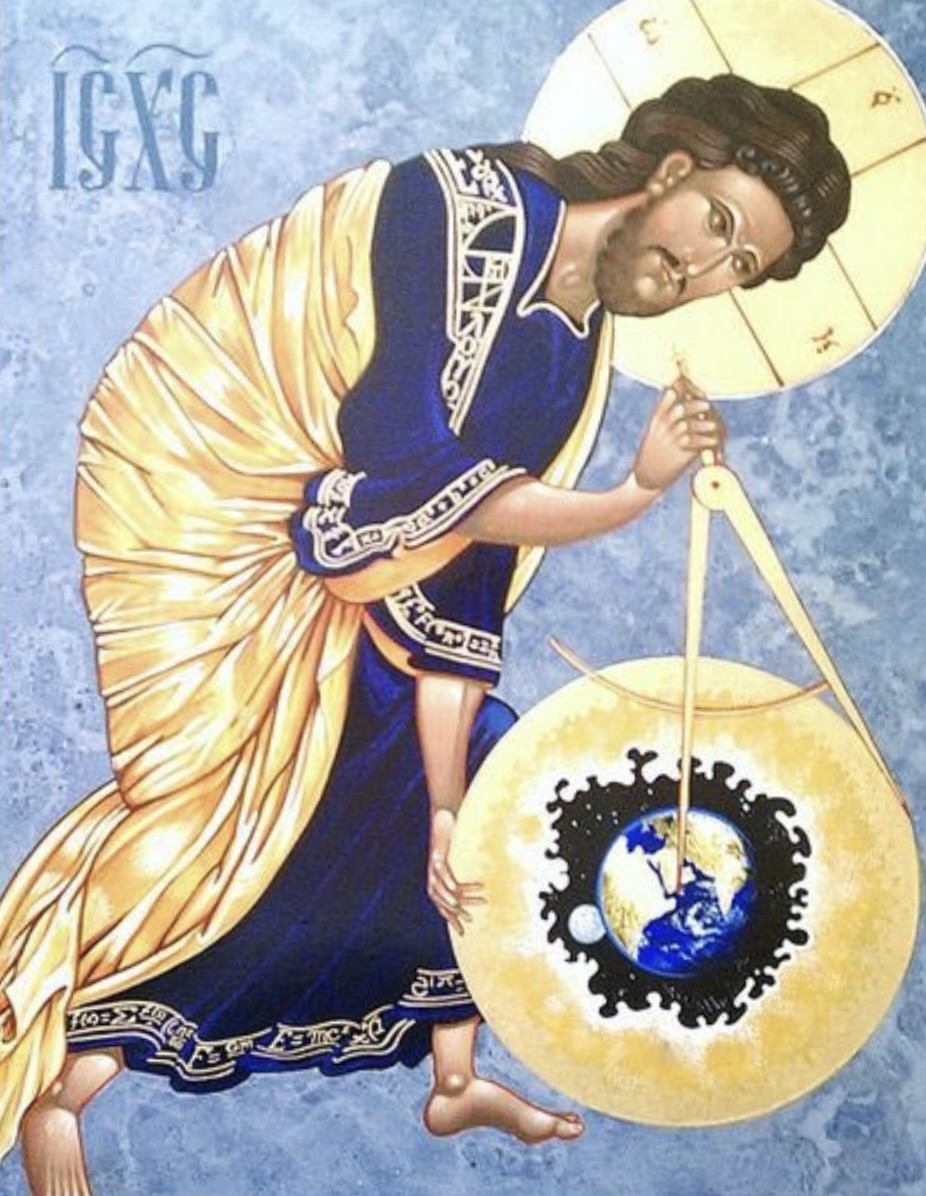
Download Podcast: "The Holy Circle"
The secular way to account for the movement and motions of our planet with respect to the sun is marked by four annual events: the Winter Solstice (when the sun is farthest south); the Vernal Equinox (when the sun is over the equator); the Summer Solstice (when the sun is farther north); and the Autumnal Equinox (when sun is again over the equator), which we perceive to be its yearly journey. (All this is from the perspective of the Northern Hemisphere because the people who first made these calculations did not know there was a Southern Hemisphere.)
But we Christians regard all such distinctions to be secondary, as things indifferent. We draw our measurements from things holy: the Annunciation signifying the Conception of God within the material Creation (readying us for His Nativity nine months later) and the Conception of His Forerunner (preparing us for his birth nine months later). In our way of seeing, their births, six months apart, mark the pivotal moments in the history of the world.
That these holy conceptions and holy births should occur at the four corners of the year might appear to be a wonderful timing of biological events. But I think of this as being even more basic, more elemental in the ordering of our world. That is, I believe that the very structure of everything we perceive is patterned upon Him, the Lord God Jesus Christ. That is, the Holy Ones come first, and our physical reality attends upon them. And why shouldn't this be the case? Why shouldn't the physical universe and movements of the heavens be about Jesus, the Logos? He created them. And they find their source and origin in Him Alone, Who was before all worlds.
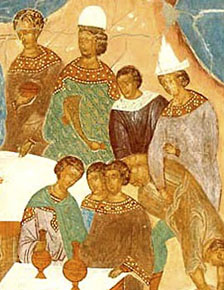
Download Podcast: "Love Marriage"
The King of Heaven arranged a marriage for His Son.
This marriage to the world would be celebrated, would be solemnized, would be consecrated upon the Holy Cross. For what is the great difference between a God Who emptied Himself, the Suffering Servant, the All-Holy and Divine God humbling Himself unto earth and the Cross? What is the difference between a Passion that began at His Conception and lasted three decades and the sufferings of a few days?
On the Cross was perfected the terrible privations of this marriage. On the Cross was put on stark display the neglect and abuse that had been heaped upon God's Son from the time of His Birth. On the Cross was no longer hid the enormity of what the world had done — and all He endured that the world might be reconciled to Heaven. No, His marriage would not be to a comely and chaste bride, who deferred to His Royal character. But it would be a thing of sordid confusion, of defilement and degradation, of adulteries and treachery, and of common filth.
The Cross is the place where the twisted world must square with the perfect lineaments of Heaven. It is a place of unbearable torsion: where demons cry out, where oceans boil, and gales blow. It is .... the end of the world. Yet One has been sent as a Bridegroom Who presides over the world's end, Who will banish demons, Who stills the winds and calms the seas. And He bears with Him the instrument of His intrinsic rectitude: the Cross with its perfect geometry, where mercy intersects with justice. He saves the world with this Life-giving rightness, this sanity, this goodness.
Thus, the Cross endures as the symbol of the most heinous crime humanity is capable of and a world that is healed and reconciled to God. It is the symbol of God's faithfulness to the last and of a love that cannot fail. It is the sign and seal of His marriage.
He is Heaven, and Heaven is none other than He. He is Judge of the world and the measure of all things. He is the Alpha and the Omega. And He surveys the whole span of human experience — every darkness, every depravity, every failure. And it is His will that all things be made right. Even at the moment of our greatest crime against Him, yet He stretches His arms out to embrace His bride and to heal her with that fearful geometry we had designed as a torture for Him.
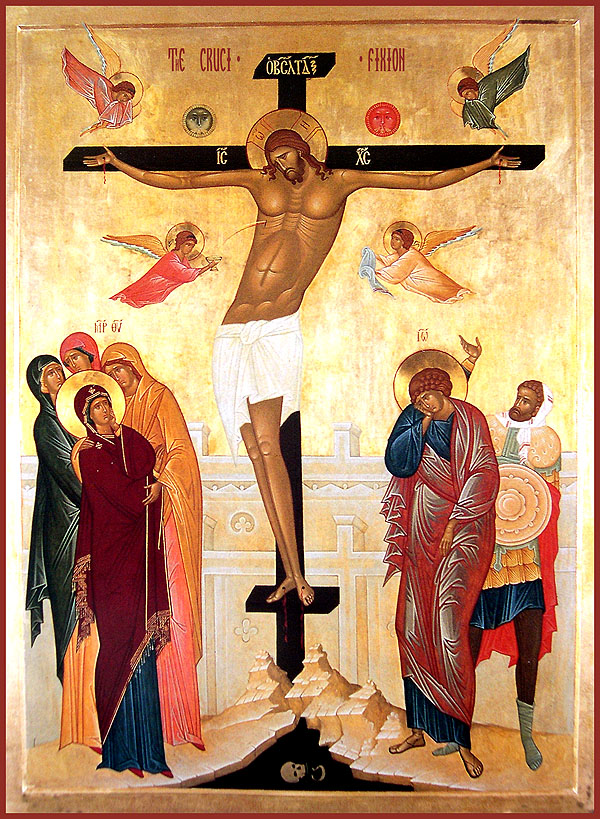
Download Podcast: "Take Up Your Cross"
What does it mean to pick up our crosses and follow Him? After all, this is a basic condition of becoming a Christian. It means that our worldly life, our old ways of seeing and being, must be crucified and killed. Our worldly selves must be buried and forgotten .... never to be monstrously dug up and revived.
We must go forward with a new way of seeing and hearing and being. We must clearly hear God when He speaks to us .... and reply. We must see Him clearly, free from polluting influences. Only by doing these things can we begin to follow Him and begin our journey to His marvelous Kingdom.
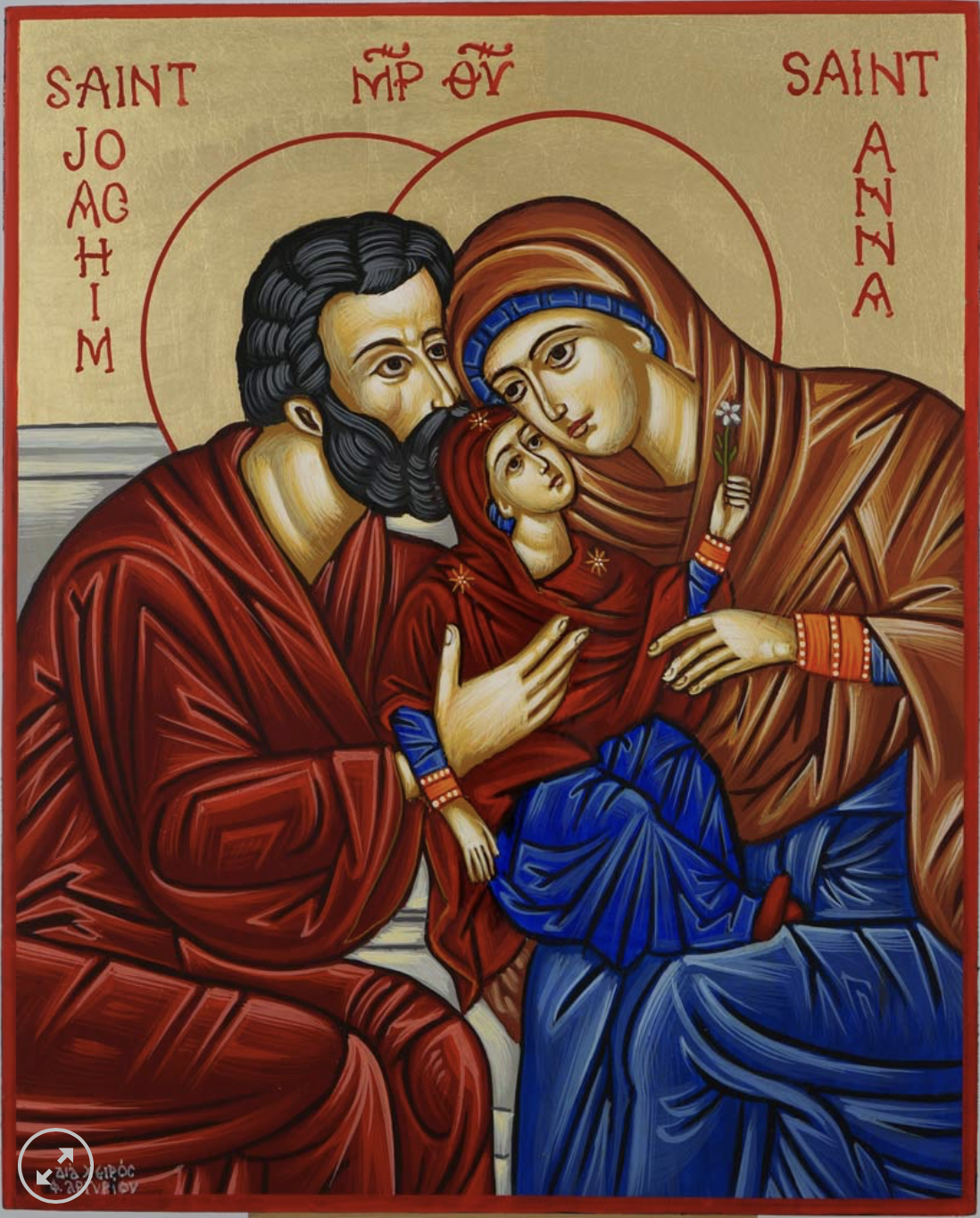
Download Podcast: "The Two Ways"
The proto-icon painter St. Luke has provided us with a dyptich — two hinged-together icons, each explicating the other. But he has painted them with words. His great theme is nothing less than the nominal purpose for the Incarnation of God, which is the gathering of the lost sheep.
Formally speaking, these icons are quite similar to each other: the barren couple. One couple is in a religious tradition which God deems to be a failure of faith. The other is in an exemplary religious tradition, representing the true ways and looking back to Abraham and Sarah, God's exemplars, which are types of the Kingdom of Heaven. Yet God will use both, the anti-type and the type, to set the stage for the salvation of humankind. Each, in its way, will surely be instructive for us, for they speak to our own age with its "check-list religion" on the one hand and the lively, religion of the heart and hand, on the other.
Come, let us appreciate the handiwork of the great icon-writer, St. Luke. And let us reflect on our lives as we gaze into these mirrors, which he has set out for us.
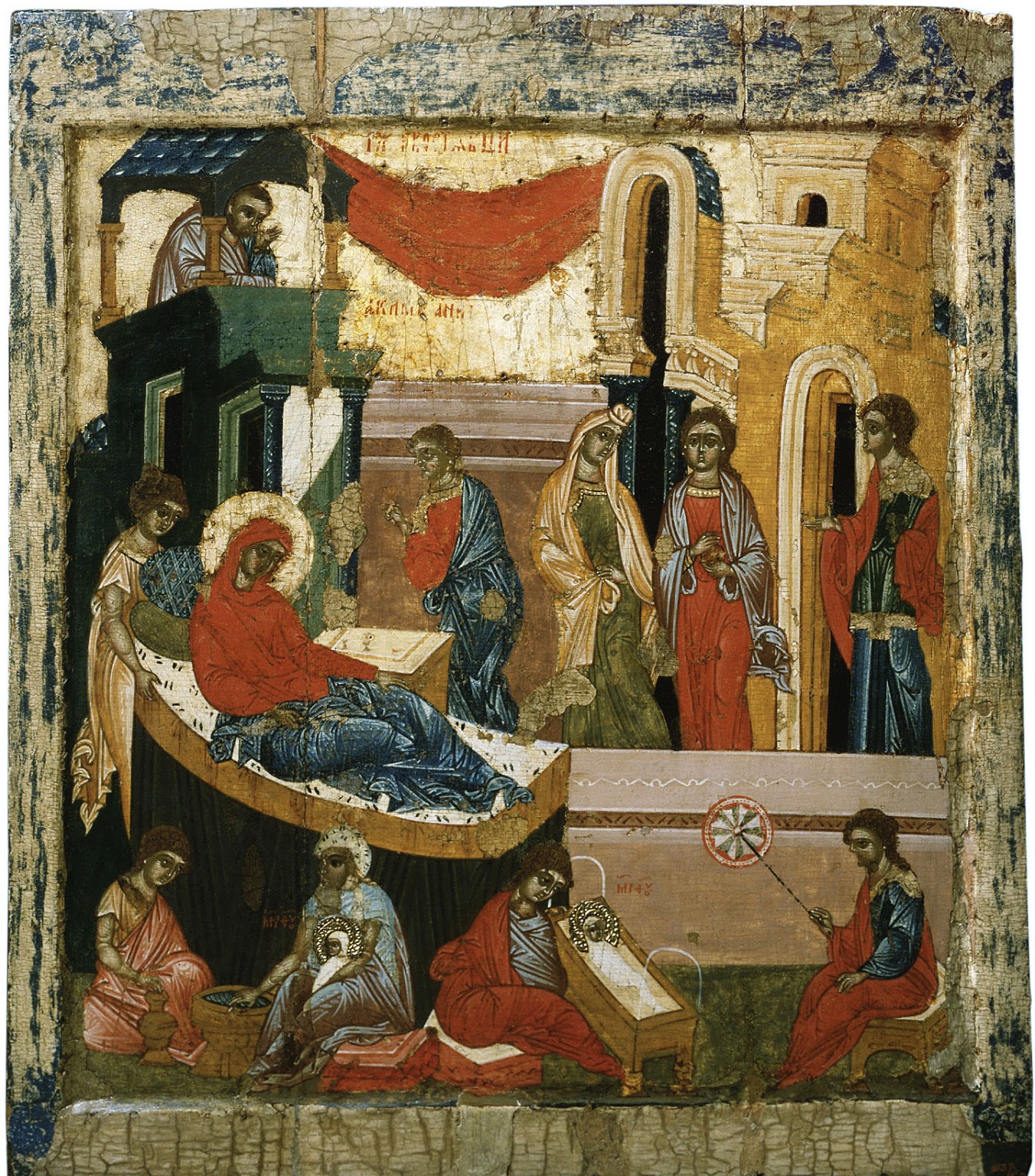
Download Podcast: "The Gates to Salvation"
Everyone is familiar with "the gate of life," for we have all passed through it. It is sacred and protected by God with holy commandments that it not be slighted or abused or defiled. On the contrary, we must revere this holy place and approach it with awe, for it has been set aside by God as a most holy sanctum. For the gate of life through which we all have passed to take our first breath in the world is the path God has prepared to effect our universal salvation. It is generational in all senses of that dynamic and life-giving word.
At the Nativity of our Most Holy Mother, let us ponder God's handiwork, which touches each of us personally yet reaches out in its meaning to Divine and cosmic dimensions. Let us step beyond our wonted ways and open our minds and hearts to God's way of perceiving and being. For this is the way of eternal life.
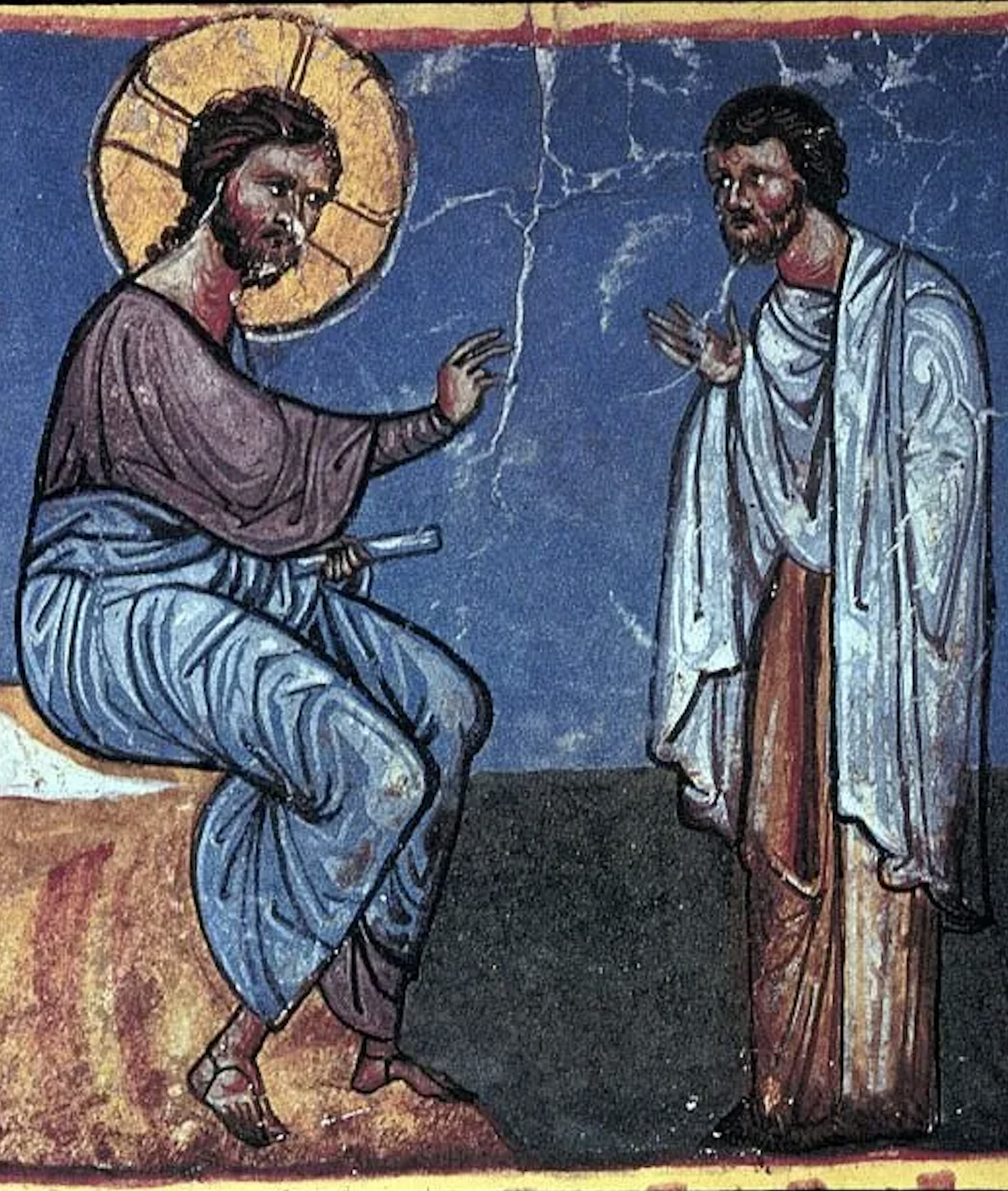
Download Podcast: "Won't the Books of Moses Save You?"
The young ruler's task is one set before all of us. The irony about true Christian life is that it is well within our reach. But it must always begins with a decision made at a crossroads: the things of the world or the things of God. St. John, our highest earthly authority, says it simply and plainly:
|
Do not love the world or the things in the world. If anyone loves the world,
the love of the Father is not in him. (1 John 2:15) |
And the Teachings of the Apostles (the Didache) begins this way:
| There are two ways, one of life and one of death; but a great difference between the two ways. (Didache, 1.1) |
In effect, Jesus says to the ruler of the Academy of Moses, "So, won't the Books of Moses save you?" There is something more, much more. We are invited not to read about the ascent to the summit of Sinai, but to ascend Mt. Sinai ourselves and to see God Face-to-face .... as even the synagogue ruler now does on a roadside somewhere in the Levant.