Returning to Isaiah's vision,
Mark 16:1-8 (Matins)
1 Corinthians 16:13-24
Matthew 21:33-42
How does one cultivate the interior garden? I say cultivate, for it is already established in each of us from the time of our childhood. It is a goodly place. Its many fragrances are etched upon our souls: the smell of a pine forest, a meadow at dawn covered with dew, the roaring seas under gray skies, freshets and cataracts in remote valleys, heavy snowfall in a quiet wood, even the smell of freshly mown lawns on a Saturday morning and the clarity and sharp outline of every leaf above. All of this and much more is still there, but do we perceive it with the same immediacy, the same face-to-face simplicity?
Undeniably, we have been distanced. But how was our joy taken from us? Little by little it disappeared ..... or rather we disappeared from its midst. Our minds were drawn elsewhere. Our egos became known to us. And, as it turned out, the demands of that new world of self-absorption and competition and personal desire took all the oxygen out of our lives. And in like proportion, the way back into the selfless world of joy and beauty was lost.
Perhaps here is a clue to that riddle: the loss of those thousands-and-millions of acres of unspeakable beauty we call Eden — un-self-conscious, ego-less Eden, for ego and self-awareness and selfish desire had no place here ..... until it did:
| And God said, "Who told you that you were naked?" (Gen 3:11) |
Upon the threshold of the Lord's departure from this, our lost world, He said,
| "Assuredly, I say to you, today you will be with Me in Paradise." (Lu 23:43) |
Of yes, God's world of purity, of simplicity, and of beauty is still there in all its superabundance. And the way back to it is love. As He Himself tells us:
|
Thou shalt love the Lord thy God with all thy heart and with all thy soul,
and with all thy mind. This is the first and great commandment. And .... Thou shalt love thy neighbour as thyself. (Mt 22:37,39) |
God's commandments — if we hear them as harsh requirements, then we have completely missed their tone and intention. They are our "life lines," our "life preservers" in a stormy sea, in a world grown dangerous from ego-think. (You've heard it's a dog-eat-dog world.) In particular, Jesus calls attention to these two, which He calls the greatest, and says that everything taught in Holy Scripture is summed up in them (Mt 22:38).
But wasn't this our mind form the beginning, out childlike mind? Did we not love God and all that was in His world? Did we not see other children, even those we had not met, as friends?
Finding our lost path back to Paradise begins by reading Scripture as a history of gardens, a succession of vineyards, for the vineyard signifies the life with God Who is goodness. It follows that ungodly things creeping into the garden, ruining the vineyard, and contaminating the grapes, represent the loss of God's company on earth and the vanishment of our path.
The Early Church Father, St. Irenaeus, speculated that Adam and Eve had not yet matured — that their sin was youthful rashness and impatience. That is, Eve was destined to be like God anyway, which was the serpent's promise (Gen 3:5). But she grasped at it. She wanted it now. Adam chose Eve's world over God's. And "the wild" crept into the garden and humans descended into feral nature.
In time their descendants also came to choose their animal minds:
|
Then the Lord saw that the wickedness of man was great in the earth, and that
every intent of the thoughts of his heart was only evil continually. (Gen 6:5) |
So the Lord God cleansed the earth with many waters and began again with the generation of Noah. Thus does Second Eden begin. But this world of goodness would not last. And "the wild" crept in.
|
And Noah began to be a farmer, and he planted a vineyard.
Then he drank of the wine and was drunk, and became uncovered in his tent. .... And Ham, the father of Canaan, saw the nakedness of his father .... So Noah awoke from his wine, and knew what his younger son had done to him. Then he said: "Cursed be Canaan" .... (Gen 9:20-25) |
"To uncover nakedness" is an ancient Hebrew euphemism for having sexual intercourse. As Deuteronomy 23:1 and 27:20 suggest, having intercourse with one's mother is expressed as "uncovering one's father's skirt." The scene before us, therefore, is one of father-drunkenness and mother-incest. And the vineyard again is sewn with wild grapes.
The Scriptures record a succession of new gardens planted. As we read in Isaiah:
|
And it shall come to pass that he who is left in Zion ....
will be called holy .... When the Lord has washed away the filth of the daughters of Zion .... In that day the Branch of the Lord shall be beautiful and glorious; And the fruit of the earth shall be excellent and appealing .... (Isa 4:2-4) |
For these favored ones God plants a vineyard:
|
On a very fruitful hill.
He dug it up and cleared out its stones, And planted it with the choicest vine. He built a tower in its midst, And also made a wine press in it; So He expected it to bring forth good grapes .... (Isa 5:1-2) |
Unruly life is walled out. The enclosure is orderly, cleared of stones, planted with the choicest vines, and set apart, signified by the watchtower. For the wild world outside bears watching.
Within the faithful life, that world must cannot enter. You see, despoiling must always come from within. From the treachery of Eve, to the wildness of Noah, to the kiss of Judas in another garden, called Gethsemane, the worm and its canker must appear from the unwholesome imagination of man and woman. And this was the creature to whom God had entrusted everything:
| The Heaven of heavens belongs to the Lord: but he has given the earth to the sons of men. (LXX Ps 113:24) |
If that garden wall is to be breached, it must be human treachery which breaches it, whose wild fruits are disease and death. Do we not see these walls and hedges everywhere ruined? We once saw childhood as an inviolable garden. Is that still true (as commonly read of women preying upon ten- and eleven-year-old boys)? And the parts of our bodies to be safely protected within the walls of sacred marriage, I say, safe within these walls — what has become of these walls? Is the garden, where marriage grows and from which children proceed from choicest vines, still safe?
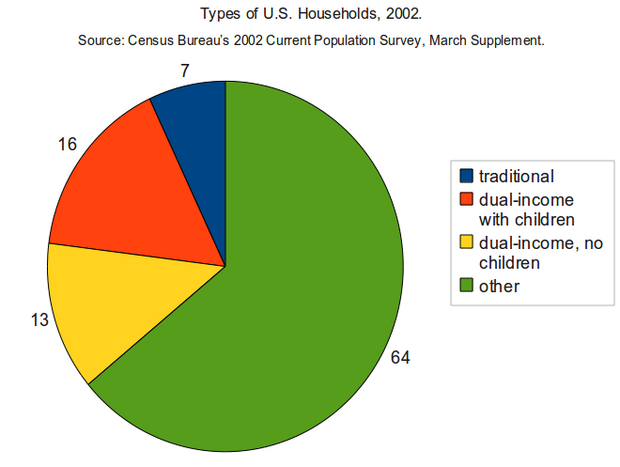
It is a shocking fact that virtually the entire adult population of the United States now has an incurable, sexually transmitted disease: HS2 or HPV, many times unsymptomatic. Meantime, "syphilis cases in the U.S. are skyrocketing" according to a report from Johns Hopkins (Bloomberg School of Public Health, March 13, 2024) released only a few months ago. We once termed these "social diseases." That name was more apt than we knew, for this aspect of "the wild" has destroyed our society and everything we most cherished. And God's plan for His garden — one man and one woman in permanent bonds of marriage together with their children (which we once called "the family") — is now the exception in America, about 7% ..... and declining.
Returning to Isaiah's vision,
|
So He expected it to bring forth good grapes,
But it brought forth wild grapes. "And now, O inhabitants of Jerusalem .... What more could have been done to My vineyard That I have not done in it? Why then, when I expected it to bring forth good grapes, Did it bring forth wild grapes? And now, please let Me tell you what I will do to My vineyard: I will take away its hedge, and it shall be burned; And break down its wall, and it shall be trampled down. I will lay it waste; It shall not be pruned or dug, But there shall come up briers and thorns. I will also command the clouds That they rain no rain on it." (Isa 5:2-6) |
Prophecy and fulfillment of prophecy.
Now, an audience in the first-century listening to the parable of the wicked tenants would have been well-familiar with these echoes from the Book of Isaiah, Jesus favored book. Who is this "certain Landowner" who "went away to a far country" (Mt 21:33)? We find that this Landowner's title in the Greek original is Κυριος (Kyrios) or King which is the title used for YHWH in the Septuagint from which Jesus and His Disciples quoted exclusively.
Like the God of Creation, this Landowner planted a vineyard. He set a tower within it and dug a wine press. He set it apart from the wild world with a hedge. And He gave it, in trust, to vinedressers. And what will they do to requite this Divine trust, this solicitude from Heaven, this kindness?
Is this not a retelling of the Eden story over and over and over? Indeed, is this not our constant state of affairs now, but much worse? At no time in history has the retelling of the treachery in Eden been more vivid and grotesque? And God's expectations remain the same from Eden to the present time:
| "Therefore by their fruits you will know them." (Mt 7:20) |
The vineyards we have read about have been proposed as historical places which are also allegories. But with the Birth of Jesus, the garden becomes an interior reality only. That is, it still has a literal / historical meaning, but that the literal level points to our souls and consciences. Thus, the St. John the Baptist, who is the man of Eden, performs God's final cleansing of the Creation (Mt 3:11, Lu 3:16, Jn 1:30-32, Acts 1:5). The Temple is torn down and replaced by the interior temple. And the Lord's interior state becomes our model and place where we meet with God, culminating in our becoming One with Him as He and the Father are One (Jn 17:21-23).
We read our parable this morning in terms of a spiritual garden. For the Son and Heir stands before the wicked tenants but also before us. The wicked tenants exhibit Eve's twisted logic believing they can supplant God's Heir. And the Lord accuses all wicked tenants — those who inhabit the garden, yet do not cultivate Heaven but rather are wholly absorbed in "the wild."
In His first miracle the Lord Jesus turned water to wine, pointing us toward the vineyard and garden. In His final miracle, He turned wine into His Precious Blood, reopening Eden. For the final time, humanity is cleansed (baptized by the man of Eden) and invited back into the Garden by "a certain Landowner". And this is our own estate: we are baptized in water receiving the Holy Spirit and instantly are invited into the journey to Eden. We are to follow Jesus, that is, take up where Eve and Adam left off. We commit ourselves to the good life and patiently attain maturity which in its fullness resulting in One-ness with God.
We participate in the sweet wine of His Precious Blood worthily. We approach the Inner Vineyard reverently. And we offer to God our oblations which are our own good growth — an interweaving of branches with the true Vine. In this sense we dwell in Him as He sees fit to dwell in us. For He says,
|
"I Am the true Vine, and My Father is the vinedresser.
Every branch in Me that does not bear fruit He takes away; and every branch that bears fruit He prunes, that it may bear more fruit. .... "I Am the Vine, you are the branches .... By this My Father is glorified, that you bear much fruit; so you will be My disciples." (Jn 15:1-8) |
From birth, the garden of innocence is re-established in each one of us. We are graced with an angel who is our protector and our guide. From our birth, it is good and fertile soil. And He watches as it matures into fullness. He sets high walls around in the form of our conscience (which the angels make to shine brightly).
|
The Lord God planted a garden eastward in Eden,
and there He put the man whom He had formed. (Gen 2:8) |
Let us abide in this garden, being vigilant and watchful, lest any bad thing intrude. He expects good fruits in due season, so we labor within its safe and fragrant bounds. And, in the end, we hope to offer Him a cup having a sweet savor. For this is our oblation as a sign and remembrance of our approaching Union with Him, awaiting such time when we shall drink it with Him:
|
"But I say to you, I will not drink of this fruit of the vine from now on
until that day when I drink it new with you in My Father's Kingdom." (Mt 26:20) |
In the Name of the Father and of the Son and of the Holy Ghost.