John 20:19-31 (Matins)
Galatians 1:11-19
Luke 6:31-36
"God Is Love"
.... you will be sons of the Most High. For He is kind to the unthankful and evil.
(Lu 6:35)
In the Name of the Father and of the Son and of the Holy Spirit. Amen.
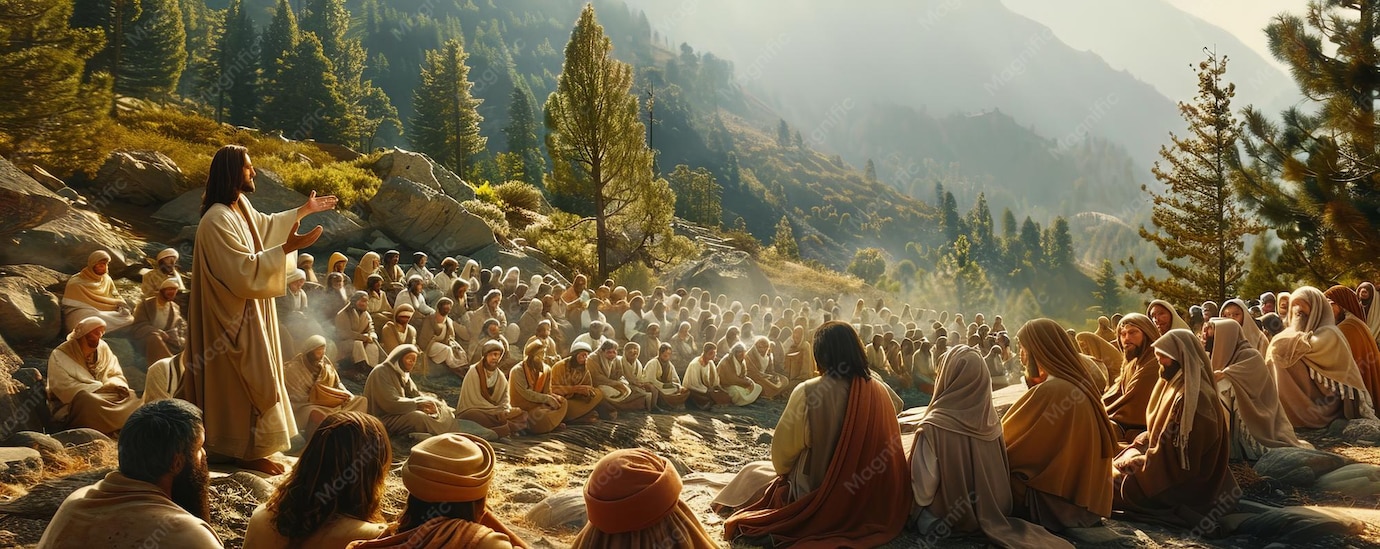
Our Gospel lesson is taken from St. Luke's Sermon on the Plain,
which is the Evangelist's retelling of St. Matthew's Sermon on the Mount.
We believe that the other Gospels were written by first-hand witnesses
—
the Beloved Disciple, who laid his head on Jesus' breast;
the publican, Levi-Matthew, whose heart was changed by Jesus
when he heard Him and Saw Him;
and
the man whom Jesus called "the rock."
He had a special love for Peter and loved to recount gently Peter-Simon's foibles.
We believe that Peter
dictated his Gospel to John-Mark,
one of the Seventy called by Jesus.
But St. Luke's two-volume masterpiece,
Luke-Acts, was written by an upper-class, well-educated, and highly-skilled
gentile,
who never met Jesus.
Yet he possessed a profound conviction that something very great,
even most great,
had occurred:
that God, in the Person of His Son,
had entered the Creation as a creature.
Remarkable.
Volume Two features St. Luke himself as a first-hand witness.
But
Volume One is a work synthesized from many sources
including first-hand reports told him personally.
The irony about a synthesis versus a written, eye-witness account
is that the synthesis cannot help but be prismatic,
setting out a fuller picture.
We must be cautious here, though.
For the Bible is not a newspaper nor is it a modern biography,
much less a manual for "how to live."
It is unclassifiable,
unique in the all the world.
The genre is a rarity indeed:
sacred books
mysteriously brought about by the Holy Spirit,
Who has
condescended to work through the minds and souls and feelings of men.
For example,
at the historical level,
Jesus' sermon was likely to have been preached on "the plain,"
as witnesses, who were there, told St. Luke.
But this is literature,
and
the appearance of "the mount" in the imagery of St. Matthew's Gospel
communicates important information:
that Jesus is "a second Moses,"
not receiving this Higher Law from God after the fashion of Moses,
but rather receiving it and giving it as God,
for Jesus
and the Father are One (Jn 10:30, 17:21).
Thus,
He gives a New Law,
which does not replace His Old Law,
which, Jesus said, would remain unto the Last Things (Mt 5:18).
But the New Law both deepens and transcends the Old ("You have heard that it was said... but I say to you now").

Something profound has happened here.
Now, any Law received from God is profound
but something wider has happened.
Moses had been the confidante of God.
He was one-of-a-kind.
In Deuteronomy, we read that no none else could touch the Holy Mountain or die.
But we now have been placed in this position of confidante,
receiving the Law directly from God,
Who stands right before us.
Do you see the change?
Moses standing alone with God seeing Him directly
(or almost directly).
Now, God gives the Law to us.
We become that confidante.
We become that holy recipient and listener.
And we do not do this in isolation but among countless others.
We are not one-of-a-kind.
We are one of many.
What is more, we learn that we
are not merely servants of the Most High,
as Moses was,
but we are sons and daughters of our Father in Heaven,
all of us are,
and
exhorted to call the Almighty "Father."
This introduces a whole new situation immediately
—
socially speaking,
a whole new Creation.
Relationships have been reordered.
Yet is not newly created,
but was true the whole time.
We were always sons and daughter of God.
This was the religion that was set in place with Abraham.
Abram is adopted as a son of God;
He in turn becomes "the father of many."
But this religion was suppressed as part of
and deliberately eclipsed as
a political calculation and conspiracy.
We no longer,
through Jesus,
would view God
as distant and forbidding
(as He appears in Deuteronomy),
but we receive this Law, as it were,
cor ad cor loquitur
as the Western saint Francois de Sales said:
"one heart speaking to another."
1
For these new precepts are not the kind that are chiseled impersonally in stone,
such as those "said of old":
thou shalt not kill,
thou shalt not commit adultery ....
No.
These are tender teachings from the heart and intended to move our hearts.
As we read from the morning's lesson,
|
And just as you want men to do to you, you also do to them likewise.
..... love your enemies, do good, and lend, hoping for nothing in return;
and your reward will be great, and you will be sons of the Most High.
For He is kind to the unthankful and evil.
Therefore be merciful, just as your Father also is merciful.
(Lu 5:31-36)
|
Is not this the kind of advice you receive from your mother?
"Be kind. Be merciful"
perhaps with you father standing silently behind her nodding his head in agreement.
But let us see this in a slightly different perspective.
These are the urgings of an Older Brother.
You know Who the Older Brother is?
The Older Brother
bids us not to forget who we are.
The distant, almost abstract, figure of
Moses has been pushed aside.
And the whole of God's people
have been raised to the heights of Mt. Sinai,
for theirs is the birthright to Heaven.
This was called the good news proclaimed to the world.
And this is in keeping with the structure of St. Luke's two-volume masterwork,
for the Evangelist's purpose is to prepare the ground ahead:
Luke-Acts
is about
Theosis,
which is in essence a highly personal work of love.
You see,
Theosis
comes about by loving God ....
and
by obeying that other great commandment, loving others.
We must
transform ourselves
to become more tender and empathetic and compassionate and mindful and aware.
That's the work of
Theosis.
We receive the precepts.
And then the Forerunner appears.
Then Jesus appears.
And then every succeeding chapter in Luke-Acts is about the long journey
of personal transformation unto the Kingdom of God.
We might add this is the selfsame structure
used to raise children lovingly .... with precepts
and
then importantly through exemplars.
An important aspect of family life is hearing the family stories.
"Have I ever told you about your grandmother?
No there was a wide and kind lady.
One time ...."
Families are nothing without exemplars.
Love, of course,
is the essence of all Divine activity.
As we have noticed,
every thought and act concerning humans means a profound condescension of God,
which is a profound act of love.
God must stoop far beneath His Element to permit the approach of His sons and daughters.
He condescends,
yet He is familiar,
even our Father, Who has sent the First-born to teach us and to nurture us.
And this unbelievable fact Jesus explains to us,
early on.
"When you pray, say this ...."
The original Greek says, "My Father Who are in Heaven. Hallowed be Thy Name."
Wow.
"My Father" .... the furthest intimacy.
You see,
we are transformed immediately.
We do not live in a
cold and unfeeling universe.
We live among
family.
"We know this love"
(perhaps said the disciples to one another).
The whole creation has been trained in it from our birth.
This is our first, most basic, and most intimate knowledge:
the knowledge and experience
of our mother's and father's love
and
our intimate nurture in and by that love.
As our parents intended,
we then,
carry on this
domestic Theosis.
It is the love of the devoted spouse (when we are of age).
It is the love of the faithful parent (which often follows marriage).
It is in the nature of that love for the one who loves to be absorbed in every detail of the beloved.
And Jesus tells us, He assures us,
|
".... but the very hairs of your head are all numbered."
(Mt 10:30)
|
Your Father numbers all the hairs on your head.
He knows everything about you.
He loves you.
This good news of family love is then carried all over the world
by Jesus' followers.
God is our Father.
He has sent His Son into the world as our Eldest Brother.
We are to emulate Him and live up to the noble standards of the family.
And His highest teaching is this:
|
"Greater love has no one than this, than to lay down one's life for his friends."
(Jn 15:13)
|
As we
noticed two weeks ago,
St. Luke, St. Paul, and their companions sailed under this banner
of love.
And not just any love:
the kind of love celebrated the world over as evinced by Damon and Pythias,
which was taught in all the academies
as the loftiest and most noble attainment of mankind
(including, no doubt, the one in Jerusalem).
As the Beloved Disciple would write decades later
as a kind of summing up,
|
".... God is love"
(1 John 4:8)
|
The underlying Greek is simple but majestic.
Ο̒
Θεο̒ς
ἀγάπη
ἐστίν.
God
Love
I AM
The Highest of High,
Almighty and Incommensurable God,
followed by
The Highest Love.
This is not lust or casual friendship
but the kind of love that inspires you to lay down your life.
And this is followed by
a form of the highest verb: To Be,
which is the word God chose for Him name: "I AM."
Before the 1980s this grammatical construction was taught
as a copula.
God the proper noun is not merely linked to the complement love (as is taught now).
But God is Love.
He is the Essence of Love,
and
Love is His Essence and Substance and Nature.
If the
Son and Father are One, They cohere in that Love.
They inhabit all of it, and all of it inhabits Them.
This is the essence of the Kingdom of Heaven,
which is the name of our family.
Over the years, we at the Hermitage have termed the Sermon on the Mount (or the Plain)
as
"the Proverbs of Heaven."
Jesus has taught us "on earth as it is in Heaven"
and
then gives us glimpses of the ways and customs of Heaven.
But our world is out-of-joint.
It will not square with the perfect lineaments of Heaven.
And this disjunction,
described in the Prophets as "the great terrible Day of the Lord,"
results in an extreme torsion
and
high velocity winds.
The center cannot hold under the strain.
It follows that anyone attempting to live the ways and customs
of Heaven,
Who personifies Heaven,
here on earth will be crushed,
which is the sad story of the Gospels.
The Western saint,
Francis of Assisi,
famously exhorted his apostles to live the Gospel ("and if you must, use words").
And upon his cruciform-shaped life
were etched the wounds of Christ,
echoing the first
such crushing,
which of course killed him.
Over the years,
I have met holy priests also intent on living the Sermon on the Plain,
who suffered terribly and finally were forced to admit,
"It cannot be done
except that it destroys me."
I fear these poor words of mine have served to discourage people away
from Gospel life.
I have intended only to ground this aspiration
....
adding that it is the only aspiration worth aspiring to.
We must follow Christ .... even in the knowledge that following Him is to enter the way of the Cross.
All the Apostles were martyred
save one.
And one who was saved
imprisoned on Patmos and persecuted.
"Love is the burning point of life,"
wrote Joseph Campbell.
"And because love is sad, life is sad."
Yes, in this world love is as sad as the Image of the Crucified One,
which I wear around my neck nonetheless.
For we sons and daughters of God
live
not in the life of the world,
but in Resurrection Light.
We follow the Risen Christ.
And He enjoins us to pay no mind to the world and its ways.
As we heard only this morning, we are sons and daughters of the Most High
keeping the family customs,
being loving as He is loving,
being merciful as He is merciful,
and
remembering always that He is Love.
In the Name of the Father and of the Son and of the Holy Spirit.
1
This device de Sales was famously adopted by
the Western saint, John Henry Newman,
upon being created
cardinal.