John 12:28-36 (Matins)
1 Corinthians 1:18-24
John 19:6-11, 13-20, 25-28, 30-35
Narrow Is the Gate
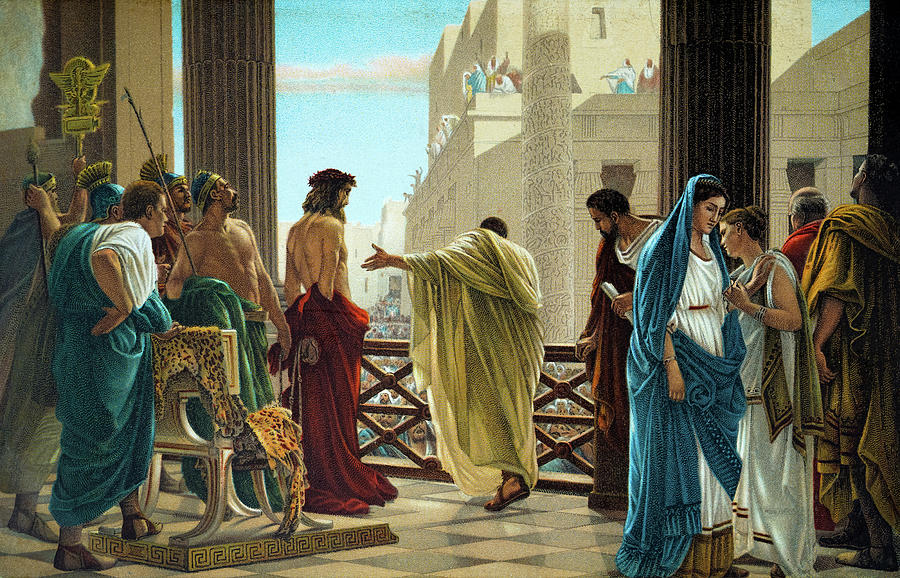
And Pilate said to the Jews, "Behold your King!"
In the Name of the Father and of the Son and of the Holy Spirit. Amen.
Three kings mysteriously appeared at His Birth.
Three kings now meet at the point of His death
—
Caesar's viceroy,
Herod Antipas,
and
the King and Creator of the universe.
He is our King,
our "Κύριος,"
reads the Gospel According to St. John.
And this very noun was selected by all Septuagint translators to render
the Tetragrammaton,
YHWH.
"Behold your God!" Who (Pilate unwittingly implies) is "'the Son of the Living God'" (Mt 16:16).
But today as we observe
the Exaltation of the Holy Cross,
so
we add,
Behold the One Who
|
"humbled Himself and became obedient to the point of death, even the death of the Cross."
(Phil 2:8)
|
Fundamental to the pastoral theology of
St. John Chrysostom
is that God must condescend
—
the verb he uses is
συγκαταβαινω
—
which means, "to step down to someone's level."
In every interaction with humans,
with every thought concerning humans,
God must stoop down, far below His sphere and level.
In this passage from
the "Hymn to Christ"
from his Letter to the Philippians,
(which we read this past Monday on the Feast of Nativity of the Theotokos),
St. Paul describes Jesus choosing the utmost humility,
the utmost degradation.
Yet, it is not.
There is a level of degradation far deeper,
which is hidden
by most English translations.
We read in the New King James translation,
(which the Orthodox Church has adopted for its English readers),
but made Himself of no reputation, taking the form of a bondservant,
and coming in the likeness of men.
(Phil 2:7)
|
Certainly, we see here the Self-humbling that Christ willed for Himself.
But St. Paul's original letter reads,
|
.... αλλὰ εαυτὸν εκένωσεν μορψὴν δούλου λαβών εν ομοιώματι ανθρώπων γενόμενοσ.
|
given in the Holy Apostles Convent literal translation,
1
|
.... but He emptied Himself and took the form of a slave, and came to be in the likeness of men.
(Phil 2:7)
|
"He emptied Himself."
The Greek verb is εκένωσεν.
He empties Himself
of His Divine glory,
of His Divine prerogatives,
of His Kingly estate,
that He might stoop down to our level.
2
On many Sundays,
we have considered the truth of our situation.
Our world is out of joint.
And when it comes to the place
when it must stand naked beneath the perfect lineaments of God's Kingdom,
there there will be "a settling of accounts" (Mt 18:23),
there on that "great and dreadful day of the Lord" (Malachi 4:5),
high-velocity winds will howl,
full-force hurricanes will blow.
|
"For the day of the Lord is great and very terrible; Who can endure it?"
(Joel 2:11)
|
Undeniably, the world we have created,
that is, the human lifeworld,
is cruel, selfish, and altogether alienated from God.
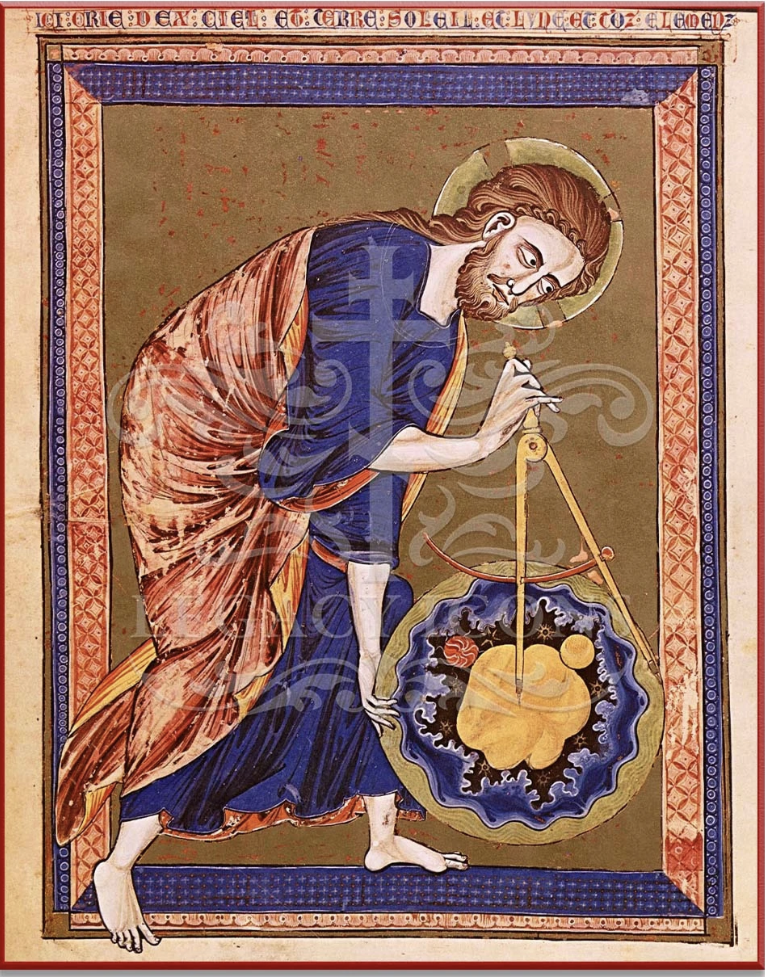
It fundamentally will not square with the Kingdom of Heaven's
compass,
level,
and
rule.
Only Jesus is able to stand before God the Father
and
hear the long-for words,
"My Beloved Son in Whom I AM well-pleased"
(Mt 3:17, 17:5; Mk 1:11; 2 Peter 1:17) ....
that is,
Jesus and those who have attained the highest level of
Theosis,
which is congeniality to the Kingdom of Heaven.
We think of Enoch.
We think of Elijah.
We think of the Most Holy Theotokos.
For Jesus, the Logos, is the Architect of the world,
and
He has revealed His design and its details
to all mankind
if we would but
have ears to hear
and
eyes to see!
Ironically, the human lifeworld is made exclusively of God's children,
but,
tragically,
most of these are indifferent towards their Creator and Father.
After all,
the Hebrew Scriptures tell the story of God,
Who, by turns, is estranged yet grieves, for His lost children.
The New Testament relates His final plan to save us all:
He will send His Son to teach us
and
to be the Everlasting Exemplar of God,
expressed in human form that we might understand.
Yes,
He will send His Own Son,
Who
will tell us of our Royal Estate,
that we hold a holy birthright to Heaven,
that as God's children bearing His Divine Image we were born to become like God,
Who is our Father.
He will reveal to us His Divine Identity:
calming the winds and the sea by His command;
feeding the multitudes in the wilderness with a kind of manna .... twice;
raising the dead .... three times;
and
setting aside His dull human form to meet with men already arrived to the Kingdom of God
—
that is,
the deathless Elijah and Moses
—
so His Disciples will have
examples of ones who have completed the journey of Theosis.
Ever after,
His three Disciples will know,
this where it all completes.
This is where you will ascend.
And He will also reveal the Kingdom of Heaven to all men and women,
first, by telling parables,
and
then by giving a kind of New Law,
declaring the customs and temperament of God's Kingdom.
It will not take long to realize that these customs are utterly alien
to the ways of worldly men and women
—
that
if we were to practice them on earth, surely we would be crushed.
And this is where we find Jesus
—
Jesus, the Son of Man,
Jesus of Nazareth.
He has perfectly observed the customs of Heaven,
and
the world has crushed Him.
He displays the truth and reality of this
with His "agony in the garden."
What is the Crucifixion of Christ?
What is the Cross?
Is it the blood-sacrifice of a lamb, so the angel of death will "pass over" us (Exod 12:13)?
Is it a kind of Azazel, the scapegoat who will carry away our sins (Lev 16:8-10)?
Allow me to pose a more fundamental question:
Do you detect the fragrance of holiness in either of these things?
.... in a panicked animal bleating as its blood pours out in pulsing gushes
or
in a smelly goat?
We do not.
We do not accept this as the high point of our story.
Neither is the pouring out of blood on altars pleasing to God.
In fitting outrage,
our God asks incredulously,
|
Will I eat the flesh of bulls, Or drink the blood of goats?
(Ps 49/50:13)
|
And His Son
—
mocking blood-sacrifice in His Parable of the Good Samaritan
and
riotously overturning tables of animals to be sold for sacrifice
—
evinces His Father's outrage.
Are we not enjoined to do the same?
Where is our righteous indignation?
Are we not enjoined to be transformed to have the Mind of Christ,
which is "that good and acceptable and perfect will of God"
(Rom 12:2)?
No,
the Crucifixion of our Lord is not a talisman
nor
is it pixie dust.
The Crucifixion of our Lord
lays bare the world and its ways.
It is the mind bent on crushing God's gentle invitation to His children.
It is our Icon of Everlasting faithfulness and devotion
in a world which will destroy us.
The Master has told us,
"If the world hates you, you know that it hated Me before it hated you.
If you were of the world, the world would love its own. Yet because you
are not of the world, but I chose you out of the world, therefore the
world hates you."
(Jn 15:18-19)
|
Here is Cross-roads:
to be loved by the world
or
to become the beloved of God.
He has chosen you.
But have you chosen Him?
If so, then
place a Crucifix around your neck
and
boldly declare to the world that you belong to Him.
Declare to the world that you are willing to embrace
the worst it can dish out,
always remembering Jesus words,
"And do not fear those who kill the body but cannot kill the soul.
But rather fear Him Who is able to destroy both soul and body in Hell."
(Mt 10:28)
|
Withal,
"Enter by the narrow gate; for wide is the gate and broad is the way
that leads to destruction, and there are many who go in by it.
Because narrow is the gate and difficult is the way which leads to life,
and there are few who find it."
(Mt 7:13-14)
|
And should I say, "There are few who choose to find it,"
for,
Heaven knows, the Lord has not hidden it.
What is that gate?
Would you know it if you saw it?
My brothers and sisters,
it is the Holy Cross.
It is made from the hard wood of the Cross,
and
like the Cross it is straight
and
it is narrow.
Embrace this Cross in the world
and
venerate it in eternity with God Who is well-pleased.
In the Name of the Father and of the Son and of the Holy Spirit.
1
The Apostolos.
A Lectionary of Anthological Texts taken from the
Acts of the Apostles and the 21 Epistles of the Holy Apostles
as They are Read in the Divine Services of the Holy Orthodox Church
with the Antiphons, Prokeimena, Alleluaria, Entrance Hymns, and
Communion Hymns for the Entire Liturgical Year for Both Greek
and
Slavonic Usages.
The English New Testament Text based on the Orthodox New Testament.
(Buena Vista, CO: Holy Apostles Convent, 2000), 302.
2
A primary expression of this
"theology of the kenósis"
is the Poustinia tradition of the Russian Orthodox Church.
This derives
from poustyn,
the Russian word for desert,
which developed into hermitage,
where one goes to pray and fast before God
and
empty oneself of the world.
The influential volume of essays,
Lux Mundi (London: John Murray, 1889)
edited by Anglo-Catholic bishop, Charles Gore,
and,
in particular,
Gore's essay,
"The Holy Spirit and Inspiration,"
are landmarks in the development of kenotic theology in the West.